English
 Français
 Deutsch
 Italiano
 Español
ONLY BE BARCELONIAN
Only-Be Barcelonian
Airport transfer into the city
Transport information from Barcelona Airport into the city
Sonar Kids, creative experiences for parents and children
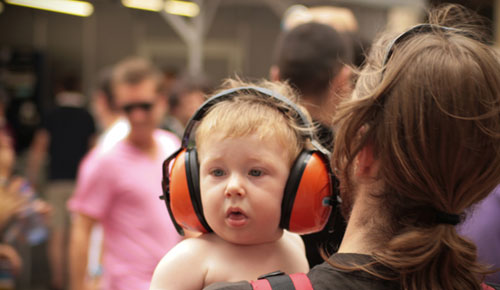
On Sunday the 19th of June, Barcelona will have a wonderful time around music and a variety of creative experiences that bring together parents and children in the Sonar Kids 2011, which takes place at the festival of advanced music and Sonar multimedia. Various activities scheduled for this edition of the festival will take place at SonarComplex and SonarVillage, as well as in the spaces designated by the Museum of Contemporary Art (MACBA) and the Centre for Contemporary Culture (CCCB). This activity was created to establish an emotional connection between parents and children through fun activities that can satisfy the tastes of both, something that is rarely taken into account in the summer activities, which only consider the adult amusement. That is why these activities have been developed for children to acquire practical knowledge of musical culture through games, for them to understand the new ways of making music, and the development of rhythm and musical design. Everything is just about playing, creation and new experiences. Many activities may be conducted with parents and others are just for kids. Children can experience how it feels to be a DJ or try out magic sounds with their voice in beatbox. They may also be designers of murals, transform their own clothes with their favorite images and discover new urban painting techniques, to write the best graffiti in their home. As you see, this will be a wonderful opportunity to live an unforgettable summer for parents and children. Recognized bands such as Papa Topo (author of “New adventures in pop”), the Portuguese electronic group Buraka Som Sistema, and the English DJ...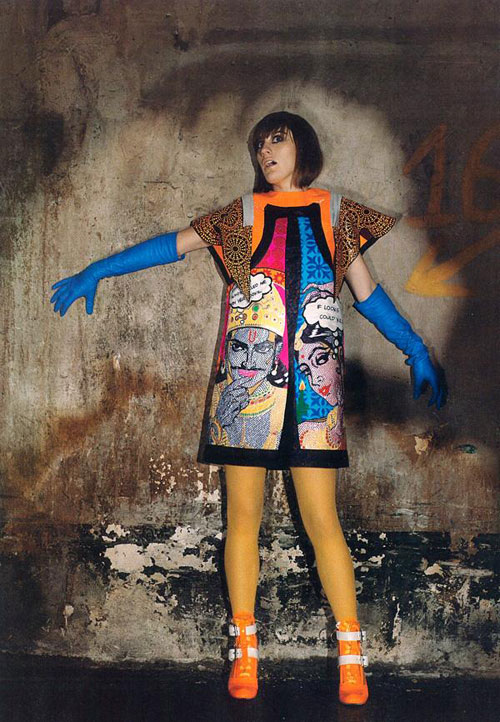
Yelle comes to Barcelona
Love her or hate her, what is certain is that nobody could be indifferent to the antidote to macho rap, Julie Budet – better known by her pseudonym Yelle, which is an acronym for “You Enjoy Life” as the singer has explained in one of her many interviews. The young woman, born in 1983 in Saint-Brieuc (Brittany, France) formed a band with DJs GrandMarnier and Tepr, and resolved to rebel against the codes of today´s hip hop culture, which is dominated by macho lyrics and attitudes, which tend to refer to women simply as “bitch” and other sexually vulgar words. But Yelle is not one to be intimidated, and always has a cutting retort or response. Yelle became better known back in 2006 thanks to a track she posted on her Facebook page, which was a kind of response to the sexism which is so rife in rap music. With the title “Short Dick Cuizi” is answered back to songs by certain bands, including TTC, and its singer Cuiziner, who wrote, amongst others, a song called “Sale Pute,” which basically complained about women (all of them), and implied that they were only good for sexually pleasing men, like instruments. Obviously, Yelle didn´t take kindly to this attitude, and she responded with a song hinting at the size (or lack of) of Cuiziner´s penis. The song, later produced in a studio, and released under a different name “Je veux te voir” became a Myspace hit, with over 125,000 hits on its first day online. Yelle´s fame grew in October 2007, when she went on tour with singer Mika. The following...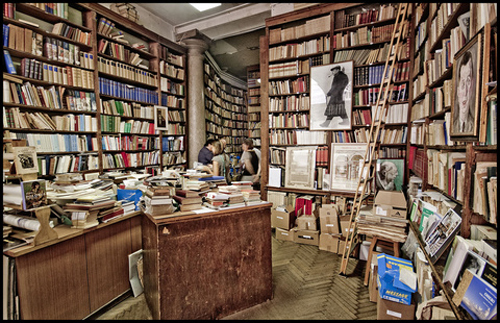
El Trieste de Claudio Magris in Barcelona
On the border with Slovenia, in the North of Italy, and on the banks of the Adriatic coast, is the beautiful and mysterious city of Trieste. An ancient, originally Illyrian town, it flourished during the Roman colonization, making it, after the fall of Empire in the West, a coveted object of desire for both the Byzantines and Francos, who tried unsuccessfully to seize it – before it finally fell in the 13th century into the hands of the Venetians. Then in 1382, it was subject to the Austrian Hungarian empire; under which it remained until the end of the First World War. It was particularly from 1719 that its position was a matter of petty conflict, as Trieste became a Franco port. As the only exit to the Adriatic, it became a place of much commercial and industrial investment, which brought with it the birth of a multicultural, cosmopolitan society – one which went on to influence writers such as Stendhal, Rilke (who named his famous elegies after Trieste´s Duino castle) Italo Svevo, James Joyce (who lived there from 1905, and wrote much of Ulysses and Portrait of the Artist as a Young Man in the city) – and, Claudio Magris. It might be said that the city´s climate is mild, and sunny – that is apart from the harsh wind which blows down from the Alps, which sometimes reaches 190km/h. When this happens, the citizens of Trieste have no choice but to cling to the streets and just pray they don´t get blown away. Its perhaps the effect of the wind, and the rough seas which brings us...
OFFF at CCCB in Barcelona
The eleventh International Festival of creation and digital culture OFFF is back with: Let´s feed the future at Barcelona Contemporary Cultural Center between 9 and 11 June. After an absence period, due to a tour in which the festival visited important cities as: New York, Berlin, Paris and Lisbon, the festival director, Hector Ayuso, said that this new edition of OFFF would be an important meeting point for lovers of art and innovation. OFFF was born in Barcelona in the early twenty-first century, with the purpose of holding a festival with an innovative approach to the post-digital culture. This art philosophy is meant to encourage people to look at the constant evolving process of art. One of the festival’s new proposals is to answer the question: How ordinary citizens react, when they look at world’s creations: how was it done? This year OFFF has opened the festival to new innovative proposals. For this reason, it will bring famous and new artists together in numerous lectures, workshops and experimental methods to let people know everything about their creations. The full program will feature 70 activities including: performances, lectures, animations and documentaries. The areas of the festival are divided into: Roots, which is a forum where leading artists display their work; Openroom, a space designed for new artists to show their proposals; Workshops, Showplace, an area for products exchange; Cinexin, where people can watch movies or videos and Chillax, a special area for relaxation. Another innovation of OFFF is the Speaker´s Corner. This event is designed for young artists to showcase their works; they will have all the needful technological setting...
Yugoslav Experimental Cinema at MACBA
The Barcelona Museum of Contemporary Art, MACBA, holds an exhibition of Yugoslav Experimental Cinema 1960-1980 – as part of the exhibition Museum of parallel narratives – until the 6th of July. This sample is an important part of the international activities that the museum has been carrying out in its agenda 2011. The series curated by Ana Janevski reveals an experimental cinematography that changed the language and the dominant aesthetic in the former Socialist Federal Republic of Yugoslavia between the decades from 60´s to 80´s. “We can’t promise to do other than experiment” was the statement that accompanied the KOD group, consisting of visual artists from Novi Sad on the Danube, city which the Serbian director and screenwriter Dušan Makavejev used as scenario to make a visual performative intervention in 1971. This triggered a revolution of thematic paradigms and Yugoslav film production, which was subject to state censorship. Dušan Makavejev was born in Belgrade in 1932. He studied psychology at the University of Belgrade, and after graduating; he got involved in the cinema and festivals society. There he became fascinated with the image content production, so he started studying at the Academy of Radio, Television and Film. In 1953 he began making his first documentaries, which were directly related to post-war events. His tendency to insert experimental raw footage in other productions, deconstructing and re-signifying their contents, transformed him into one of the most important men in Yugoslav cinema. In his first three films: Man is a bird (1966), Love Affair (1967) and Innocence Unprotected (1968), we can see a strong influence from the filmmaker Jean-Luc Godard, particularly in...
Gaudi’s architecture and territory
All animals need a territory, which they sometimes mark with their urine. We humans do it by adorning it with our personal tastes, reflecting the way we think and view the world. We decorate our spaces with objects which mean something to us, or which make us feel loved, and cheer us up – and so if there is something that conjures up a past trauma or conflict, it is going to do the exact opposite. The founder of surrealism, Andre Breton lived in a small apartment in Pigalle – the Parisian neighbourhood famous for Moulin Rouge, cabaret and sex shops. The flat consisted of a couple of narrow rooms which were filled with paintings, curios, and magical African sculptures. Irish novelist Samuel Beckett lived in the top flat of an architecturally ordinary building, with minimal furniture, and plain blank walls. Out the window was a view of a prison wall. Marcel Marceau lived in a mansion, with a park, with trees covered in spiderwebs and walls covered with photographs of himself with famous people – actors, presidents, millionaires and so on. Most of his furniture were chests displaying medals, diplomas, trophies, etc. In a large studio, hung dozens of his posters in all different languages. Catalan architect Gaudi lived in a house full of furniture designed by himself, inside Parque Güell. He was an artist who never sought the vindication of his own ego, preferring instead to just observe nature (“The tree near my workshop is my mentor“) as inspiration for his own aesthetic style, which didn´t call for ornamentation. Gaudi was the first artist to dedicate a...
Nudist Beaches in Barcelona
To be honest, “nudism” is not really my thing. I mean, I do go topless, and I use a tanga which resembles a piece of dental floss. But my thing is more to suggest than just show everything, and it always has been. For those of you who like to show the best (or worst) of your bodies, and underneath the sunshine, my beloved Barcelona has many options and surprises in store for you. You can reach many beaches from the city – via car, train, bus you can pretty much get anywhere without any problems. Of course, you can stay in hotels on the beach – but as you imagine, during the high season, the prices rocket. Truthfully, if you are after something a bit more secluded, Barcelona isn´t your nudist option. If you want parties, chiringuitos, drinks till late and the whole city at your finger tips – Barcelona is for you. One beach just a step away from the city is Mar Bella. Only 500m long, it´s in Barceloneta, and well located, in front of a row seafood restaurants, and near lots of bars for drinking and eating tapas. It´s a very touristy area…and is full of nudists and curiosities. With its white sand, this artificial beach is a good option if you want something to near to where you are staying, and it also has wheelchair access. San Sebastian is another beach just by the city centre. Apparently one of the oldest in Barcelona, it´s also known as the Baths of San Sebastian, and is next to the Club Natación Barcelona. In spite of its...La Ferrería
La Ferrería es una opción ideal para degustar la comida catalana. Más de 20 años de trayectoria avalan la calidad de sus platos y servicio.
Santa María del Mar
The Church of Santa María del Mar is located in the popular Born district. With its Catalan Gothic style, it´s one of the most beautiful monuments in the city.
Promotions