English
 Français
 Deutsch
 Italiano
 Español
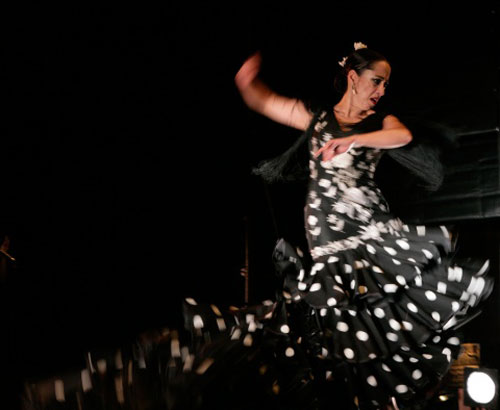
Flamenco Festival in Barcelona
Between the 18th-21st May, Barcelona will host the new edition of the Ciutat Vella Flamenco Festival, organised by dance school Taller de Musics. Now in its 18th year, this time round the festival has expanded, incorporating new spaces, including the Mercat de les Flores, and the theatre at CCCB. The various new creative strands to the event all come together under the title “Omega,” – the last letter of the Greek alphabet, signalling the end but also the hope for new starts, innovations and cycles. This is the ethos which ties the festival together, as it seeks to also involve the public in new ways. Flamenco, which is the beating heart of the four days of fiesta, is a genre of music and dance which originated in the Andalusia region in the middle of the 18th century, predominantly amongst the gypsy communities. Though, the music and dance of flamenco has evolved considerably since then, and the goal of the Ciutat Vella festival is to present new frontiers, with a varied, multi-disciplinary line up which incorporates theatre and performance, music and other forms of artistic exploration. All of the works demonstrate then new and progressive routes into the arts, and new hybrids of familiar ground – with a special attention to the techniques of improvisation in flamenco. In this respect, highly relevant is Flamenco Empírico, a cycle of dance hosted by Mercat de les Flors, and commissioned by Juan Carlos Lérida and Belén Maya which brings together over 50 artists in order to define, and identify the developments and new references of contemporary flamenco. The festival will be opened by...Barcelona Cathedral
Barcelona Cathedral started being built in the 13th century and so it´s a world architectural gem that you can´t not visit.
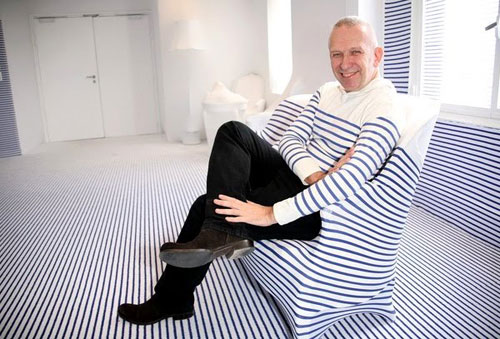
La Suite Elle Décoration – Jean-Paul Gaultier
The Cite de l´Architectura et du Patrimonine exhibits the decorative facility Suite Elle Decoración created by the prominent fashion designer Jean Paul Gaultier in the old department of Jaques Carlu, architect of the Palais de Chaillor. This installation organized by Elle Magazine and the Cité de l’Architectura et du Patrimonine will be opened until October and can visited Saturdays and Sundays. This Gaultier installation corresponds to the third version of the Suite Elle Décoration that Elle y Cité de l’Architectura et du Patrimonine, organize to enhance the importance that design has in decoration and to situate it at the same level of the rest of other artistic creations. The last two versions were created by Christian Lacroix and Martin Margiela. Gaultier, as usual is provocative and breaks with all the habitual Paris schemes, He builds his creation using the classic blue and white nautical stripes even if the apartment is situated in front of the magnificent Eiffel Tower. The Designer, who´s main priority is to dress up bodies, focused on the project as if the walls and floors of the apartment was a motionless body and dresses them up, including the furniture, something that creates and interesting effect of forms, perspectives and light movements with anthropomorphic textures. His reputation as enfant terrible has taken his style to the highest fashion and design levels. Even if he doesn´t have a designer academic formation, Gaultier is one of the few fashion designers that has revolutionized the classic sexist aesthetic appearance in fashion, promoting the use of Kilts or masculine skirts in his collection “Hombre Objeto”(Man Object) Gaultier´s disrespect towards traditional fashion...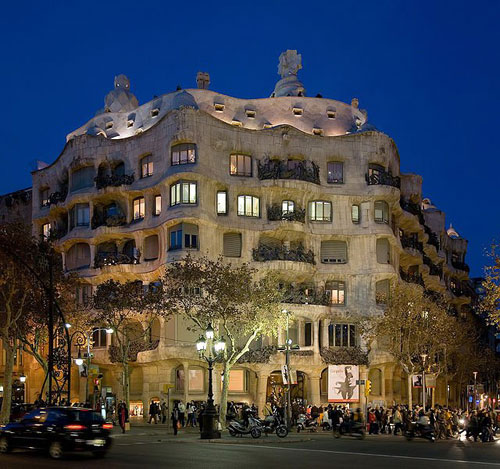
Museum Night in Barcelona
On 14 May, from 7 pm until 1 am, all the museums in Barcelona will be open to art and culture lovers, as well as those of us who may not be in the habit of visiting museums but are interested in enjoying a different kind of night out. La Noche de los Museos en Barcelona (Museum Night in Barcelona) forms part of International Museum Day 2011, established by the International Council of Museums with the slogan ‘Museum and Memory’. This open day seeks to bring people closer to the treasures housed inside each museum, as well as highlighting the importance of the conservation work that is done by these institutions: places that guarantee the preservation and upkeep of our cultural heritage. The word museum comes from the Latin, mus?um, which comes in turn from the Greek, m???????, but if refers to a public or private entity dedicated to conserving, caring for, investigating and exhibiting collections which represent some aspect of human life, whether that be natural history, art, clothing or architecture etc. The concept of the museum has always been linked to the dominant and exclusive vision of a culture. In the past, they were often built to restrict access to the objects they stored, having been designed as places for experts only. However, this has begun to change in recent years with the realization that museums are not places built just for those who work in them, and that they should acknowledge the outside world by helping people to appreciate the culture they house. Museum directors are concerned about the lack of interest shown by much of the public...
Ecocity & Industry 2011 in Barcelona
It´s about time that local governments started to worry “more” about the environment. Well, we say “start” – “Go Green” has been on the agenda for over 30 years; and yet we seem to have the same problem, which is that our natural resources are disappearing, and that nothing seems to be able to stop it happening. Ecocity&Industry 2011 brings to the table some questions about the conservation of the environment, and some potential solutions for industry and consumers. This time round, Ecocity presents “Environmental solutions for industry and the city,” held via various installations in the Fira de Barcelona. The proposals are highly innovative – with issues broached such as waste and recycling, water shortage, renewable energies, prevention of labour risks, amongst others. The importance of this event is clear – not only for businesses, but the citizens of Barcelona, and indeed the rest of Spain and Europe.During the previous Ecocity, which was in 2009, there were a total of 160 exhibitors and around 9000 visitors. One of the exclusives of the event was the new Barcelona waste bins, adapted for disabled people, and which will put in use from November 2011. In that case, I wonder how much more time has to pass before the local governments actually put their current ingenious solutions in place. In general, I tend not write about these kinds of things – but it´s genuinely alarming how our cities are treating the environment. Adding to that the ongoing economic crisis, and the general sense of malcontent it has created, our cities will just become poorly mechanisms moving towards an generation of wasteland....
Folcore. Electronic music with latin-american rhythm in Barcelona
Music and dance are two elements which have the power to free the spirit – and electronica is one genre which is particularly innovative in this respect. What sets Folcore apart from other emergent groups is that it takes the music of Latin America into the marginal musical communities of Europe. Folcore was born as an audiovisual collective in underground spaces round Barcelona. It´s counter-cultural approach seeks to bring together different rhythms of displaced, alienated communities in the context of the economic crisis, and globalisation which has provoked people to turn to new creative horizons. Aside from the collective´s critical, multicultural approach, they the mix sounds of the cumbia villera, which was born in the marginal neighbourhoods of Argentina,; vallenato colombiano, along with others which merged the styles of reggae, salsa, bailanta, malambo, Brazilian rhythms and Angolan Kuduro. The challenge of transporting electronic music to the ethnic musical landscape, creating new tones and styles in order to provoke an aesthetic, expressive effect has prompted recognition amongst fans and lovers of electronic music and dance in Barcelona. The special thing about this type of music is its roots – most of which are variations of music styles which grew out of poor areas, where delinquency and cultural resistance were channeled into dance. Latin America has proved the fertile ground on which to express social phenomenon through music – in the 60s and 70s there was a surge in protest music, which took traditional sounds to articulate reactions to the political changes of the revolution. The 80s were marked by the Nueva Trova born in Cuba, which adapted itself to the...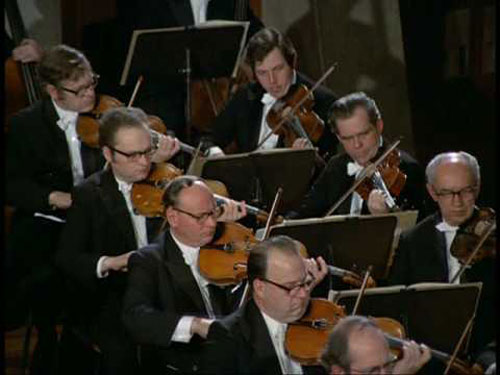
Mahler and America in Viena
On the 14th of May the Konzertaus Festival dedicated to Gustav Mahler takes place in Vienna as part of the XXXV Music Festival that will include nearly 60 concerts under the motto “Mahler and America” to celebrate the Mahler Year. For the opening act the interpretation of Mahler´s symphony will be interpreted by the Vienna Philharmonic Orchestra. At the reception there will be a an interesting symposium about the live, work, influence of his music and death of Gustav Mahler Gustav Mahler was born in Bohemia in 1860. He was a composer and the most recognized orchestra director at the end of the XIX century and beginning of the XX century. He wrote 10 symphonies even thou the last one was mere sketches impregnated with sounds of folk music he used to enjoy listening to. Mahler was a reformer of classical music which lead him to compose very interesting pieces based on poems by Fiedrich Rucket like “The Boy with Magical Horn” or “The Song of the Dead Boys”. He died in Vienna in 1911. Out of these almost 60 concerts of international music, the organization highlights the performance of Ian Bostridge and Florian Boesch as well as the acclaimed Music banda Franui with its iconoclastic presentation of Mahler´s earlier compositions, so strongly admired among modern classic music lovers. Important string quartets have been invited to participate, among others that can be heard we find The Pacifica Quartet, Hagen Quartet, Belcea and Mosïques along with front line guests such as Isabel Charisius, Pierre Laurent Aymará and Mihaela Urselesas. There will also be piano and violin concerts with interesting interpretations...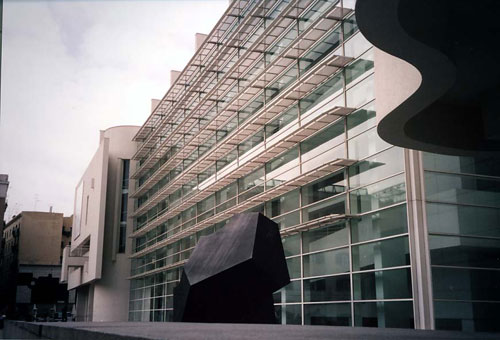
MACBA & Narrative Parallels in Barcelona
From the 14th of May, MACBA presents exhibition Museo de las Narrativas Paralelas, commissioned by Zdenka Badovinac and Bartomeu Marí. It is the first to be organised by The International, which is an initiative formed by five European museums, in 2009, of over 40,000 works. The show compiles one hundred pieces from the Galerija Museum of Modern Contemporary Art in Slovenia, in participation with the Bratislava Julius Koller Society Museum, Van Abbemuseum, de Eindhoven Museum van Edendaagsen Kunst, de Amberes, and MACBA in Barcelona. This interesting exhibition attempts to question the existing narratives in art, in which western area of Europe has implemented a series of aesthetically acceptable rules; ignoring the important creative processes taking place in the ex-Soviet Union – two parallel creative processes which did not meet. Despite the creative richness which arose from the complex political climate, many Eastern European artists are practically unknown, along with their work. During the 70s and 80s there took place interesting experimentation with the notion of the body amongst artists in Eastern Europe, who challenged and questioned the social, political and philosophical norms, denouncing the banality of power, and the irrationalities of the Soviet communist regime. It was a kind of aesthetic which confronted power through the use of the body as a liberator. Amongst these artists were Czechs Pert Stembera and Jan Mlcoch, who made installations using their bodies as a comment on the socio-political reality, deliberately subjecting themselves to physical danger and violence. Stembera started out as a painter in 1966, before moving to Paris after the events of 1968 and experimenting with self-inflicted experiments, such as going...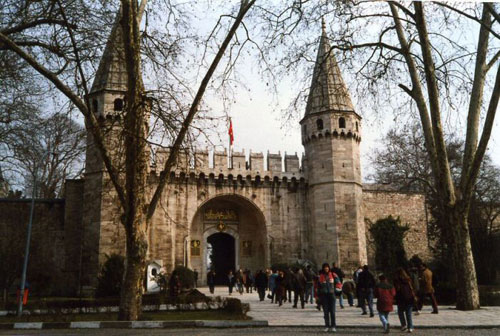
The Magic Shirts at the Topkapi Palace in Istanbul
Between the Golden Horn and the Marmara Sea, with an incredible view of the Bosforo, sits the Topkapi Palace http://www.topkapisarayi.gov.tr/. Built by order of the Sultan Mehmed II a few years after the final collapse of the Byzantium, it was the centre of administration for the Ottoman empire for the following four centuries – until 1853, and the Christian era, when the Sultan Abdulmecid decreed that the headquarters move to the modern Dolmabahçe Palace. Today, the Topkapi Palace is a museum dedicated to those far away glory years of the Ottoman Empire, and which houses some of the most magnificent treasures in the world. Visitors who wander the vast and winding spaces are often grateful for a tourist guide to show them the Pearl room for example, which holds the Topkapi head, embellished with precious stones, gold and emeralds – or the room which displays the famous Indio-Turkish throne from the 18th century. But one thing we would advise you not to miss out on is the extraordinary collection of talismanic shirts, made famous recently thanks to the publication in Istanbul of Hülya Tezcan´s Las Camisas Mágicas del Palacio de Topkapi. In Turkish culture, great importance has always been placed on magical practice – whether aesthetic or ritual – as a lesson for the future, from coffee, to the summoning of the omnipresent Turkish eye, or nazar to cast curses. Tezcan´s book speaks of the power of the talismanic tops to make the fighter invisible in battle, to protect from evil, to maintain good health and aid fertility. The latter was the case with the powerful Sultana Nurbanu –...