English
 Français
 Deutsch
 Italiano
 Español
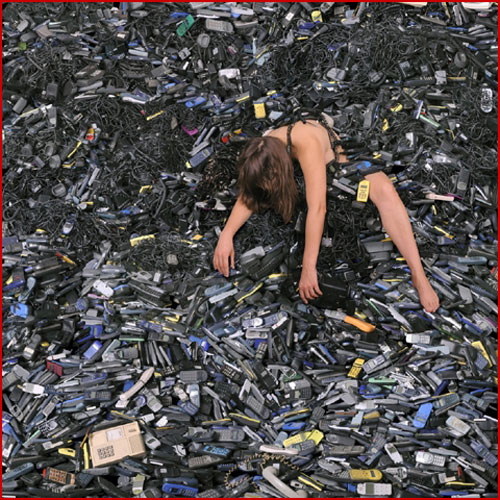
Daniel Canogar in the Canal de Isabel II in Madrid
Text about the current exhibition by Daniel Canogar, one of the Spanish artists with more international projection in the city of Madrid, particularly his huge Travesias installation, which can be seen in the exhibition hall of the Canal de Isabel II until next May 15.
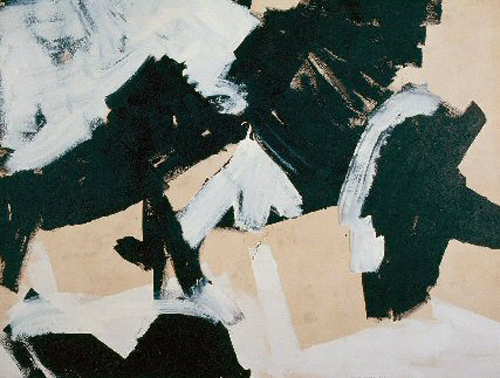
Vítor Pomar at CAM in Lisbon
On April 15, the CAM opens the exhibition “Nothing to do nowhere to go”, which will present the work of Portuguese artist Vítor Pomar. For the first time the CAM in Lisbon will present the work of one of the most iconic artists of Portugal, Vítor Pomar born in Lisbon in 1949. In this exhibition entitled “Nothing to do nowhere to go”, which opens on April 15 and will remain on display until June 12 and where can see some of his most interesting works devised by the artist between 1974 and 2010. With a special emphasis on the visual side of his work the CAM will present video art and film works, which will be displayed in the “Multipurpose Room”. Pomar studied at the Escola de Belas-Artes in Oporto, Portugal in 1966 and 1967. His first exhibition took place in the Gallery Guadrante in 1970, the same year he turned his back on his native country to live in Holland. And it was in the 70´s when Pomar began experimenting with visual media, which came to serve as a conceptual basis for artistic practice, which investigates the mutual infiltration between cinema and photography. Pomar estudió en la Escola de Belas-Artes en Oporto, Portugal en el 1966 y 1967. Su primera exposiciòn tomò lugar en la Galeria Guadrante en 1970, en el mismo año que dió la espalda a su país natal para vivir en Holanda. Y también fue en los años 70 cuando Pomar empezó a experimentar con los medios audiovisuales, lo cual le llegó a servir como base conceptuale para su práctica artística, en la cual indaga...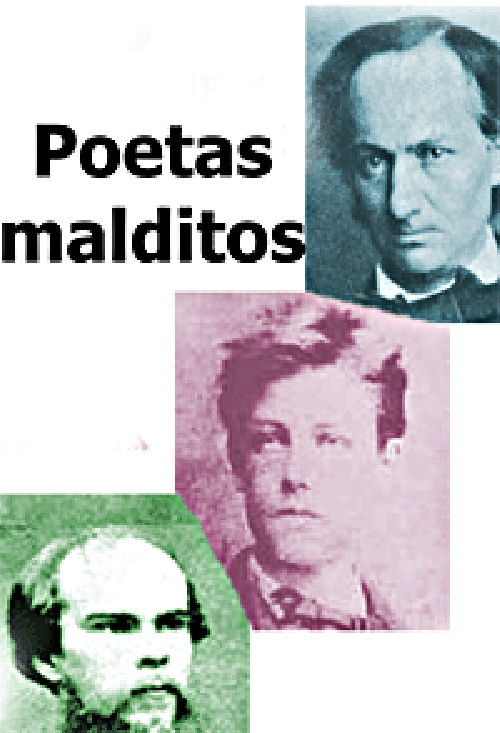
Baudelaire and the damned poets
A damned poet is he who takes his life and work outside of the conventions of society. Illness, disgrace, drug abuse and alcohol – all leading to a premature death are the typical components to the life story of a doomed poet or artist. And his works are laden with doom and gloom, like a backdrop. The term damned poet comes from a poetic essay by Verlaine, Les Poètes maudits, in which he pays homage to 6 poets: Tristan Corbière, Arthur Rimbaud, Stéphane Mallarmé, Marceline Desbordes-Valmore, Auguste Villiers de L’ Isle-Adam and Pobre Lelian (Paul Verlaine). The first French poet known as a kind of proto- damned poet is François Villon, who lived in the 15th century. Other doomed poets include Antonin Artaud, John Keats, Edgar Allan Poe, the Count of Lautremont, Dylan Thomas – and the great suicidal Argentinian poets Alejandra Pizarnik y Alfonsina Storni. Undoubtedly, the list goes on. The French poetry from the end of the 19th century, known as “fin de siécle” was at the hands of many of these poets, who didn´t conform to the conventional rules, and were ignored by the critics. However, after the materialisation of symbolism, these artists who had innovated the form, began to be recognised more in society. Baudelaire is one of the best doomed poets. An innovator of French literature, and prophet of modern poetry, his work was very influenced by romanticism, whilst rejecting the movement´s rhetoric on the importance of nature. He was initiated into the literary movement known as the Parnasianos and came to to be one of the key exponents of Symbolism. With his ironic...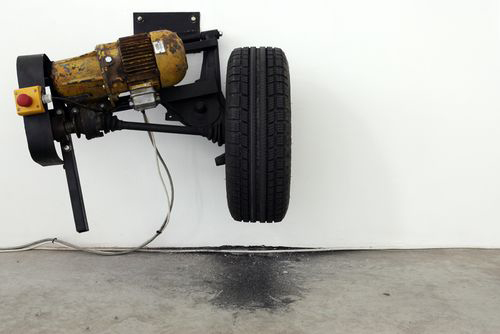
Michael Sailstorfer at the Miro Foundation in Barcelona
On until the 25th April at the Miro Foundation is Sonar, an exhibition of the experimental work of German artist Michael Sailstorfer. The interesting new show addresses the question which preoccupied the artist and which shaped his work: what is a sculpture? Sonar, as the name suggests, is an experimental exhibition based on sound, in which a piece of glass is broken for acoustic effect. In order to make this effect visible, Sailstorfer constructs a room from wood, with one window, whose glass absorbs high frequency sound via a generator installed on the inside. The final smashing of the glass, which is the climax of the show, is shown on a video inside of the room, and can only been seen through the window frame of the broken glass. Michael Sailstorfer plays with concepts that he has derived from literature and cinema, transferring them into experimental installations. The Sonar piece is inspired by a character in the novel by Günter Grass, which was adapted for the screen by Volker Schlöndorff. The narrative revolves around Oskar Matzerath, a young boy who decides to stop growing at three years old, and develops a talent for breaking glass, using sounds created by playing his tambourine. The child symbolises the rupture of purity at the time of Hitler´s rise to power, and the desperation of a world without hope. Another of the inspirations at play in this work is the interesting performance Window Blowout in 1976 from North American vanguard artist Gordon Matta-Clark, son of surrealist painter Roberto Matta and Anne Clark, which involved shooting at glass in an abandoned building in Bronx,...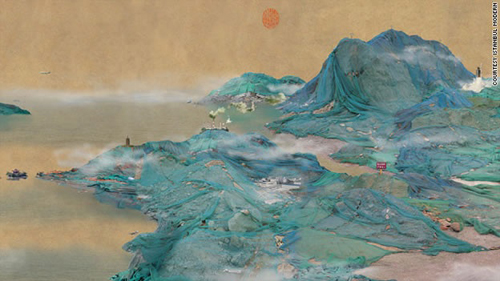
Paradise Lost in Istanbul
On until the 24th July at the Istanbul Modern Museum is exhibition Paradise Lost, in which 19 contemporary artists explore the eternal conflict between nature and the technological world. Through digital videos made by the artists, a dialogue is developed about an uncertain future of nature, and the role of art in sustainability. The Istanbul Modern Museum, with co-operation from the Department of Education, is opening the show to schools, offering interactive discussion workshops which aim to encourage awareness of the concept of nature in a post-modern society. The interesting interactive programme aims to create communication between people of different ages and generations, and teach them about the uses of different digital medias, and the role of technology in contemporary art. Amongst the artists participating in the show is acclaimed North American Doug Aitken, whose work encompasses both photography and sculpture. Born in California in 1968, he is one of the most influential digital artists of the States. Since 1990, he´s created numerous interesting installations, in which he uses multiple screens to challenge the idea of a linear narrative. His themes mainly question the use of nature, and his works are ambitious and high-impact – such as Sonic Aitken Pavilionin the wooded area of Inhotim in Brazil, in which sounds of the earth were audible through noise sensors installed a mile deep into the ground. Aitken´s conceptual work has a startling poetic beauty which is always highly conscious of our role in nature. Native Bulgarian Ergin Çavu?o?lu will be another of the selected members of the debate, whose digital works confront the notion of space and place in order...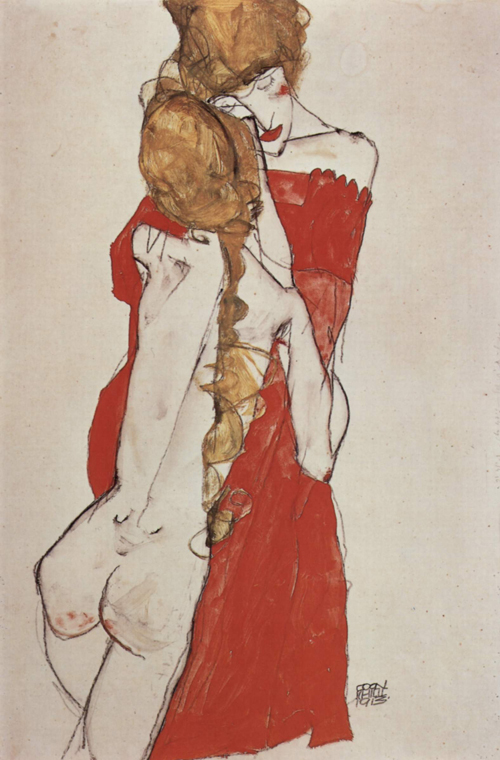
Egon Schiele: self-portraits and the erotic
It is his strange way of painting – his distorted, twisted lines which show the subject from unusual angles, in images loaded with eroticism which is what has always drawn me to the work of Egon Schiele. The discovery of this Vienna-born painter is all thanks to writer Vargas Llosa, who uses the storng erotic element in Schiele´s work to intensify the relationship between Fonchito and his step-mother, in the book “Los cuadernos de Don Rigoberto” (“The Paintings of Don Rigoberto” – a great book, by the way). As soon as I finished the book, I immersed myself in the work of Schiele. Though I thought initially that his obsession with the self-portrait was simply down to narcissism on the part of the artist, having read the criticism, I have learned a little more about the process of introspection that Schiele reveals in his paintings. None of the portraits are a faithful likeness – because the self he wanted to express was not the visible one, but the inner self and all of its complexities. To use to a metaphor, Schiele´s self-portraits are the like the mirror in Dorian Gray: they show his true self, and not the exterior appearance seen by everybody else. This is why Schiele deliberately distorts his self-portrait – to bring light to the tension between the true self, and the represented self, and discover which is most recogniseable to him. It is this approach which gives the work its unique perspective, and which has gained Schiele the respect of Gustav Klimt, a key inspiration for the artist. Though Schiele´s work is highly original, Klimt...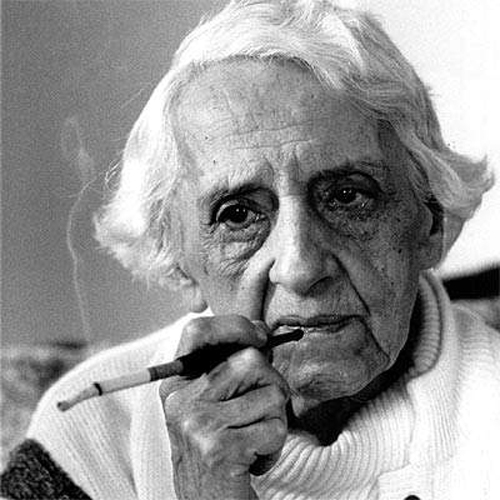
María Zambrano and Málaga
In his book A modo de último sacrificio Samoa Albert Hanover tell us about the emotions that he felt when he travelled to Malaga for the first time surprised by the fact that the train station is named after María Zambrano. On the train coming from Córdoba he read Delirio y Destino and the conformity of the name let him think if he could illustrate this part of his book better or maybe the exact opposite, that the book could not be illustrated in a better way. And never before he felt this truth, that two exact opposites could be true at the same time. The main objective for his journey was to come up with a personal itinerary, that followed the steps of the Malaga born writer in a chronologically reversed order. His last stop was Vélez-Málaga where she was born in 1904. Around her grave you can find lemon and orange trees. Maria Zambrano was one of the great thinkers of the 20th century. With her delicate literary style she invented philosophical concepts such as the poetic reason and a clear example of the dominating sexism of the time but still hjer work is known, especially in Spain. Upon thinking the itinerary through, Hanover noticed that the nomadic life style of Zambrano not only matched his own existence but it also delivered a reflection of his opinion and way of thinking about Gnosticism and Sufism. Paul Oilzum Maria Zambrano mixed philosophy, poetry, mystic, art, music and dream in an unforgettable manner. If you rent apartments in Malaga you will be able to confirm that there aren’t...
German Cinema at CA2M, Madrid
As part of a cycle which starts on the 29th May at the Centro 2 de Mayo (CA2M), in association with the Centro socio-cultural Joan Miró de Móstoles and the Instituto Goethe, there will be screenings from the Show of German Cinema. German cinema has always been known as more a form of art than entertainment. The first currents of German cinematography developed from the expressionist vanguard of the first half of the 20th century, which had strong ideological and aesthetic roots in the bridge collective, which called upon the new generation of creators to strive for the “freedom of living and acting in the face of traditional forces.” Expressionism transmitted the complexities of the port-war world, and was primarily critical of materialism. In the 1960s, the economy of a Germany occupied by North American forces would have a strong impact on the arts – which since the beginning of the Second World War had been stagnant, due to a large number of the country´s artists fleeing at the outbreak of war. Up until the 1960s, German cinema had been victim to propaganda, and an aesthetic based on the North American presence, whose politics left little room for an interest in the arts. The arrival of television imprinted a visual aesthetic in line with the North American establishment. This led to an uprising from students of literature and cinema, who saw in the short film a platform for developing the culture of German cinematography. The Oberhausen Manifesto declared the birth of new German cinema, and a new visual and poetic language without atavistic enclaves, or rejection of technique and...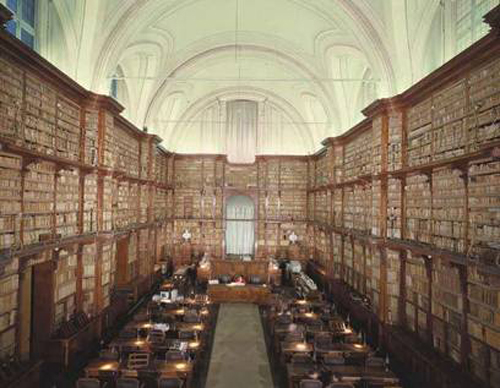
A walk through the legendary Vatican library
Founded in 1451 in a time somewhere between the Roman Empire and the Middle Ages, movie conspiracies and literary adventures, where time seems to stop, about 1.6 mio volumes of prints, 80 thousand manuscripts and 100 thousand units of archives, nearly 8400 incunabulas, 300 thousand coins and medals, drawings and fotographs are kept. Revealed mysteries and still kept secrets. The Da Vinci Code can not merely be fiction. Whoever likes detective games about history or whoever wants to find out more about the mysteries of astrology. Why must we decide between one or the other? At the library of the Vatican we will find records of what the Catholic Church condemned as devil’s work and master pieces by Almagesto and Ptolomeo, the biggest of the ancient mathematics and astronomers and his 4 writiongs about astrology. The Sistine Library, decorated with frescos from the 16th century, possesses the most important antique manuscripts, codices of western history from the Christian Era until today, valuable incunabulas, prints from different centuries, drawings by big artists und also a laboratory where old manuscripts are being restored. The current library dates back to 1451 but the origin of the Papal library goes back to the 4th century when the administration of the Roman Church served as library and archive. Vauzzayin apartments in Rome will give you the unique possibility to visit the Biblioteca Vaticana. Don’t miss out. ? Translated...