English
 Français
 Deutsch
 Italiano
 Español

Jasper Johns at the IVAM: The Footprints of Memory
An exhibition of the work of Jasper Johns, one of the most important artists of the the second half of the 20th century, will be at Valencia´s IVAM from February, through April 24th. The retrospective, “The Huellas of Memory” comprises 40 works of painting, sculpture, and pieces using signs, letters and numbers. Along with Robert Rauschenberg, Johns was a precursor of the North American Pop Art movement. Jasper Johns was born in Georgia, U.S in 1930. After spending a year at the University of Carolina, he transferred to Parsons School of Design in New York, where he met Robert Rauschenberg, Merce Cunningham and John Cage, and started to develop his style. Johns’ prolific and eclectic work has passed through various art movements of the 20th century. Though identified as a member of the Pop Art group, for his early works with the North American flag, his use of unorthodox materials also places his at the fringes of Dadaism. There’s also a clear influence of the American abstract expressionism of the 40s and 50s, cubism, and even the German expressionism of the early 20th century. Hence the importance of Jasper Johns’ work. In 1952 he was called up for the Korean war, an experience that marks a particular stage of his artistic development which was centred around detailed paintings of the North American flag, upon which images were superimposed, and numbers and letters formed the title “Flag.” This period of flags, numbers and letters ended in the 1960s, when he discovered Marcel Duchamp’s Ready Made, and started to make bronze moulds of simple, every day objects. Johns’ methodical style of...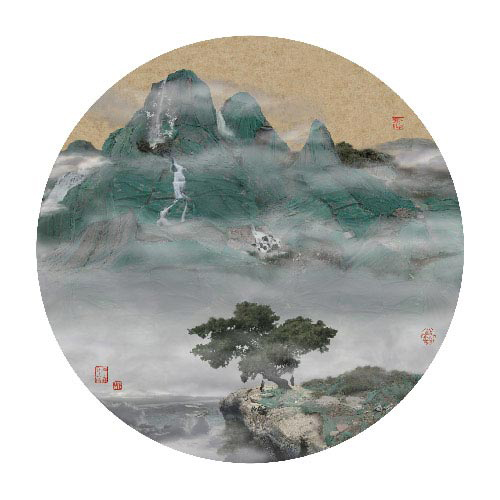
Yao Lu. The New Landscapes in Istanbul
The Istanbul Modern is presenting the work of Chinese photographer Yao Lu with new exhibition Los Nuevos Paisajes, on until the 22nd May. Lu´s aesthetic is based around ecology and industrial waste – and with landscapes created to look like classical Chinese paintings. Yao Lu was born in Beijing, China in 1967. Though he studied engraving at the China Central Academy of Fine Arts, Lu chose to explore the photography medium, becoming a professor of design at the Griffith University´s Queensland College of Art. Yu developed his personal style, mixing the techniques of photography, painting and design. Whilst Lu bases himself in conceptual art, many of his paintings are also reminiscent of both expressionism and traditional Chinese art. His works, on one level, possess the harmony and beauty of the pastoral landscape paintings of the Chinese medieval period, but also, upon closer inspection, themes of violence, and protest against the destruction of nature, and natural beauty. Lu has travelled round China photographing different signs of societal destruction – it is a complex, time-consuming project which is carried out in three stages. First, he covers mountains of rubbish with green fabric, photographs them from different angles, and then finally loads the images onto a computer, adding digital effects to give them an element of the classic Chinese water-colour landscape paintings. Lu´s skill as a photographer helps him to observe nature, in order to be able to transfer its imagery, beauty and impact onto the canvas, and combine them with a powerful conceptual message. He directs his criticism at the damaging effects of industry on the environment. His apocalyptic mountains of...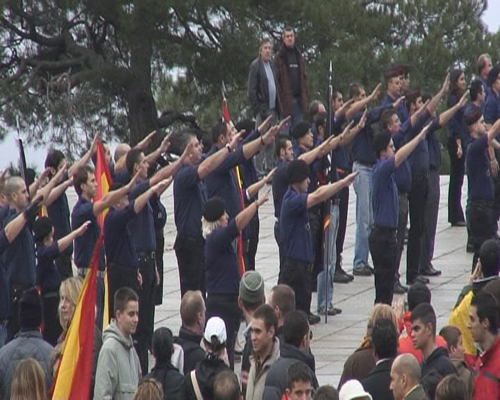
Plan Rosebud 2. A documentary by Maria Ruido, Madrid
On the 8th of May, the Centro de Arte Dos de Mayo in Madrid will be screening Plan Rosebud 2, a documentary by María Ruido, as part of the center´s “Thought and Debate” cycle. Visual artist María Ruido was born in Orense, Spain in 1967. Her entrance into the art world was not the conventional one, as she had studied history – and her approach cinema, based on the idea of the construction and deconstruction of images, was shaped by these studies. Making Barcelona her adopted city, Ruido´s work as a professor at the University of Barcelona´s Department of Images led to the production of various documentary essays which explored the contextual representations of social memory, and its relation to the construction of historical narrative. In 2006, the year of “memory,” Ruido assembled a team and started work on the documentary “El Plan Rosebus 2,” along with the support of the Centro Gallego de Arte Contemporáneo de Santiago de Compostela. That year, Spain was full of tributes to the victims of the Franco years – a topic which resurfaced due to the Memory law passed by congress in 2007 – and so it seemed that finally the lid had been lifted on the collective memory of the country after 30 years of near silence. However, Ruido wasn´t interested in making another documentary about the victims of Francoism – nor in commenting on the defeat of the Republicans; but rather in examining the general politics of memory, and the discussion that takes place during commemorations, places of memorial, and the symbols of collective memory – in order to create a...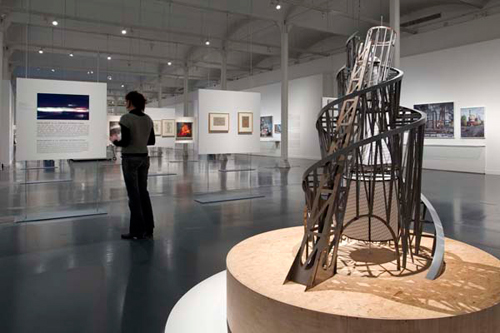
Russian Architecture 1915-1935 at CaixaForum Barcelona
Until the 15th of April, the CaixaForum in Barcelona is showing an interesting exhibition about the architecture and vanguard art of the Soviet Union between 1915 – 1935. The show is made up of 250 photographs, drawings and models which belong to Moscow´s Schusev State Museum of Architecture, and the Costakis collection from The Thessaloniki State Museum of Contemporary Art. This exciting new exhibition focuses on a period of major urban and architectural development in the ex-Soviet Union. The era starts with the arrival of Stalinism – a time of high political contention and violence, but also of economic growth, and the birth of the ideals of proletarian revolution, which sought to break with the chains of oppression and global poverty. During this period of growth, the Soviet cities were redesigned according to a political project of transforming the once agrarian society into an industrial one. Huge central buildings of power sprung up, as well as wide avenues, and the Moscow underground. The architecture, which was heavily influenced by the harsh lines of constructivism and rationalism, was designed to reflect the strength and rectitude of Social Realism, and became the hallmark of the time. Constructivism was born in the Soviet Union with the October Revolution, which sparked the belief in a new, utopian society, where art and politics combine for an ideal society. So it was that Kasimir Malevich coined the term constructivism to describe the work of architect Alexander Rodchenko. It was a conceptualisation of art as a service for the revolution; the aesthetic of architecture was based on a massive social objective whereby the imagination of an...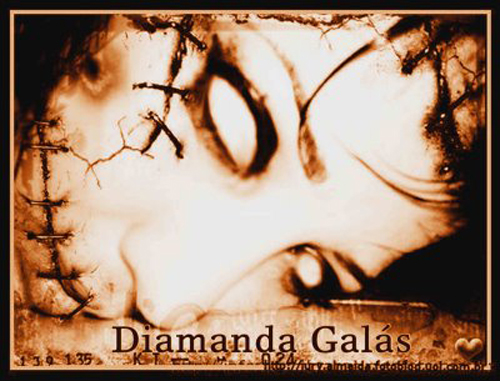
Diamanda Galas concert in Lisbon
This is one of those concerts you have to go to at least once in your life – and I´m sure that anybody who has already had the pleasure of the experience would agree with me. As well as being an undisputed music diva, Diamanda Galás is an artist like no-one else, and her three and a half octaves of voice, and power of musical interpretation are just two of the reasons not to miss out on this show. The career of the American-Greek singer kicked off officially in the beginning of the 80s. Her extraordinary voice, which she describes herself as “capable of the most terrifying sounds,” has taken her down a number of musical paths – from Jazz, to rock, via opera, blues, etc. All of these styles get the treatment of her unique voice – and the drama, groans and shouts which have become characteristic of her identity as a vocalist. Throughout her extensive career Diamanda has never ceased to amaze, with her particular way of feeling the music, the themes which many have described as dark – and her humanitarian work, which is where her latest show comes in. In Leiria on the 16th of April, she will perform “The Refugee,” a work inspired by the Turkish genocide of the Greek village in 1922 – as well as her interpretation of “O Prosfigas,” a song about the exile from the village of Smyrna. The concert in Leiria, which is an “introduction” the town´s “Entremuralhas” festival in July, is on 16th of April at 9.30pm at the José Lúcio Da Silva theatre. Tickets are 25 euros....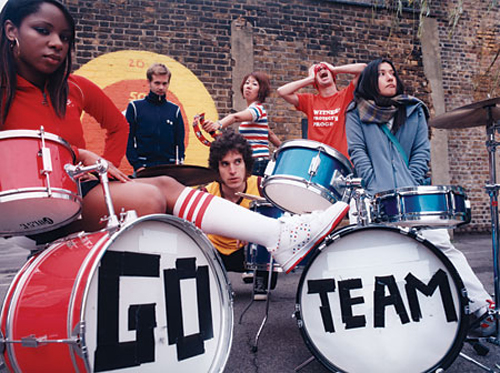
The Go! Team in Barcelona
The Go! Team never ceases to amaze. With a sound that ranges from post punk, funk, ska and noise guitar, the combination they put on stage is so highly energetic that you forget you´re standing still, and without realizing, you fleet. The sextet formed in Brighton, UK, is one of the favorite bands of all those “intense” kids who do not miss any festival, you know who I mean. Rolling Blackouts is their latest album. Under what genre should we label this new piece? Ranging from shoegaze to the sounds of epic trumpets in the style of blackexplotation films of the 70´s. The theme “Rolling Blackouts” is an ode to My Bloody Valentine that has no limits; it’s the most beautiful one. “Back light 8 track” is a hymn to a boxing movie of the 70´s, with little cries and voices of a super pop style. Of course there is no shortage of necessary samplers. “Secretary song” is another mash-up of 60´s pop and dreampop choirs. “T.O.R.N.A.D.O” is the most rap style one. Perhaps what best describes bands like The Go! Team is the postmodern effort to condense in the most obvious way all sound spaces where they come from. That is to say, it´s a proof of our time, they make clear the origin of each song and style, it is like having a display ready to be heard with no greater desire than entertainment. I stop and compare the phenomenon with all interpretations of tracks from blues, rockabilly and beat that multiple bands, in all continents of the world performed between the 50´s and 60´s. See for...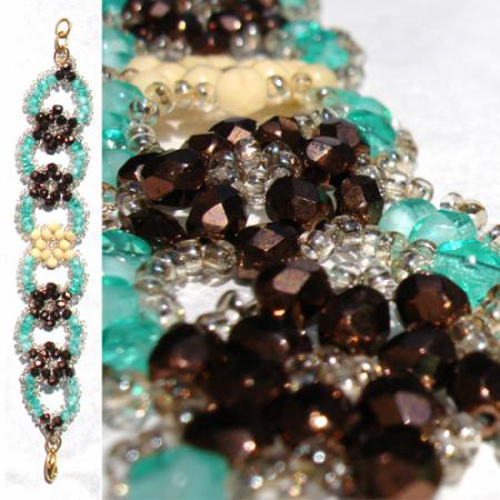
Glass Expo: Thousand years of art in Venice
On until the 25th of April at Venice´s Correr Museum is exhibition La Aventura del Vidrio: un milenio de arte veneziano. The show, which marks the 150 year anniversary of Venice Museum Foundation, is commissioned by Aldo Bova and Squarcina Chiara. The exhibition was created with the aim of both promoting and telling the story of the art of Murano and Venetian glass, and is organized into four sections: archeological glass, 15th and 18th century, 19th century and 20th century. On show are more than 300 pieces from the Murano Crystal Museum´s collection – some of which were recovered from the banks of the Venice canals, having fallen from ships which were transporting them abroad. The Murano glass name dates back to the 11th century, when Venice´s artisan glassworkers moved to the small island of Murano after a massive fire hit the city. Up until then, Venice had been the European leader in the production of glass, and so that this prestige was maintained, the special techniques and creative processes of the artisans became a closely guarded secret. Venice would go on to dominate the European glass market until 1700. The special feature of Venetian glass was its hard, refined sodium-based composition, making it colourless and transparent. The early pieces were simple shapes decorated with gold or silver enamel to make them look like jewelry. By the end of the 16th century, the designs had started to become more sophisticated, along with the technique. Pieces were smaller, lighter and more delicate, and glass filigree was developed, in which tiny strands of opaque glass were added to the transparent glass,...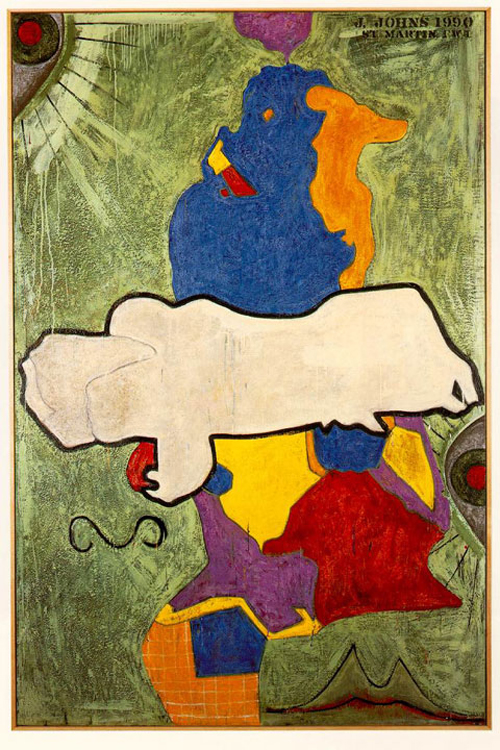
Jasper Johns at the IVAM
Samoa writer Albert Hanover relates in his strange novel Daughter of light how before hearing the story about its design, he only smoked Lucky Strikes because the package invariably made him think of the American artist Jasper Johns. He had already had fun with the word game of the American brand of cigarettes, allowing to identify a stroke of luck which the name announced with the lighting of the match (to strike a match) that would ignite the cigarette, and that, somehow, also evoked Johns and his elegant and incisive Duchamp irony which admirably illustrate works such as The critic smiles, consisting of a toothbrush metal mold placed on a plinth made of the same material. All in Johns, despite the deliberate banality of his themes and forms -or precisely because of it, as banal designs do not generate any energy anymore- is always elegant, starting with his exquisite and masterly treatment of the canvas painting that refers to the concept of inertia of Kenneth Noland paintings, and ending his interest in the idea of painting as object and not as representation. It was in Lisbon, however, while Hannover worked as a Spanish teacher at a language school, where the general director of Lucky Strike in Europe, then a student of him, assured that Johns hadn’t had any involvement in the design of the package, which was designed by Raymond Loewy, co-creator of the Shell logo and one of the biggest names in industrial design. In the original pack an area painted red on a green background represented a ball on a pool table -adding a new word-game to...
Conspiracy Theories
Anyone who finds themselves putting the phenomenons our society down to mysterious, unknown powers tends to get labeled a conspiracy theorist. It’s true that when the facts don’t add up, or there is no rational explanation for something, it’s easy to come up with a far fetched argument. Obviously, this isn’t the best, or only way to “truth” – but at the same time, automatically believing the “official” explanation from those in power won’t shed any more light on the matter. For every social event, there exists the accepted, official argument – and then the hundred or so “alternative” explanations and hypotheses. The idea that we stick with is not always the most logical, but usually the most dominant, or popular. That’s to say, the one which has been presented to us like a misile of misinformation – and is so overpowering that we can’t hear or make out any other possible ideas on the matter, regardless of their potential logic or common sense. If what people want is the truth, and objectivity – something which is pretty unattainable in any case – then they have to reject the idea of one singular “correct” explanation. That barrage of information reaches us sooner rather than later – and worst of all, it reaches our collective subconscious without even trying. And all thanks to a very subtle strategy of experimentation with human weakness, used on us by the media-propaganda specialists. If what is desired is reality, or impartiality – something which is impossible to acquire totally – we have to tune our ears, and open our eyes. To look further, and take more note of all the little,...