English
 Français
 Deutsch
 Italiano
 Español
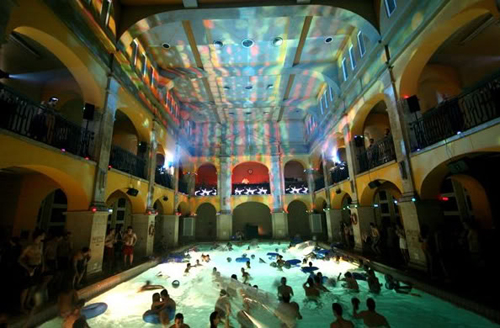
Cinetrip Ruda at the Baths of Budapest
Cinetrip party features visual effects, best music and most famous DJs for attendees to dance in different pools. March 5 will be a time to attend the parties that have revolutionized the amusement of Europe. The famous Rudas baths, near one of the main bridge in the Buda side of Erzsébet híd are used exclusively by men, although women are allowed to enter the pool in the open area since just a few years ago. This beautiful bathroom was built around 1550, and restored 16 years later by Sokoli Mustafa Pasha of Buda. It consists on eight columns that support a beautiful dome, under which there is the Turkish style octagonal pool. The contrast is produced with input from the sun rays that penetrate the dome and the brilliant turquoise of the pool bottom, produces an incomparable calming effect that is one of the main virtues of this place. In the Rudas spa is where the famous Cinetrip or Magic Bath parties are held, water parties that take place regularly in various weekends throughout the year, within these ancient thermal baths. The famous Cinetrip parties were born in 1998 and with a whole array of technology they transform the resort, full of lights, dramatic lighting, visual projections by VJs masters, dancers, water gogos to enliven the atmosphere and of course with electronic music world´s best Dj exponents. This parties bring together thousands of young people from varied parts of Europe dancing in the warm water springs, as an experience like this is not possible everywhere, where the party counts with water and light, pleasure and welfare. “Parties linked to...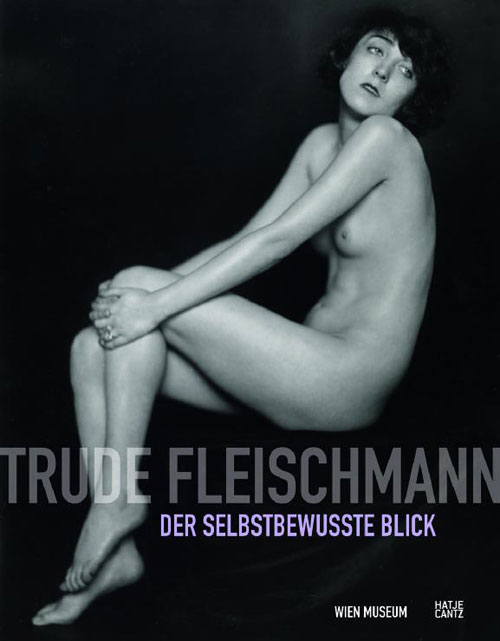
Trude Fleischmann exhibition: Der selbstbewusste Blick
Trude Fleischmann and her career are true symbols for independence and emancipation of women. Being a Jewish woman in Austria of the 1920s she faced many challenges, however she established herself as a very versatile photographer, a profession that traditionally was only occupied by men. Her most known works are portraits of personalities such as Albert Einstein, Karl Kraus, and Adolf Loos. She caused uproar in the 1920s with a series of nude images that were part of a study of the movements of dancers. After World War I she opened her own studio in Vienna and rapidly became one of Vienna’s leading portrait photographers. Her studio became a meeting point of the Vienna’s elite in art and culture. When Austria was forcefully re-integrated into Nazi-Germany during the Anschluss in 1938 the Jewish artist was forced to leave. After she spent time in Paris and London she moved to New York where she managed to successfully pick up her career. 20 years after she passed away the Wien Museum is dedicating a retrospective to her focusing on her time in Vienna. The exposition seeks to not only present her most known work but also unseen work to show her versatility and talent. The very appropriate title “Der selbstbewusste Blick” (the confident glance) stands for her confidence to not only pursue passion for photography but also the courage to use her talent to make daring experiments in photography. The Wien Museum is in possession of the biggest and most significant Fleischmann collection. The inauguration of the exposition was on January 27th and it will be open until May 29th. For...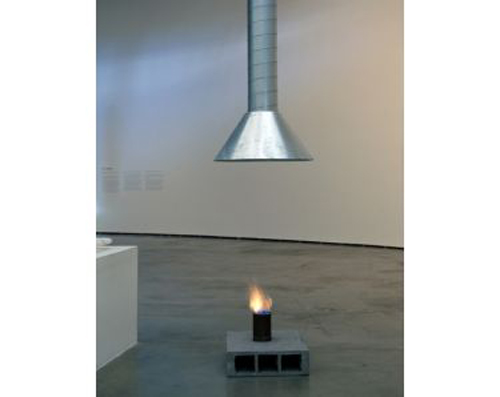
Asier Mendizábal in Madrid
Between 8th February and 2nd March, Asier Mendizabal will be showing at Madrid´s Reina Sofia Museum. The celebrated Spanish artist approaches art from highly political and ideological vantage points, drawing upon an idea of the popular imagination – it is this which is the defining force behind his work. Asier Mendizabal was born in Ordizia, in the Basque Country, in 1973. He studied Fine Art at the Basque Country University, and was granted a scholarship from Amsterdam´s de-Ateliers arts funds organisation. In 2010, he won The Spanish National Radio Critical Eye award for Art. Mendizabal, though of the post-Franco generation, has constructed his artistic imagination from a political aesthetic, examining the landscape, symbols, icons and linguistic codes of the movement of the revolutionary left in the 1970s. From his investigation into street subculture, and the left-wing punk-rock movement led by bands such as The Clash and Joy Division, arose the material for Mendizabal´s artworks, which encompass the cultural, the political, and the popular, forging a strong link back to Basque cultural history. In his constant search for the most suitable mode of expression, the artist alternates between sculpture, installation, design, cinema, video and writing, in order to best reflect the themes that drive him – principally, the ideology of the left as a unifier of people, and trigger for cultural change throughout history. Of his exploration of aesthetics, Mendizabal says it requires, “a specific way of thinking, with signs.” Immanuel Kant defined the aesthetic as a chain, or link of representations which is created when a feeling has been provoked by an object. If representations are marked by their...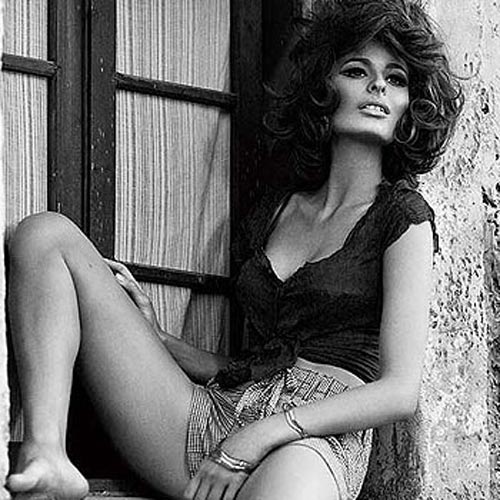
Lou Andreas Salomé y Viena: On lost books
It´s been said that T.E Lawrence lost the original manuscript of his most famous work, The Seven Pillars of Wisdom, after leaving it inside a telephone booth, moments before catching a one-way train that would take him far away. Though the re-draft of the book was met with extraordinary acclaim, the author, as well as those who had seen the original, always maintained that the first version was better than the one we see today. Readers may or may not realise that this has little to do with the literary and historical merits of the two versions. The reason – whether believed or not – has more to do with how the pages of the manuscript of the novel were used as cigarette rolling papers during Stalingrad. Could there be a more literary gesture? Literature up in smoke – it couldn´t fail to be his masterpiece, his best work. Lost books, all those never published or written, are an essential part – if not the most essential part – of literature. This sense of regret is what drives many to continue writing. One such story is the legendary never-published tome in which Albert Hannover related the sessions between Lou Andreas Salomé and Sigmund Freud, where she taught him about the psychoanalysis of Viena. The well-known story is that whilst perusing the old, hidden libraries in Caledonian Road, London, Hannover came across an October 1894 volume of The Yellow Book, edited by Aubrey Beardsley, which had an error on page 18. Though his activities as a double agent (maybe even triple) were sporadic, and often unclear, what is certain is that one day, Hannover also came across, in the sadly now extinct library of Marxist theory in Finsbury Park, a folder which contained what seemed to be the...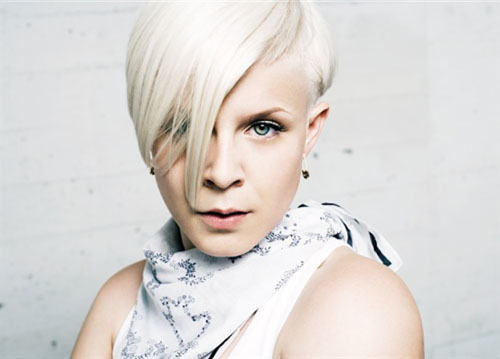
Robyn’s Pure Pop in Berlin
Robin Miriam Carlsson, or Robyn as she is better known, is one of Sweden´s most famous singers. She shot to star status with smash hits such as “Show Me Love” and “Do You Know (What It Takes),” along with her debut release “Robyn Is Here.” And after more than a decade of making music, she released trilogy, “Body Talk” in 2010. Much of Robyn´s success is down to her unique sound – a vibrant combination of pop music and quality dance-electro, peppered with echoes of the 80s, and hip hop beats. It´s music that doesn´t take itself too seriously, and avoids all the tired old cliches of mainstream pop. Robyn´s music career came up against some obstacles, and after considering quitting the industry for good, she parted ways with her label. It would turn out to be one of the best decisions of her life, after “Robyn” which she produced under her own label, Konichiwa Records, taking a riskier, less-commercial route, not only reached number one in Sweden, but saw her catapulted to the world stage of pop. In triology “Body Talk,” Robyn recreates that amazing musical energy that makes her the queen of intelligent pop. With collaborations with Snoop Dogg, the brilliant Royksopp, she strikes the perfect balance between the best of American hip hop, and Swedish dance music. On the 12th March, she´s playing a concert at Berlin´s Astra Kulturhaus – which means a guaranteed party. For more information about the concert: http://www.songkick.com/concerts/7215001-robyn-at-astra-kulturhaus Heloise Battista Don´t miss out on the party of the year – rent apartments in Berlin and enjoy Robyn´s hits. Translated...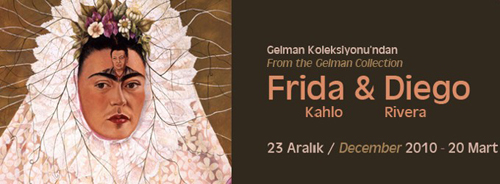
Frida Kahlo in Istanbul
Istanbul´s Pera Museum in Turkey exhibits the work of Frida Kahlo and Diego Rivera for the first time ever. The exhibition, which is open until March 20 2011, has an extensive collection of works from the Gelman Collection, including the best self-portraits by Frida Kahlo and rare paintings by Rivera. The exhibition consists of 40 paintings from the renowned collection by Gelman Twentieth century Mexican art, and includes the retrospective works by Frida Kahlo presented in Berlin and Vienna in 2010, so the curator Helga Prignitz-Poda. The xhibition will also include side events that document the life and the historical moments that influenced the work of this important painter, by Salomon Grimberg, an expert on Mexican artists. Also, the program Viva la Revolución will be shown, with screenings of films on the Mexican Revolution. Magdalena Carmen Frida Kahlo Calderon was born in Coyoacan, Mexico, in 1907. Her deeply personal and original painting , with a strong emotional and metaphorical content of her life, let the father of Surrealism André Breton consider her a spontaneous surrealist, a label that she refused by responding “I never painted my dreams, only I painted my own reality”. Indeed, her life had been a chain of pain that lodged in her body until her death. In 1926 she suffered a traffic accident that left her with irreversible damage to the spine when a tube embedded in her hip and pelvis, which also left her sterile and unable to conceive children. This accident marked her life and the intensity of her work. She began painting during her convalescence and it required body efforts that set...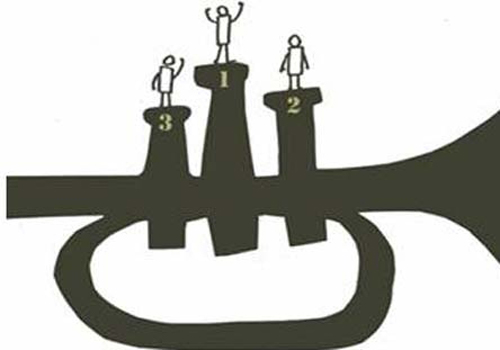
Get Jazzed Up in Barcelona
More than any other music, the good people of Barcelona seem to embrace jazz. Throughout the summer months there is free jazz in the parks, and many a jazz festival passes through the Catalan Capital each year. Most nights of the week there is jazz to be heard somewhere in Barcelona. If you´re in the mood for something soulful, then check out these Barcelona jazz hot spots. JAMBOREE This is the first place to look for live jazz. Jamboree has music 7 nights a week, with a jam session on Mondays. Local and international jazz acts play at this hip and central Barcelona club. Tickets for concerts at Jamboree range between 10 and 15 euros, but never more. This low price means that all sorts of people come to Jamboree to see music. Check out their line up online:http://www.masimas.com/jamboree/ LUZ DE GAS This posh jazz club is known for its chic ambiance. Shows at Luz de Gas usually include two sets, an opener at 9pm and a second act around midnight or 1am! Some big names in music have played here, such as the Alan Parsons Project, Bonnie Raitt, and Noa. Ticket prices vary quite a bit depending on who the musician is. Expect to pay anywhere from 10.00 to 20 euros a seat (or more). See their website for up-coming concerts. http://www.luzdegas.com/ HARLEM On the other end of the spectrum from the refined tables at Luz de Gas, is Harlem Jazz Club. Harlem is a little more rough around the edges, which is why it is popular with many Barcelona locals. Despite the name, Harlem offers up more...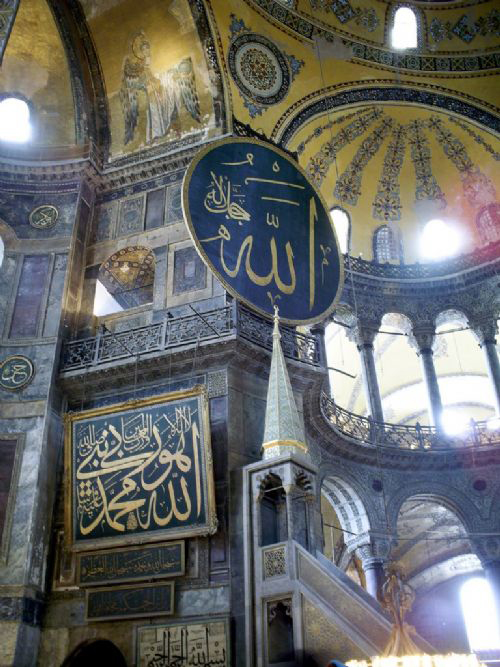
Restoration of the Santa Sofía
Though there are always exceptions, lovers of Istanbul could generally be divided into those whose tastes lean towards the Blue Mosque, and those who, if pressed, would have to choose Santa Sofia instead – just as in the times of Hippodrome, it would have been equally difficult to sit on the fence between the green and blue factions. There are few places quite like Istanbul and Bosforo, with their seductive aromas of the Orient – to use an old proverb. Despite it´s conversion to a mosque in 1453, despite the four magnificent minarets flanking it today, despite the stunning caligraphy under the seductive name of Allah and the eight prophets of the immense medallions suspended in the interior, despite the fact that the crusaders plundered the temple, taking to the Sainte Chapelle in Paris the gold from the mosaics, the crown of thorns of the Nazareth – Santa Sofia will always remain in the Western imagination as the most powerful example of the extraordinary wonder of the Byzantine Empire. Emperor (between 527-565) Justiniano, in the attempt to strengthen his public image, not only communicated with God in a sophisticated courtly ritual which ended up being adopted by the Greek Orthodox church, but, wishing to be the central point for all politics, as well as religion, he also constructed a grand imperial palace, and a church – the Santa Sofia of Constantinople. The Santa Sofia promoted a close identification between Christ and the emperor, who saw himself as his representative. The emperor had an unusual, bold approach to architecture – the combination of basilica columns, a central, circular-shaped building, the...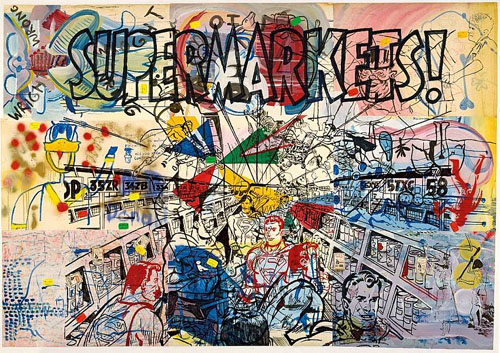
Tribute to Sigmar Polke
The Akademie der Kunst in Berlin opened a fantastic exhibition presents some of the most iconic designs of artist Sigmar Polke Jan. 14. Klaus Staeck, a close friend of Polke, pays tribute to more than 40 years of creative friendship between him and one of the most important German painters in this personal exhibition at the Academy of Fine Arts in Berlin. Staeck was not only editor and gallery owner of the famous painter, but also a creative partner. Now 90 large-format drawings are presented us, which Polke devised during more than 40 year of career before his death in 2010. He died prematurely at the early age of 69; one of the most international artists from Germany, which emphasized not only for its bold criticism, but also for his elegant sense of humor. Polke was born in northern Germany; he was a multifaceted artist who worked outside the traditional aesthetic parameters and academics. In the 60´s he became known as one of the founders of “Capitalist Realism”. With humor and critical distance watching our reality marked by a rapacious capitalism. The architect detected with insight empty political slogans and the dark temptations that lay in the depths of repression and bourgeois society. Without doubt, Polke was becouse of this one of the most interesting German artists, as he was able to bring out the ethical contradictions in our postmodern society. More info: http://www.adk.de/ Heloise Battista If you want to attend one of the most moving exhibits and, in turn, highlighted of the year, join a tour of the Akademie der Kunst in Berlin, and be inspired by the...