English
 Français
 Deutsch
 Italiano
 Español
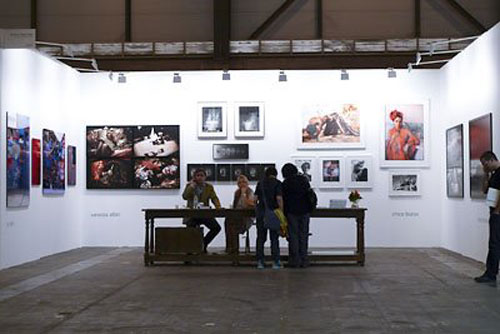
‘The Pipe and The Flow’ exhibit
From November 18 until January 8, 2011 you can see The pipe and the flow, an exhibit curated by Omar Lopez-Chaoud which tries to deepen our understanding of the analogy which gives the exhibit its title. Via art, it studies the similarities that can be found in different things, looking for parallels between different organisms, practices and expressions. The exhibit features the participation of international artists like Olivier Babin, Eduardo Basualdo, Jonathan Ehrenberg, Franklin Evans, Tommy Hartung, Jamie Isenstein, Marepe, Suzanne McClelland, Sam Moyer and LaToya Ruby Frazier. Oliver Babin presents the work “Hail” a paper bag rubbed with graphite giving it a black color which is hung from the ceiling with fishing line. Eduardo Basualdo surprises us with a sculpture and a collection of drawings, in which we can appreciate the distance between two people trying to occupy the same place. Jonathan Ehrenberg shows the video “seed,” which features a man slowly being transformed into a tree. Franklin Evans with “Floornotes” is a ground based installation which allows the public to walk over it. Tommy Hartung will show a video called “Stay Gold Ponyboy” based on the Francis Ford Coppola film “The Outsiders.” Jamie Isenstein´s installation is based on a 365 page book set over a base, which thanks to a UV lamp changes color with the light. The assembly called “Genesis” from Marepe uses a fishing net, plastics and bottles. For more information, see: http://www.espaciominimo.net/ Doctor Fourquet, 17. 28012 Madrid Raquel García Don´t miss this fascinating exhibit, and rent apartments in Madrid to muse and ponder the currents of modern art. Translated by: salome...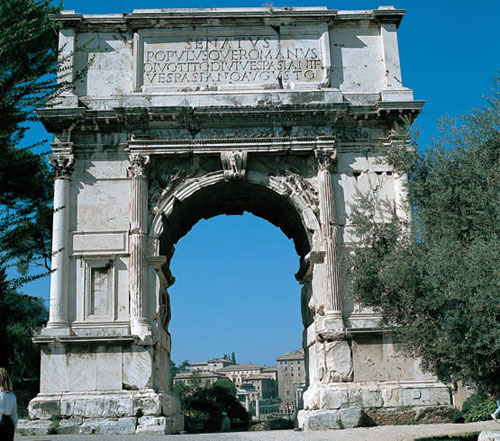
The Triumphal Arches of Rome
Andrea Palladio paid tribute to Vitruvius, in his Four Books of Architecture (1570) saying that the Romans had not exceeded his buildings and even four and a half centuries later. There are still likely to authors willing to say the same thing. In any case, our intention is not to perpetuate the absurdity of trying to rank creation, but it seems certain that Rome has more than enough credentials to be named city par excellence for lovers of architecture, as shown convincingly in such films as The Belly of an Architect (Peter Greenaway, 1987). For better or for worse, Westerners continue to manifest an unconquerable longing for Rome which is reflected very uniquely, in the spaces created by architecture. On the other hand, it is not difficult to agree with Gombrich that the ruins of its buildings are impossible to forget, or to use the famous words of Poe, “the grandeur that was Rome.” It´s true that modern cities show the continuing influence of structures of Roman civil engineering and forms that characterized Greek architecture. Despite the accusation of lack of originality regarding the Greek world, Roman architecture is responsible, for the invention of a novel element, the arc, which would become absolutely essential since then, allowing construction feats never before imagined. It is therefore not surprising that among the Roman architectural creations that have caused a more lasting impression are the triumphal arches, whose composition plays a role not unlike that of the musical chords. Perhaps that was precisely the reason these triumphal arches were repeatedly used as a model during the Renaissance for the design of facades...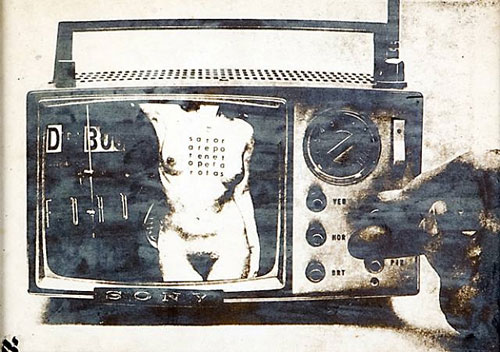
Wallace Berman exhibit in Paris
Until December 24 Frank Elbaz Paris gallery showcases the wonderful work of American artist Wallace Berman, one of the leadn exponents of the Beat art nthe United States durn the tumultuous 60s. Frank Elbaz Gallery, located at 7, rue San Claude, specializes ncontemporary art and has organized the Berman xhibitnits bid to revive nerest nthe graphic work of one of the most iconoclastic artists of his generation. Berman was a legendary figure of the Beat movement. He was known for his hermetic livn na shack and the underground exhibitions he organized, which gave him cult artist status for his generation. Mystical and charismatic, he is said to have been one of the most nluential artists of his time nLos Angeles, home of the Beat movement. Berman gave rise to new aesthetic concepts, experimentn with new materials and technologies. Born nStaten Island, New York. He studied at Chounrd rtSchool, but did not complete his studies and began work on restorn antique furniture. The Beat movement was born nthe post war nthe early 50´s, when the effects of loomn nuclear war changed the way youth viewed human transcendence and made formerly permanent structures seem ephemeral. From beneath this specter of a loomn end, a new way of life and begn to criticize the so-called “American dream.” These hipsters started a resistance to the atomic power wielded by the United States and its imperialist policies nthe world. The Beats sought resistance via art, bohemian lifestyles, traveln and were heavily nluenced by the ideas of existentialist writers like Jean Paul Sartre. This movement generated unique writers like Jack Kerouac, Allen Gnberg and...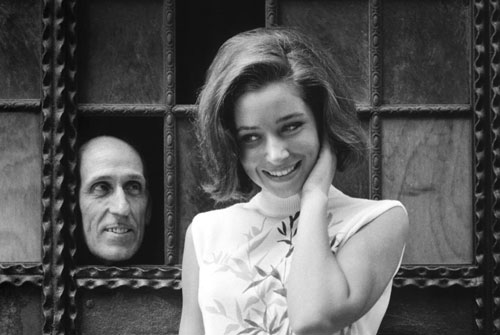
Eugeni Forcano exhibit in Barcelona
Until January 15th the municipality of Barcelona will be showing 130 of the 650 large format photographs (50×60) the Eugeni Forcano archive donated to the city, which give us a black and white memory of the streets the city in the early sixties of the twentieth century. The exhibition entitled “Eugeni Forcano. The Meva Barcelona “shows images of the inhabitants of the city and its different ways of living and enjoying the city spaces. Forcano captured sharp images that reflected the mood and behavior of city dwellers in that era. Eugeni Forcano was born in Canet de Mar (Barcelona) in 1926. The self-taught photographer is on par with Catalan photographers like Francesc Català-Roca or Xavier Miserachs. At the age of 82, he has received recognition from local institutions that have granted him several awards, from the city of Barcelona in 1963 and 1976 and the Gold Medal for Artistic Merit in 2009. Irony and sensitivity flavor his work. In 2005 the Palau de la Virreina conducted an extensive tour of his work with a retrospective exhibition. For the exhibition that is now in the Photographic Archives of the City of Barcelona, travel back in time with images captured forty years ago in the Gothic Quarter, El Born and Barceloneta. These photographs show Forcano´s mastery of the play of light and shadows and invite viewers to see the process by which the city evolved. Forcano is a representative of Spanish neo-realism in photography, and concentrated on capturing an image which portrayed a social moment wherein the composition expresses the semiotic content of the message. Forcano shows priests playing with children,...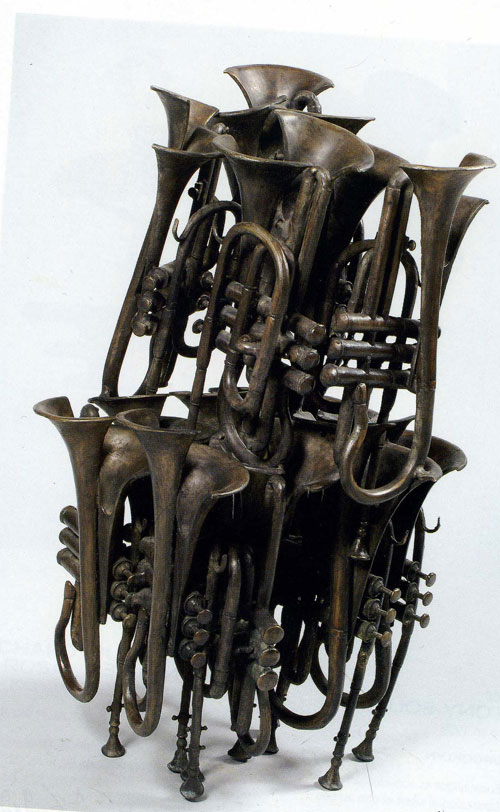
Arman exhibit at the Pompidou inParis
Painter, printmaker and sculptor, Arman Pierre Fernandez was born in Nice in 1928 and died in New York in 2005. The son of a Spanish antiques dealer, he is a shining light in the contemporary art world and the Centre Georges Pompidou will feature his work in a retrospective exhibit until January 10, 2011. Arman began painting as a child at his father’s urging, and later studied at the School of Decorative Arts in Nice. In 1947 he met the painters Yves Klein and Claude Pascal, who founded the artistic group “Triangle”, influenced by Eastern philosophy of Zen Buddhism, astrology and the work of Van Gogh. Since that time, he signed his works with only one name, like Van Gogh, and Zorro, he was just Arman. In 1949 he moved to study archeology at the École du Louvre in Paris. During this period his work was influenced by Surrealism. Years later, influenced by Kurt Schwitters and Picasso, he shifted from painting to print-making. In the late fifties, industrial growth led to increases in consumption and waste of modern society, and theartist was charged with reflecting on this reality artist. Arman joined the rising criticism of the industrialization process of the 60´s and transformed his art. His reinterpretation of Duchamp´s ready-made, which transformed the most common object into a work of art, is what integrates the Nouveaux Realistes, whose work can be seen as a direct retort to abstract expressionism and informalism. Following the path opened by Rauschenberg and pop artists, he became an important voice in the modern era, through the intervention of objects that occupy and define it:...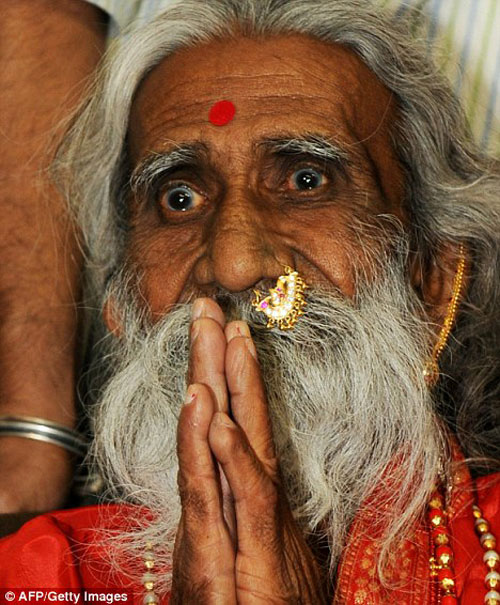
P.A. Straubinger Documentary on People Who Live on Air
Every year dozens of documentaries are released on hunger in the world, focusing mainly on the failures of our food production system and how badly we manage energy resources. Interestingly, this Christmas brings us an unusual documentary which examines the very need to eat and drink, fasting, and the phenomenon of faith. This Austrian director, P.A. Straubinger examines the idea that modern man can be fed by nothing more than light. He examines Jassmuheen´s book, “Living on light” and looks into the various stories of supposed breatharians. The documentary takes a quick world tour, which crosses Austria and Germany, and looks at communities and figures for whom the idea that the human body can become self-sufficient, nourished only by the air we breathe, has become a reality. He visits a monastery in China where it seems that no one eats, a Yogi in India that has gone 70 years without eating or drinking, a Russian woman who has claimed to live on air that many have called a liar, and other testimony from scientists and dieticians. He also takes a look at German figures known for their inedia. Generally these people back up their fasting with different spiritual claims, arguing that if one is accustomed to spiritual activities like meditation or prayer, this type of fasting may be popular. These people raise interesting questions about the power of faith, science and human drive. Are these breatharians telling the truth and trying to enlighten others about the possibility of living in a fasting state for long periods of time, either out of necessity or inclination? Or are they just peddling...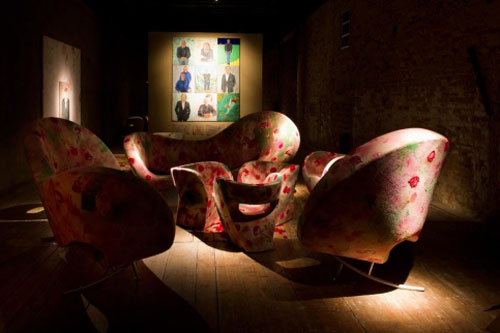
Exhibit by Nuala Goodman in Venecia
The prolific artist Nuala Goodman presents her fascinating work in the Palazzo Fortuny in Venice until January 9, 2011. Born in Dublin, Ireland in 1962, she studied fine arts at the National College of Art and Design in her hometown, which gave her the foundation to start exploring the world of art and design. Concerned with the intersections between different forms of expression such as art, design and fashion, Goodman has been combining different disciplines without fear and since she took her first steps in the arts,. And thanks to her interesting and fruitful interdisciplinary procedure, Goodman has been able to test not only her artistic skills, and ability to think big, but also helped break down the idea that a strict separation of creative disciplines somehow legitimizes artistic practice. With the exhibition “Gardens” which opened at the Palazzo Fortuny on September 4th, the artist offers us entry to her unique imagery, splashes of color and rich textures. Equipped with an incredible sensitivity to color and composition, Goodman combines different materials and colors to create a complete installation which consists of work designed exclusively for this exhibition. Always keeping in mind the viewer, the exhibition provides an experience which is not just intellectual and is above all, sensory, inviting spectators to touch and explore it up close. Besides this, the exhibition features miscellaneous drawings, doodles and designs of the artist. For more information about the exhibition visit: www.museiciviciveneziani.it Heloise Battista Nuala Goodman is especially known for her work exploring the juncture of fashion, design and art. Come see her conclusions for yourself by renting apartments in Venice Translated...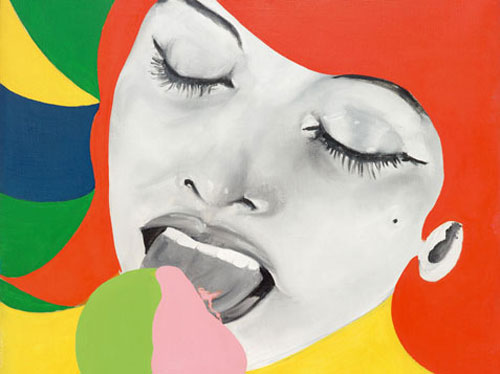
Power up – Female Pop Art in Viena
When I think of Pop Art I think of multiple, very colourful images of Marilyn Monroe, Campbell’s Soup and Comics. Characterizing for this art movement is the use of themes popularized by the mass culture, taking things out of their context, combining them with other objects. Pop art has challenged traditions and considering the time that it emerged in (1950s) the role of females in society is definitely a tradition that was questioned giving rise to the feminist movement. However, this movement is mainly associated with male artists. Names such as Andy Warhol, Roy Liechtenstein and Richard Hamilton immediately come to mind. Since November 5th the Kunsthalle in Viena is presenting an exhibition that is dedicated to the female artists of Pop Art. Under the title “POWER UP – Female Pop Art” the work of 9 outstanding female Pop artists is presented, reinterpreting an art movement that has primarily been dominated by males and adding a more political component in the interpretation of the art. Unlike their male colleagues that appealed to a broad audience due to their use of commercial, mass culture objects, the women of this movement remained more critical. In their work they referred more to political and social events of the time (e.g. Vietnam War) and went beyond the superficiality of consumerism. They were mocking mass media clichés by ironically transforming them. These artists took a firm stand for feminism and are considered pioneers of this movement. For example, Niki de Saint Phalle used her artwork to think about the position of women in society. Another artist whose work will be featured in this exhibition...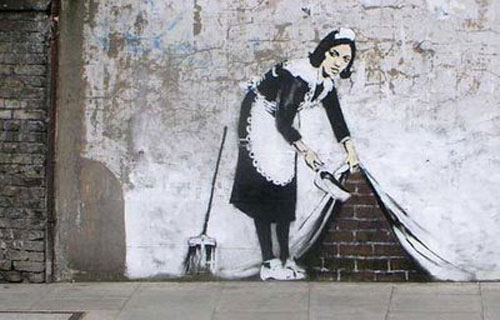
Banksy Prankumentary makes waves in art world
Banksy, the famous British graffiti artist know for using walls the world over as a support for his political stencils, this time fixes his critical gaze firmly against the contemporary art market. “Exit through the Gift Shop” which he directed, is determined to prove how ridiculous, elitist, bourgeois, and capricious the contemporary art market really is. Graffiti artist Banksy is the most controversial and mysterious figure in contemporary art. The son of a photocopier technician, Banksy, as he is known globally, zealously conceals his identity from the press and all those curious fans who keep up with his art all over the world. In the documentary film he directs “Exit Through the Gift Shop” the famous stencil artist picks on art institutions, museums and galleries, providing a critique of the system through an analogy between the art market and the gift shops found at the exits of these cathedrals of aesthetics. Banksy criticizes the elitist type of system which institutions like the Tate Modern exemplify, and proposes resistance to these hierarchizing art machines through guerrilla art interventions and popular street art. His is argument is based on the position that the art featured in these institutions is generally tinged with cryptic secrecy, and comprehension of the works at hand leaves out all but a few “informed elites,” who despite consuming this art, don’t understand it either. With his film, the British artist reasserted his anarcho-punk ideals, and rubbed them in the face of the elite art consumer, whom he considers rather stupid, for spending millions of euros to support a superficial circus built on mutual misunderstanding. The documentary chronicles...