English
 Français
 Deutsch
 Italiano
 Español
Seville April Fair
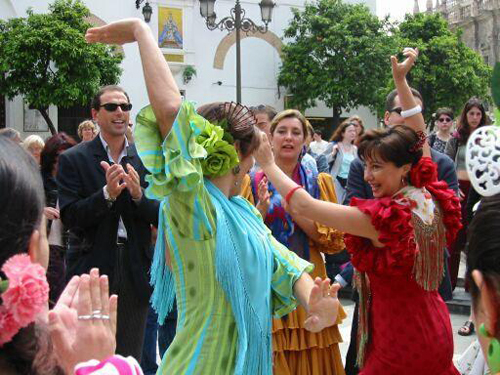
This spring, the traditional Seville´s April Fair will be held from 3-8 May in the popular district of Los Remedios, where it has been held since 1973. It is an area of ??a kilometer and a half long and half a kilometer wide, where the streets are decorated with lanterns, where you can see horses, horsemen and carriages, people singing and dancing day and night showing off their gorgeous sevillanas and popular flamenco dresses. The beginnings of the April Fair date back to August 25, 1846, when Mr. José María de Ybarra (Basque) and Narciso Bonaplata (Catalan) drafted a proposal which they led to the City Council, where they asked to be authorized to organize an annual fair on days 19th, 20th and 21st of April. They were granted permission after several meetings and negotiations with the mayor. In March 1847, Queen Elizabeth II granted Sevilla the privilege of fair, and the following April the 3-day fair was held for the first time. The first livestock fair was at the Prado de San Sebastian and was very successful. It consisted only of 19 stands, that mixed farming and fun. It was from 1920 when the fair started to be more similar to what’s now, which is currently visited by many foreigners, onlookers, partiers and mostly artists and celebrities that give it an air of glamour. The main gate to the show is very characteristic, which stands at the fair since 1949. This gate is hand-made decorated is dedicated each year to some event or important monument of the city: the Torre del Oro, the Giralda of Seville, the centenary...
20th anniversary of the Wave Gotik Treffen
This year the famous and largest Gothic festival in the world is 20 years old and comes with everything, a lot of surprises, souvenirs and novelties that not only seduce people from the dark world, but everyone who loves good music and magic of the most beautiful costumes and staging of the Gothic scene. One of these first surprises is that it has changed its dates; the Treffen this year will be held between the 10th and 13th of June, which enables best weather for many activities planned. What has the Wave Gotik Treffen that other festivals do not have? Well, it has not earned the fame and good reputation in vain, one of the first things that stands out is that the city of Leipzig is turned into a great Gothic city during the three-day festival. The concerts are not performed in a single spot, like it happens with most festivals, but throughout the city, mobilizing all services at their disposal for the occasion. Thus, the TRAM service is free for everyone attending the festival. And the point is that the 8 or 10 scenarios prepared for the occasion, not to mention the activities devoted to classical or erudite music, deserve having free transport all day and night. The Treffen is unique in its kind. Since the first attempts to hold it, in 1987, with bad results due to the situation of in the country that time, to date, it has grown so much that it is now a fundamental part for tourism in Leipzig, as it is already part of its identity as a city, the huge...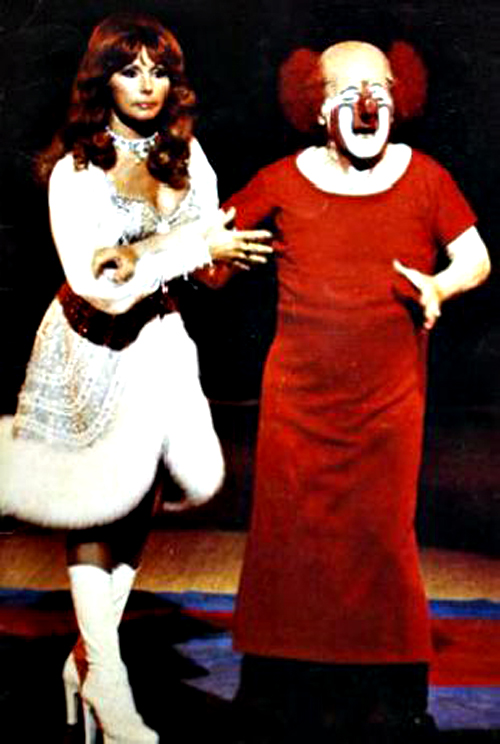
A Century of the Circus: Paulina Andreu Rivel Schumann
The cultural phenomenon of the circus has gradually undergone a resurgence, thanks to the recent recognition of the complexity of the circus arts. Even if circuses have often been seen as places of animal exploitation, this recognition of its aesthetics, and its contribution to fine art is an opportunity to delve a little deeper. Beyond the “cruel” label of the spectacle is a wonderful way of life, whose inhabitants live for their art – an art which forces them to adapt and sacrifice a lot. Itinerant, ephemeral and diverse, the circus troupe traverses the globe – great cities and small villages alike – showcasing it´s joyful, virtuoso world. The big top and all that goes on inside it involves a lot of hard work. The inhabitants of the circus are its creators; tightrope walkers, trapeze artists, jugglers, magicians, clowns – each person has their own special role in the circus micro-community. Circuses are often made up of entire families, and is a lifestyle which is passed down, from generation to generation. Telling these stories – or at least one of them – was the aim of exhibition “Un siglo de circo” (“A century of the circus“), where we learn about Paulina Andreu Rivel, daughter of famous Barcelona-born clown Charlie Rivel.* She may not be as well known as her father, but Paulina Andreu Rivel has had an active career in the circus – on the eve of her 90th birthday – is almost a century old. A collection of photographs tell the story of Paulina Rivel, and the many well-deserved tributes she has received over the years – the...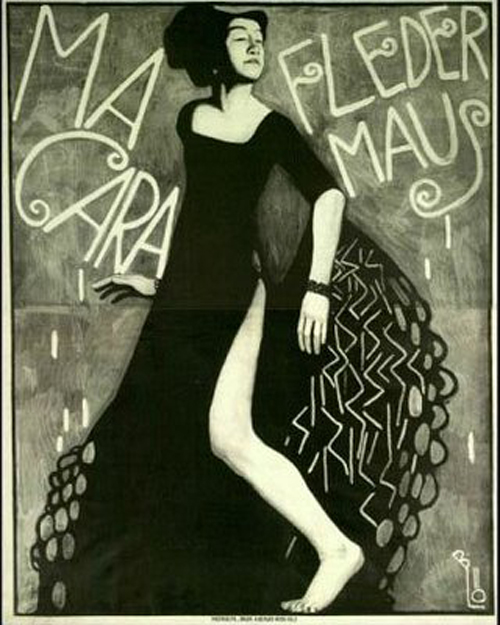
The Fledermaus Cabaret
Most likely, the Cabaret Fledermaus, designed in 1907 by Josef Hoffmann, and famous ever since for the vibrant, fun and hedonistic mixture of the mosaic made from the glazed ceramic tiles on the walls, and the checkered black and white floor of the hall, filled with the legendary Fledermaus chairs – is the most popular, and known creation of Viennese movement, Werkstätte (Talleres Vieneses). Its origins can be traced back to Fritz Waendorfler, a man of refined tastes who dreamed of a place of sophisticated entertainment in Vienna city – it was a concept along the lines of the Art Nouveau ethos. Art Nouveau encapsulated all areas of life related to the artistic – it was not only limited to the world of dance, theatre, song and literature, but anything at all which possessed a hint of the aesthetic sensibilities attached to the name. The beginnings of the architectural planning of the building correlated closely with those of another of the Wiener Werkstätte´s grand creations – the Palais Stoclet de Bruselas (1905-1911) – the use of simple, cubic forms, contrasts of black and white, and chiselled metal decorated with garland shaped relief. Since the Cabaret Fledermaus hall was wide rather than long, the space between the performers and the audience was significantly reduced, and was completely taken up by the wonderful chairs – a layout which would become a classic of 20th century design, and an ideal distance of stage from audience. But it wasn´t just the famous Fledermaus chairs which made the project a great feat in design. There was also the lighting, the decor, the crockery, and...
Antoine-Ignace Melling and Istanbul
It is said that in the late eighteenth century Hatice Sultan, sister of Ottoman reformist Sultan Selim III and bowed with creative curiosity for news from the West, fell in love at first sight with the gardens that festooned the former Danish trade ambassador´s mansion in Istanbul and immediately wanted a natural environment like in his palace. Without caring about the scandal, she surrendered to the desire to walk when out on a whim around a Western-style garden, a maze of roses, acacias and lilacs she claimed to have dreamed of since childhood. In her dream there was a crystal ball, the base of a statue and a winged lion covered by nets of an unseen colour produced by stylish and tiny floating women working on stranger looms in a small annex pavilion, which years later she identified in an English painting as an European kiosk. Apparently the painting was a gift of Antoine-Ignace Melling, the person recommended to her as the designer of these gardens that she so desperately desired. Born in 1763, Melling was an artist, architect and German mathematician, in whose veins ran also Italian and French blood. At the age of 19 he left the city of Strasbourg to obey the call of the East, in line with the emerging Romantic wave beginning to stir the conscience of Europe. Thus he came to Istanbul, where he would inhabit for the following two decades of his life. Melling not only designed neoclassical style gardens and worked as an art adviser for Hatice Sultan, but he also scheduled annex pavilions and internal arrangements to the summer palace...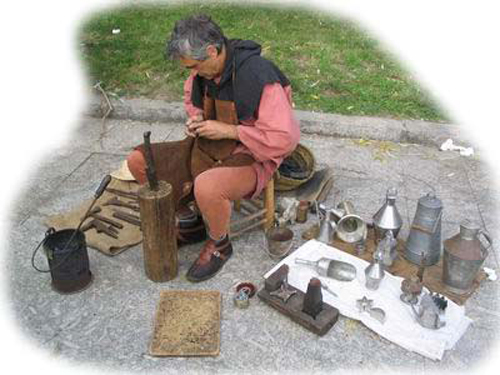
Montblanc Medieval Market
The story goes that Montblanc was at the mercy of an evil dragon which had brought much disgrace to the village. One day the town, fed up of all the suffering, got together, and made a pact with the dragon, so that he would stop his path of destruction. The agreement was that, every now and again, the village would offer somebody up to the dragon, to quench his thirst for blood – and that the name would be drawn out of a hat. So, one terrible day, the chosen one happened to be the daughter of the King of Montblanc. Knowing that his daughter was a villager just like everybody else, it was with great sadness that the King had to obey the order. The princess began her journey to the dragon´s den – but just as she reached the entrance of the cave, there appeared a gentleman riding a white steed who introduced himself as George, and announced that his mission was to save the princess, and the village from the evil dragon. A great battle commenced between George and the dragon. Finally, the dragon was killed, and the village was free. Legend also has it that in the spot where the dragon died, grew a bush of red roses. This took place on the 23rd of April – and is celebrated with San Jordi, who is the patron saint of Catalonia. Medieval week is commemorated with a dramatisation of the legend of St George in the beautiful town centre, during which the “blood” of the dragon is drunk by the visitors to the fair. There is...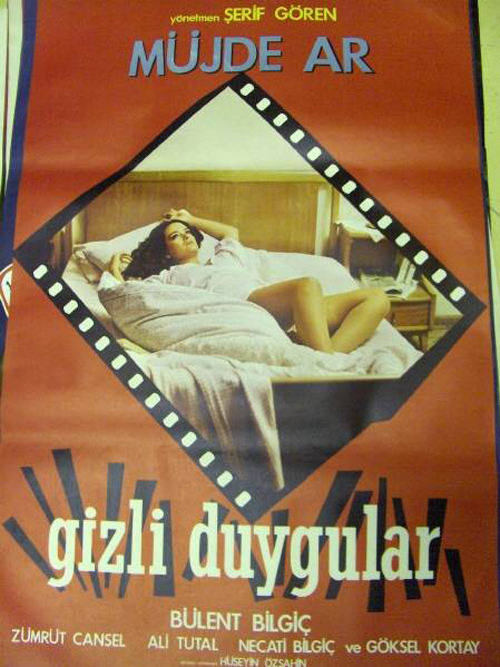
The new Turkish cinema
Empress Theodora (501-548) is sad and significantly more famous for the scandalous and promiscuous sexual prowess bordering on the pornographic, without doubt relying on her past as a circus prostitute and actress, credited with clearly defamatory intentions of her contemporary Procopius of Caesarea in the Secret History which, due to her important work as a state woman and feminist legislator avant la lettre. Not only was she at the forefront of a decisive role in all significant developments during the reign of her husband the Emperor Justinian I. Moreover, among others, she pushed laws which forbade the punishment for adultery regardless of sex, governed the right to abortion, allowed divorce by women´s own decision as well as free marriage between different races, religions and social classes, imposed death penalty as punishment for rape, prohibited forced prostitution and regulated brothels so that they were under the control of women themselves. At least since her time, largely because of Procopius, the occidental imaginary of the Anatolia region is usually associated with hedonism and pleasures of the body. To this, the existence of a long, refined and successful tradition of erotic literature and the heady world of light perfumes, aromas, textures, colors, clothes, beverages, sounds and songs that somehow turned Istanbul into the place where the East begins to unfold its many sensory promises has undoubtedly contributed significantly in Minor Asia. Hence, perhaps, that since the early sixties until the coup of 1980, the erotic film industry representing more than two thirds of Turkish film production. At first, the erotic content is inserted more or less naturally in the romantic comedies and...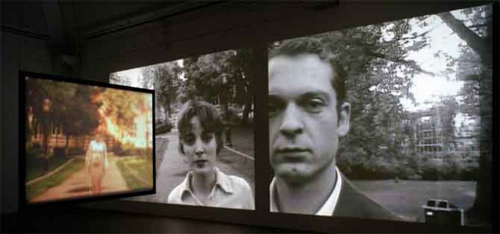
The Cinema Effect: Illusion, Reality and Moving Pictures at the CaixaForum Madrid
CaixaForum in Madrid The Cinema Effect: Illusion, Reality and Moving Pictures until April 24. The exhibition is an interesting review of the influence that cinema has had in shaping the 21st century visual culture. The exhibition is organized by the Hirshhorn Museum and Sculpture Garden of the Smithsonian Institution in Washington, with support from the Broad Art Foundation and the Audrey and Sydney Irmas Charitable Foundation. Cinema is in our unconsciousness through images and social representations constructed in the contemporary imagination. Along with advancing the technique to produce and play movies and documentaries using computers and televisions, video art work is increasingly popular and invites us to project ideas via the image. Illusion and reality intersect in the sample and the ones who call to decode these two proposals are international artists Isaac Julien, Omer Fast, Runa Islam, Ian Charlesworth, Ferry Tribe, Mungo Thomson, Julian Rosenfeldt and Paul Chan. They summon us to discover the reality of their dysfunctional compositions which communicate us with the unconscious construction of images: dreams. The filmmaker Isaac Julien, born in London in 1960, in his complex works on the search for racial and sexual identity in a world dominated by the stereotypical image of beauty, correctness and everyday life, has done interesting video art works where he plays with dreamworld poet that treats mediation on the cultural impact of global migration. Runa Islam, a filmmaker born in Bangladesh in 1970, inspired her documentary video art work in avant-garde Franco-Swiss filmmaker Jean-Luc Godard, one of the most influential representatives of the Nouvelle Vague, the critical and poetic acidity of his images. His films have...
The Classic Real Madrid – Barcelona FC
In the last two years, the football league in Spain – which is one of the three champions of the world – has been determined in the Spring, at the stadium Santiago Bernabéu, with the classic match between Real Madrid and FC Barcelona – the two best teams in the world. In spite of the fact that since Pep Guardiola took over the Catalan team in 2008, the football of Barcelona has turned into the worldwide benchmark for the sport, as it continues to break records and gain new titles – in the last two editions of the League, the game has only been won in the second half when at the Madrid stadium. This just proves not only the Madrid competitive streak – who are unable to give over a defeat until right at the last minute – but also the all-round quality of the team, which is full of international figures who have just been unlucky enough to come up against one of the most memorable and formidable line-ups in history. Indeed, it seems an indisputable fact that Barcelona under Guardiola has reached an unforgettable level in the history of football, up there with the Madrid under Di Stefano or Milan under Arrigo Sacchi – the stuff of legends. It´s not unusual to hear Barcelona being referred to as the best team of all time – a label which arose from games such the one in the first round of the League against Madrid at Camp Nou, their brilliant home stadium. A fired up Barcelona whipped their opponents with a deserved 5-0 score, which has gone down...