English
 Français
 Deutsch
 Italiano
 Español
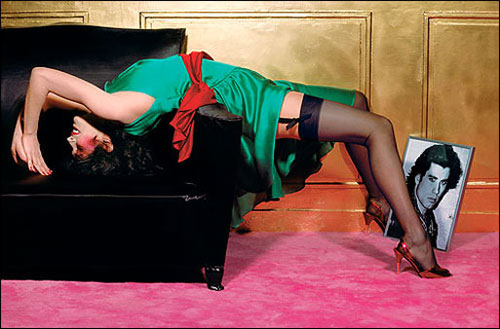
Guy Bourdin has first exhibit in Spain
Guy Bourdin is one of the most relevant photographers of the 20th century, and is coming to Spain for the first time to present his work in an exhibition in Madrid, that will show the most important moments of his career. Guy Bourdin is one of the most famous fashion and advertising photographers in the world, and although a lot of his colleagues are experts as well, he is also one of the most influencing artists around. For the first time, his work will be shown in Spain in the Sala de Exposiciones Del Canal Isabel II de la Comunidad de Madrid from the 14th of September until the 14th of November. The title of the show “A Message for You” alludes to the complex mind of a photographer, and tries to dissect what it is that he wants to communicate and show to the world. Now the work that he did during his career, that lasted over three decades, will be shown in different art galleries and museums all around the world. For instance in the Victoria&Albert Museum in London, the Jeu de Paume in Paris or the National Museum in China. For this French artist fashion photography has been a means to communicate a message, conveying it by images with a background history, fascinating compositions full of colour. But this doesn’t mean that his imagery and messages were easy to decipher. On the contrary he was deeply influence by the absurd and surrealism. Thereby he changed the way in which fashion and advertisement photography was conceived and this is the reason why he became so famous and...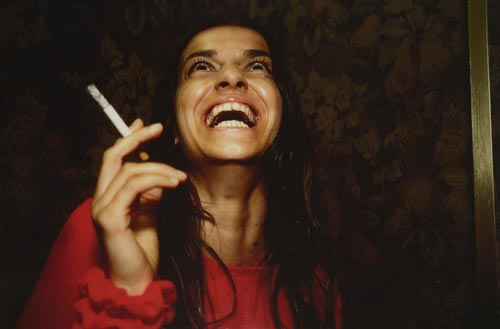
We: A tour of feminist art in the CAAC in Seville
The Centro Andaluz de Arte Contemporáneo in Sevilla is exhibiting a feminist art group show titled simply “We.” In 1993, the former Museum of Contemporary Art of Sevilla-integrated today in the CAAC-wondered why there were no women artists in its collection, a question which had been posed some 20 years before by American feminist artists: Why do the country´s most prestigious museums have such a low proportion of women in their exhibition halls? Since then, sufficient time has passed to see that these attitudes of public denunciation and have made a difference. Thanks to a thorough review of art history, radical cultural shifts, and scholarship by feminist researchers, the systematic exclusion female presence in the art world is slowly becoming a thing of the past. This group show organized by the CAAC and curated by Maria Luisa Lopez and Juan Antonio Álvarez Reyes will remain open until September 26 and has two specific precedents. One, the exhibit 100% exposure is quite local and proposed as a way of responding to those criticisms from 1993. The other precedent is an international exhibition is titled elles@centrepompidou recently at the Centre Pompidou in Paris, which exhibited work by some of the most important artists of contemporary art of the twentieth century XXI. CAAC has put together a tour of the works of numerous local and international artists than now form a part of their collection. So names like Hannah Collins, Valie Export, Carmela García, Cristina Garcia Rodero, Victoria Gil, Nan Goldin, Cristina Iglesias, Carmen Laffón, Zoe Leonard, Ana Mendieta, Pepa Rubio, Carmen Sanz, Soledad Sevilla, Aleksandra Mir, Ruth Morán, Marta María Pérez,...The MUVS, The museum of birth control and abortion in Vienna
The constant controversies about different birth control methods and the legality of abortions often centre around religious and political beliefs. Almost everyone has an opinion about these subjects, but only occasionally do we really base our beliefs on historical facts, which could widen our perspective and help us to analyze the present with more clarity. How can we understand something we don’t know the origins of? Taking this question as a starting point, Viennese gynaecologist Christian Fiala began the Museum of Birth Control and Abortion in Vienna. This unique museum gives you insight on the history of a topic that has been outlawed or taboo for centuries, although a few ancient cultures like the Egyptians, Greeks and Romans didn’t consider it to be unacceptable. Whether if you’re in favour or against abortion and birth control, visiting this museum will give you excellent hints of what family planning nowadays means. All the documentation and data is a result of a huge interest and effort that doctor Fiala put into rising awareness about reproductive health matters, so that medical and political advances in this field shall be appreciated. In addition to his investigative work in Uganda and Thailand about HIV he has opened a hospital in Vienna. Although the museum is rather small, it is full of important information, so much so that the guided tours are up to 90 minutes long. In the exhibition space dedicated to abortion you can find antique condoms, the first pills, even a bidet and toilet accessories that were meant to facilitate the washing of the vagina after intercourse in order to prevent conception. There...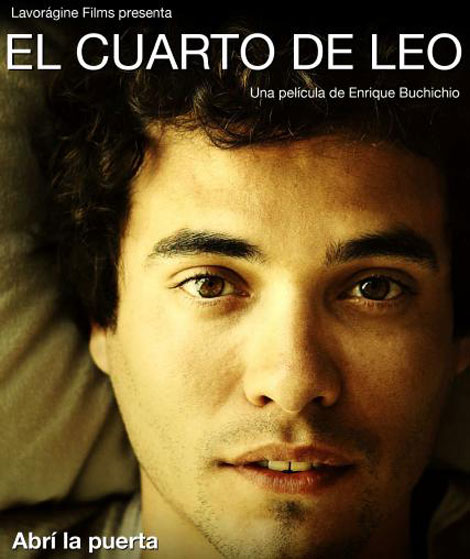
Queer film festival Lisbon
Queer Lisbon is one of the largest film festivals in Europe. This year marks its 14th edition and which will once again bring interesting audiovisual contributions to the city which deal with gay, lesbian, bisexual, transsexual, transgender or queer movement related themes. Films will be shown in Sao Jorge from 17 until 25 September, and apart from the projection of over 100 movies, there will be various events and festivals promoting the LGBT spirit. The festival will award contributions in three categories: documentary, fiction and short films – the latter, chosen by the public. In “Queer Art” proposals will be shown for experimental cinema and documentaries on queer artists, while “Queer Pop” is dedicated to investigate the intersections between music and queer culture. “Leo´s Room” is one of the most interesting contributions to this year´s festival. This debut film of Uruguayan director Enrique Buchichio is a shrewd portrait of Leo, a young boy in the process of self-acceptance and sexual definition. We embark on an intimate story which traces the protagonist´s emotional topography, as is reflected in the many interiors in which this sensitive story takes place. The plot unfolds when the paths of Leo and Caro, a former classmate he liked in the past, end up crossing paths again in unexpected ways. Winner of last year’s prize, Roberto Castón´s “Ander” tells the story of a homosexual in his 40´s in an innovative way, depicting the protagonist in a rural area and offers an atypical variation from the norm of Spanish gay films, which are usually set in an urban environment. If you don’t want to miss one of...
Nudism in Finland
For many people public nudity is still seen as something abnormal and reluctance to participate in a nudist lifestyle is widespread. However, around the globe you will find beaches, social spaces and other meeting places where you can be naked with total freedom. Naturism has been practiced since ancient times and was sometimes linked to religious practices, but modern nudist culture was born in Germany. The Freikörperkultur Nacktkultur or “the culture of body release,” goes back to the early twentieth century. In general, for Nordic countries naturism has long been practiced in a very natural, matter of fact way. In Finland, for example, where the sauna is a well established tradition, it would be unthinkable to hang out in a sauna whose temperature ranges from 70 and 100 with a bathing suit, regardless if the sauna is unisex or mixed. The skin has to breathe to eliminate toxins through sweat, and Lycra fibre, the material swimsuits are normally made of doesn’t really let skin breathe. The Finns are certainly not overly modest, however “official” nudism (as reflected by people registered with the Finnish Naturist Union) is not as widespread as you might imagine, at least in the open air. This may be due in part to the fact that Finland has very few really hot days compared to other countries such as Spain. The traditional race Nude Run of Finland, in Padasjoki, took place in June, and 82 people participated, but the movement is definitely growing… There is no lack of spaces reserved for those who like to soak up the sun with nothing on. Near Helsinki, Pihlajasaari beach...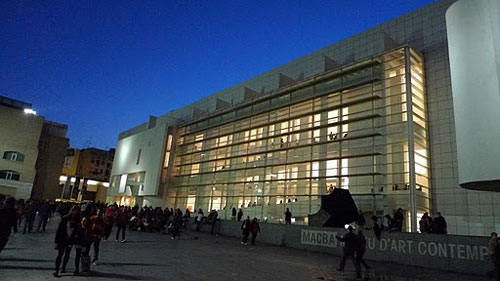
Late nights during the summer at MACBA.
An interesting idea occurred to a number of museums a few years ago: why not stay open late the long and hazy nights of summer? This initiative seeks to open up these spaces to those who work during the day or might not normally be able or interested in going to museums.The Museum of Contemporary Art of Barcelona, also known as MACBA, is one of the pioneers in this type of initiative and each year has several summer concerts as part of “Nits del MACBA”. This year, the museum will be open until midnight on Thursdays and Fridays, so that museum visitors can enjoy the night. One of those special nights will be on September 23, to end the summer. Visitors can enjoy all the exhibitions on display there. Starting from the Museum´s permanent collection, which contains works from some of the most important contemporary Spanish and international artists like Eduardo Chillida, Clyfford Still, Morris Louis, Robert Motherwell, Ad Reinhard, Philip Guston and Franz Kline, along with works by informalists like Joan Hernández Pijuan, Albert Rafols Casamada, Modest Cuixart, and Antoni Tàpies. There are also temporary exhibitions such as an exhibit on International Letterist society Gil J Wolman, a journey through the archives of the Fischer collections, one of the most important collectors and curators of contemporary conceptual art, and Parallel, a show of experimental artist’s Benet Rossell cinema tinged works. We promise that there is nothing more exciting than travelling through the halls of an art museum in the wee hours of the evening. Rent the best lodging and step out of your fabulous apartments in Barcelona to...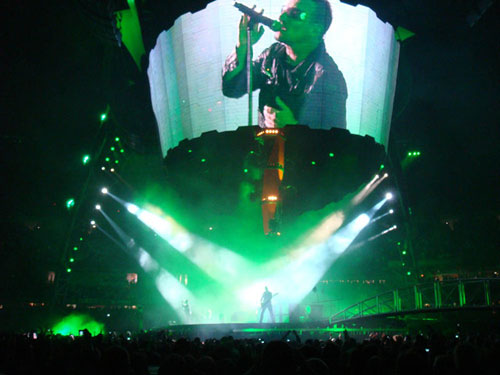
Vienna U2 Concert
U2 have undoubtedly contributed to writing the history of rock music in the last 30 years. Bono (Paul David Hewson), The Edge (David Howell Evans), Adam Charles Clayton Larry Mullen Jr. are not only members of a successful band, but also just a group of friends. This strong bond between them has contributed to their...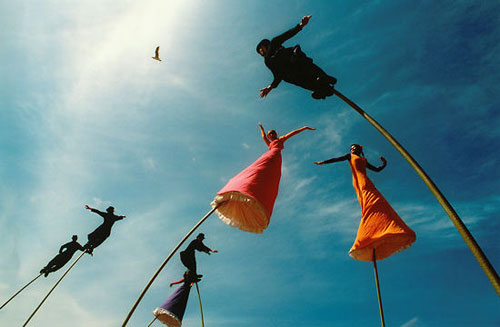
Helsinki Festival 2010
Every year in late summer Helsinki hosts Finland’s largest festival to honor the creative arts. The main objective of the festival is to make art available for everyone. Music, poetry, theatre, dance, etc. You name it and it will all be found in the rich programme. For the little ones there is a special Kids’ Programme, and throughout the city there will be tons of events. Some of the events during the festival will require tickets and some are free. This year’s edition will take place from the 20th of August until the 5th of September. We can´t list all the venues and events here. But the Huvila Festival Tent should be mentioned since it is Helsinki Festival’s very own events venue at Hakaniemi. This half-concert hall, half-marquee is a unique space that dates back to 1995 and was designed by the architect Roy Mänttäri,. An important date during the festival will be the 27th of August. During the beginning of the festival until the 27th a project named “Happy Helsinki” invites everyone to a series of art happenings in the city´s parks, streets and squares. To make the city a happier place everyone is invited to take part and get involved. Over the website anyone can also sign up as a volunteer for the events. The 27th marks the Night of the Arts and it is the big finale for this series of events. A rather new addition to the festival events is the Flow Festival, which showcases the best in urban music. International star Big Boi from the group Outkast is expected to perform this year in...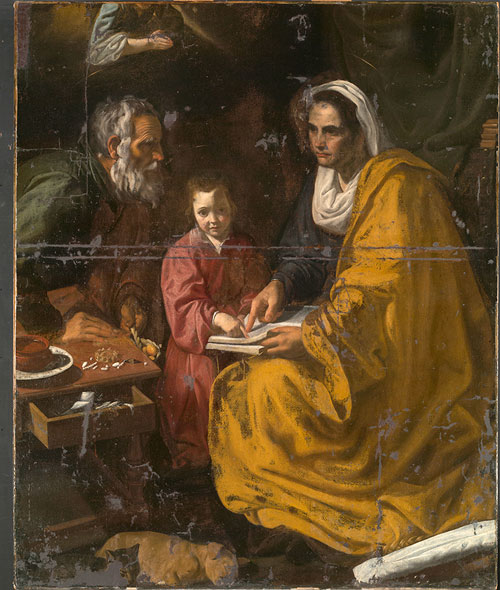
Precious Velázquez painting found in the basement of Yale University
Velazquez is one of the world´s most famous painters and also recognized as one of the most important and influential Spanish painters. It comes as truly amazing news that Yale has found an alleged work by the artist stored away in the basement of the university. John Marciari, a curator who was working to archive art during the renovation of the University´s Art Museum found the painting back in 2003 but did not want to believe it was Velasquez. For a long time he paid no attention to his gut feeling and doubted his own discovery. He thought he was crazy, but followed his hunch that the it was an early work of Velasquez, hallowed painter of “Las Meninas”. Previously the painting, called The Education of the Virgin, had been attributed to an anonymous artist of the Spanish school of the seventeenth century, but Marciari wrote a 40 page article, partially published in the next edition of Ars Magazine, where he explains what were the indications that encouraged him to think that it was in fact an early work of Velasquez. The actual structure of canvas that was used to paint the work was the same those often used by Velazquez early in his career. According Marciari this painting was made in 1617 when the artist was only was 18. Current director of the Velazquez Center, Benito Navarrete, said that this is a very important find, but Marciari is still waiting to hear back from the Museo del Prado, which is the highest authority in the world in relation to the painter. The Museo del Prado now has the...