English
 Français
 Deutsch
 Italiano
 Español
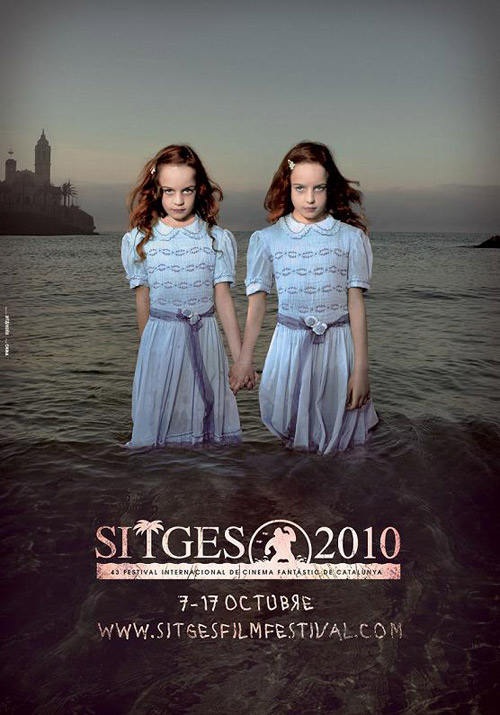
Sitges 2010: A festival to commemorate Stanley Kubrick
Sitges is one of the most important film festivals in Spain and the new official poster pays tribute to the “Shining”, a film directed by Stanley Kubrick 30 years ago and starring Jack Nicholson, and probably one of the most famous horror movies in film history. But the homage doesn’t end here. The festival will also pay tribute to “Back to the Future” by Robert Yemeckis and “Psycho”, the world’s most famous film by Hitchcock. Up to date the collaborating directors, actors and producers are still yet to be confirmed, but the list of the movies that are going to be shown at the festival have already been published: “Outrage”, Takeshi Kitano`s comeback to yakuza film (Japanese mafia) and “A Serbian film” a gory movie that is surely going to surprise the viewers. One of the things that was most relevant for the organisation of Sitges this year was the incorporation of films from new countries. That’s why this year we will be able to see movies such as “Somos lo que hay” by Mexican filmmaker Jorgen Michel Gray, and “La casa muda” by Uruguayan director Gustavo Hernández, and the Turkish film “Kosmos”, just to name a few. One of the most anticipated films is “Uncle Boonmee Who can´t Recall His Past Lives” from Weerasethakul, which has never been shown in Spain before. And Guillem Morales, Belén Rueda and Lluís Homar will present “Los ojos de Julia”, and Eugenio Mira will show his film “Agnosia” starring big actors like as Eduardo Noriega, Bàrbara Goenaga and Sergi Mateu. This is only a small part of the Sitges film program this...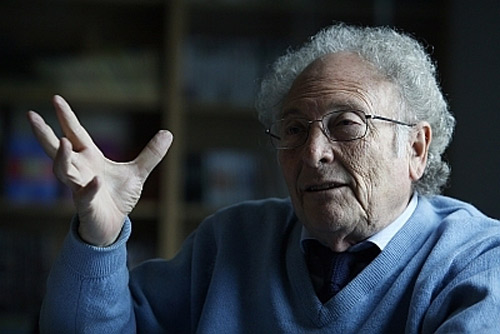
The journey to happiness, love and the power of the mind
Eduardo Punset is a versatile Barcelona born writer lawyer, economist, professor, philosopher, scientist, and documentary film director and minister, born at the beginning of the Spanish civil war in 1936. He is described as an innate fighter for his teachings about love, happiness and consciousness about what makes our lives easier. Recently he finished his trilogy: “Journey to love”, “Journey to happiness” and, to complete the series: “Journey to the power of the mind”. In his journey to happiness Punset has discovered how fortunate we are to have more than 40 years to live. A hundred years ago life expectancy was around 30 years, which is just enough to survive and procreate. Nowadays the vast majority of us don´t have to fight for basic needs. Thus we have enough time to worry about ourselves. Punset even dared to elaborate a mathematic formula for happiness: F= E(M+B+P) / FR+CH Which means: Happiness= Emotions multiplied by the sum of maintenance+searching+relationships divided by the sum of reductive factors+ hereditary problems Up until now love has been considered as almost a magic response by literature and morality. But in the present day we know that love has also evolutionary and biological reasons. The incredible technological progress of the last few years has allowed science to do research about love. Most of us have been – or are still- in love and still we don’t know the chemical and biological factors that produce this feeling. The truth is that it is much easier to make love than war. In his journey to the power of the mind Punset has discovered our inner selves. Through...
If there’s smoke there’s fire… Rumours and their social effects.
We all know the saying “If there´s smoke there´s fire”, but beware!, Even though conventional wisdom is often correct, rumours have two sides and one of these shows clearly how we relate to and judge other people. For this reason, if there’s smoke, it doesn’t always mean there’s fire It is no secret that we live in a world where stories and rumours about others, especially if they hurt the people involved, spread with tremendous ease, not to mention if these people are famous people we see on television or the Internet. But clearly there is no need to be famous, more than ever; we may find ourselves involved in a rumour circulating in some of our social circles that has little to do with reality. Sociological explanations of the rumour say that they help us to socialize and meet people with whom we interact through social constructions. Our ideas about others are extremely vague and often arbitrary, an sometimes, just seeing a person is enough to make assumptions about their life and personality, for example if we see a good-looking man, dressed smartly in suit and good manners, it will make it harder to believe in rumours that are inconsistent with the social image that he shows. This sounds simple and seems at first glance like it helps us to maintain a social vision which is shared and mental order. But what happens with the thousands of rumours that seem to be unfounded, that share in the salon, with our neighbours in the shop up the block or in the hallways at work? Rumours are not always about...
The Labyrinth of the Cerdanyola valley
Opportunities for leisure and exploration abound in Barcelona, but few that give the same opportunity to enjoy an imaginative and interactive way for people of all ages to enjoy their time together as the Labyrinth This timeless challenge begins as an ephemeral installation which can be set up in unexpected spaces like parks, gardens, plazas, squares, streets, terraces or roofs. Thanks to its modular design, it can be adapted to a variety of proposed sites. The Labyrinth does not know night or day and its aesthetically tempting effect is spectacular at any time. The metal maze of doors and false doors, walls, false walls, paths to a destination or those that take you directly to the exit, creates a new space where there was never anything and is a catalyst for laughter and also occasionally, anger, for the passengers entering it. With the aesthetics of the typical range of fairground circus freaks, its creators mount the installation on-site, pulling a magic maze out of their sleeves on demand. Let yourself take the road less travelled, and give free rein to your imagination, solve riddles and lose yourself in its paths. Gaze at the sky from inside or watch others stumble through invisible walls. This installation is a gift to the spirit because the maze is the impossible made real in a here and now which invites return. Close your eyes and find that without them, now all that remains is the echo of their voices. During this summer, this installation will be erected in public spaces at festivals and fairs in the UK and Italy, in the Barcelona area,...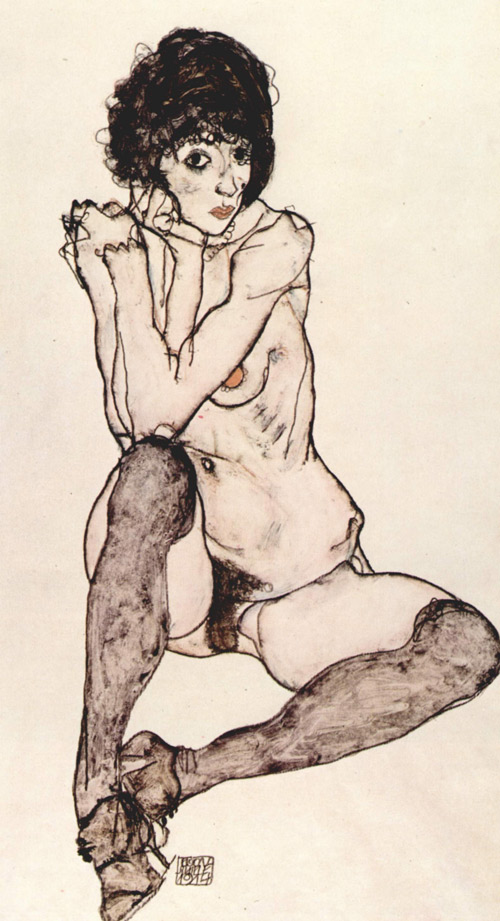
Leopold Museum pays $ 19 million for a work of Egon Schiele
The Leopold Museum, one of the most important in Vienna, paid no less than $ 19 million to restore a work by Austrian painter Egon Schiele. The museum’s director, Peter Weinhäupl, revealed that the agreement was made through a settlement that ended a long legal battle concerning the painting’s provenance. The painting is called “Portrait of Wally” and the museum is content to have the picture back in its collection following its seizure in 1998 by US authorities, concerning suspicions that it had been stolen from its rightful owners by the Nazis. To make this purchase Weinhäupl said the Museum sold various paintings and a U.S. bank will finance the transaction. As collateral, they took five gouache paintings by Schiele. According to both Elisabeth Leopold and Diethard Leopold, the wife and son of the late founder of the museum, Rudolph Leopold announced that when “Portrait of Wally” is back at home will be a special presentation with a text to be written by both the Foundation and by the heirs of original owner. This text will explain the history of the work and the various changes of ownership, as well as all the legal wrangling that took place afterwards. “Portrait of Wally” was stolen from a Jewish collector in Vienna by the Nazis in the ´30s. Years later, in the ´50s, Rudolph Leopold finally managed to acquire it. If you want to visit the Leopold Museum, where you can see paintings by Schiele and other very important Austrian artists, you can rent apartments in...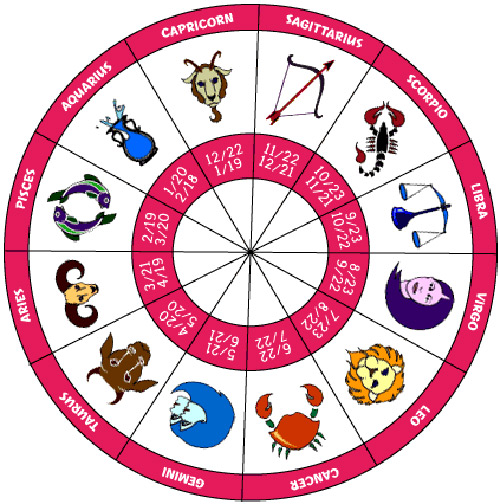
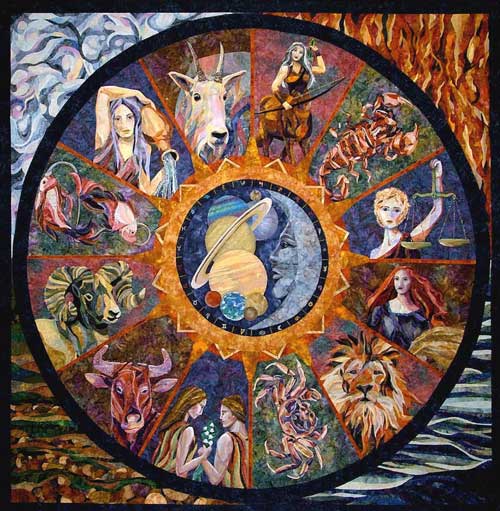
Horoscopes: Junk or a Blueprint for Life? Part 2
Historically, astrology and astronomy were more or less interchangeable. Mathematicians and astronomers were closely aligned, and carefully studied the skies (as well as weather patterns and other more observable phenomena) to advise everyone from kings to farmers on the best times to do things. As our ancestors were more closely dependent on the earth, the shifts in seasons were intertwined with everything from when wars were waged to when to plant seeds. It is only our modern differentiation between art, science and ´facts´ that has changed. Remember that music was only recently unlinked from maths – Mozart was considered to be a brilliant mathematician, when we considered those black notations to be calculated rather than inspired. As astrology was a respected branch of astronomy and mathematics, astrologers were well-paid and highly respected. Their calculations were also freakishly accurate, and continue to confound modern-day scientists who track the skies with deep-space telescopes, satellites and GPS, and are STILL unable to recreate the pinpoint calculations of earlier ´space men.´ The grey area of astrology comes in the form of interpretation. Astrology is testable in astronomical purposes (the movements of planets) but a good astrologer used this information to draw conclusions that help their clients to predict their future. However, all good astrologers are cautious. They go to great pains to remind us that astrology simply helps us to identify tendencies rather than certainties. In the same way that ancient astrologers could tell us a better time to plant seeds, modern-day astrologers can help us find a better time to begin a new romance, apply for a better job, or begin a...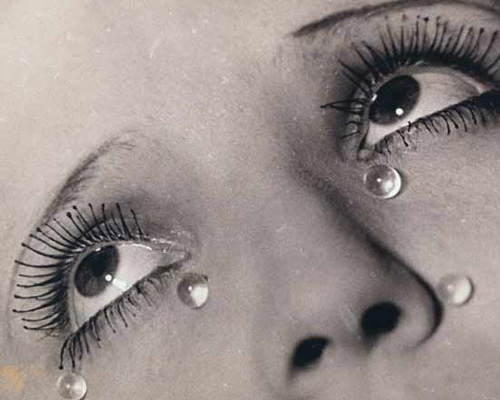
Subversion of images
With photographic and audiovisual works of surrealist artists as Manray, Boiffard, Painlevé, Tabard and Bresson, the curators and Clément Quentin Bajac Cheroux, present the exhibition “The Subversion of Images” in the MAPFRE Foundation This exhibition, with over 300 photographs, 100 documents and about 10 films organized into nine sections, attempts to address the processes of research and experimentation that made the surrealist movement through photography, film and all possible variants of visual work. The surrealist movement was determined to change life through art and to achieve the indissoluble union of art and life. That is why its experimentation crossed all levels of life to discover the “ beyond”. This need to transform the look, to contemplate the environment and the point of view from which we observe revolutionized the possibilities of the image. The first section of the exhibition entitled “Collective Action” and it presents the surrealist movement as such, and as first the collective over the individual. Hence the display of collective writings, manifestos, exquisite corpses, collage and multiple photographic images of the group. Secondly we find the “Theater of the unreason” that shows how the theatricality, which shows how drama, a pillar of the aesthetics of surrealism, applied to photography. “The real, accidental, how wonderful,” is the section which deals with the street. Windows, mannequins, deserted streets at night become subject to portrayals of the hidden or secret. “The mounting board” brings together images, photographs, clippings or postcards collages, photomontages and exquisite corpses that were published regularly in magazines of the time. The tension generated between what we see and its reality or the surreal look of...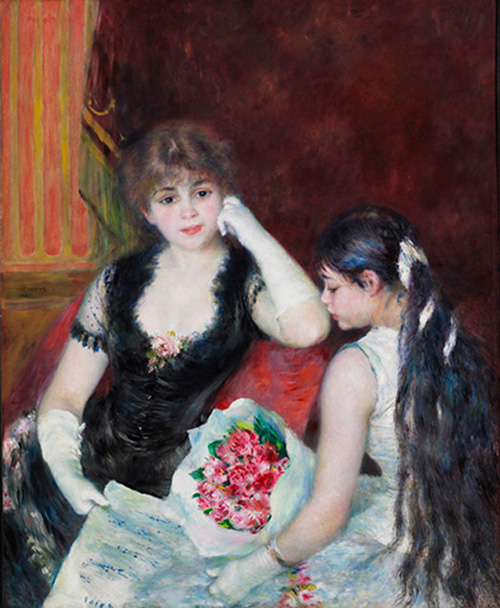
Renoir exhibition at Prado Museum Madrid
The Museo del Prado, one of Europe’s most important museums, is going to open the first Renoir exhibition in Spain in October, the 19th to be more precise. The show is titled “Renoir (1841-1919)” and will present one of the world’s biggest collections of works by the French painter, owned by the Clark Art Institute from Massachusetts, which worked closely with the Prado Museum in order to set up this amazing exhibition. The exhibit will show 31 pieces owned by Robert Sterling Clark (1877-1957), founder of the Sterling & Francine Clark Art Institute. The exhibition is meant to highlight the rich diversity of Renoir’s oeuvre, by showing his most relevant periods between 1874 and 1900. The artist was interested in different themes, such as: landscapes, flowers and dead nature, portraits, nudes, and feminine figures. Sterling Clark inherited a huge fortune in 1910 and moved to Paris, where he started collecting art works. Without a doubt, Renoir was one of his favorites and, currently, the Clark collection is one of the biggest collections of the French painter in the world. Pierre-Auguste Renoir is one of the most important painters of the French impressionism. And although the impressionism is based on the representation of the world through a spontaneous and subjective perspective, Renoir wasn’t always faithful to this paradigm and added a great amount of sensuality to his style, which was linked to oriental art and feminine beauty, though without distancing himself too much from the impressionist manifesto. Without a doubt, “Renoir (1849-1919)” is one of the most important exhibitions that have been shown at the Prado lately, so if you...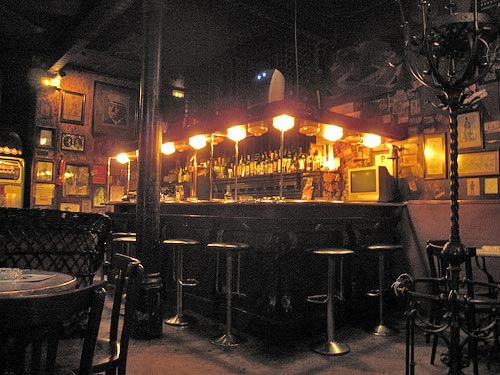
Les Gens que j’aime, a romantic hideaway in the heart of Barcelona
In Barcelona near Paseo de Gracia, you can find one of the most original bars in the city on Valencia Street, in a basement just barely marked. It´s called Les Gens que j´aime and it’s known for its modernist aesthetics, its red velvet couches and live jazz and soul. In addition, a friendly tarot reader offers her services there … Barcelona is full of places that are out of the ordinary for one reason or another: places with special charm because of their original decor, activities that are held there, beverages, music … or all these factors like in the case of the Valencia Street pub called Les Gens que j´aime (ie, “The people I love.”) I discovered this beautiful bar almost by accident, wandering aimlessly one sunny summer afternoon in the Eixample. Incidentally I noticed a few white ball lamps, located almost on the floor, pointing to the presence of a shop in a basement. A silver metal plate and stairs to the entry confirmed to me that there was actually a bar, so curiosity led me inside. Descending the stairs I had to stop for a moment that my eyes become accustomed to the nice cool shade of Les Gens que j´aime … I looked around, surprised by the ambiance of bohemian yet modernist style: Elizabethan red velvet couches, dozens of paintings and old photographs, period lamps … Later I learned that the place has not changed at all this decoration since its opening 1967, when it represented a breath of fresh air during the late afternoon of the Franco era in Barcelona. I sat in one...