English
 Français
 Deutsch
 Italiano
 Español
Istanbul Jazz Festival
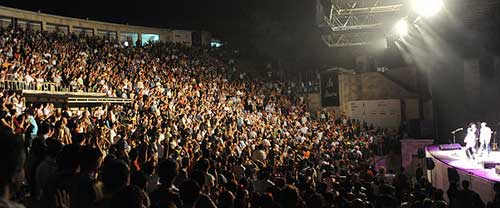
The root of all modern music styles, jazz, returns to Istanbul for a festival that is about to turn sweet 17, from 1 to 20 July. More than 50 concerts await music lovers during this international festival, which invites more than 300 groups and artists to the city. It’s a fantastic opportunity to discover a fascinating city and delve into its many architectural and acoustical treasures. The Open Air Theatre Cemil Topuzlu, the Archaeological Museum, the Museum of St. Irene, Istanbul Modern, Istinye Park, the Board IKSV, the Sepetçiler villa and the Marmara Esma Sultan are just some of the places where concerts will be held, and you are sure to vibrate with pleasure. Don’t miss the opening ceremony with a concert by the best Turkish musicians at The Marmara Esma Sultan … International stars Artists and groups such as Tony Bennett, Grace Jones (16.07), Seal (17.07), Chick Corea, New Folks and Martha Wainwright (who will interpret songs by the divine French chanteuse Edith Piaf) are eagerly expected. Save the date for July 3, and head over to the Festival of Tünel, held in various cultural centres and concert halls divided between Galata and ?i?hane. Stages will be set up in tunnels and Kuledibi Galata to host several free performances: it’s free, which means you can’t afford to miss this chance to enjoy exciting jazz rhythms. Rock, pop, blues, reggae and new age resonate as well, which makes this event a festival for all types of people. In recent years, Bjork, Massive Attack, Eric Clapton, Patti Smith, Lou Reed, Paco de Lucia, Jane Birkin, Mercedes Sosa and Lenny Kravitzhave...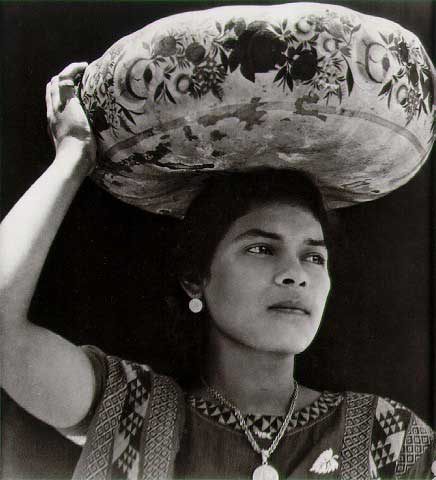
The Muse Revisited: Tina Modotti
Museum Kunst Haus Wien in Vienna hosts a historical exhibition of the work of Tina Modotti, noted Italian-American photographer. The exhibit runs from July 1 until 7 November. It will include her famous series “Women of Tehuantepec,” as well as studies of plants, pictures and rare photos. The path of Tina Modotti, who was born in 1896 in Udine, Italy, was filled with intrigue and suspense. She died in 1942 in Mexico, after having crossed the world to create art and to promote her radical political ideals. As a teenager she had immigrated to the United States with her family, and it was there she would meet Edward Weston. She was his model, assistant and lover for many years; perhaps part of the reason her work did not receive the attention it deserved for many years. Art critics dismissed her as just another muse. Today, we recognize that she was much more. For a time, she worked in silent films, and often played the femme fatale role, but what made her famous were her pictures, and her relationship with Weston. Modotti and Weston travelled to Mexico in 1922, where they met such figures as Diego Rivera and Frida Kahlo, and set up a studio, where they worked on remarkable modern photographic collaborations with an anthropological approach. When Weston returned to the U.S., she furthered her political involvement, and became a member of the Mexican Communist Party in 1927. She was expelled from Mexico in 1930 as a result of the anticommunist campaign, and from there she went to Berlin, Paris, Moscow and Spain, to continue her political activism. Madonna...The Night of San Juan
When I was younger, on the night of San Juan in France, I found it very boring. For me, it was nothing more than a crazy group of adults dressed up, dancing around a giant bonfire and drunkenly ambling in the street. Later on, when I discovered the night of June 23 Catalan style in Barcelona it was totally different, a magical and unforgettable time for both children and adults. A Night for Witches and Wishes This party is a gold-mine for photographers, as they can see how the beach morphs overnight. As the hours pass, the sand fills with people, who arrive with their dinners and kids. The beach begins to fill with young people who gather in bars or set up their own makeshift bars, complete with music, bonfires, alcohol and BBQ. Children come with their pockets full of firecrackers and light them until dawn. People jump into the sea, dance in the sand and throw fireworks … And the next morning when city officials come to clean the scene of the crime, they not only find kilos of garbage, but also lovers baking in the sun … Souvenirs, souvenirs … Lovers or friends who participate in the festivities should comply with the Spanish traditions for good luck: As the flames burn higher, you should jump though the fire while making a wish, or write three wishes down on a paper which is then cast into the burning flames. Typically a cake called “coca” is eaten, it’s similar to a brioche, and filled with cream, candied fruit and pieces of butter. This cake is round like the...
Kubrick’s Early Photos
Stanley Kubrick is known as the great director of some of the most important films of the twentieth century. Without a doubt, he has been one of the most influential and inspiring figures, not only with regards to the cinema, but twentieth century arts in general. His film aesthetic was marked by the revolutionary concepts of the German theatre developed by Bertolt Brecht. Brecht´s epic theatre which promoted the idea that theatre is a representation of reality on a stage, and always should maintain its artificial and groundbreaking nature, to encourage a critical eye in the audience. Kubrick´s work is now seen as a turning point in the history of celluloid. What few people know is that his first foray into the world of art began with a series of assignments from LOOK magazine when he was just 17 years old. The young Kubrick took his camera, and set forth to portray post-war American life in a comic mode, and produced a visual narrative. In these photographs the broad strokes of his cinematic language are already visible: his humour, obsession with the dark and focus on things that are easily overlooked. This marks the first time these photographs have been shown as part of a museum exhibition. Regione Pallazzo in Milan houses the exhibition, which opened on the 16th of April and will be open until the 4th of July. The exhibition is divided into narrative sections composed of the photos Kubrick shot for the magazine. It is impressive to see incredible sensitivity and maturity that the young director already possessed, and above all, his ability to capture the...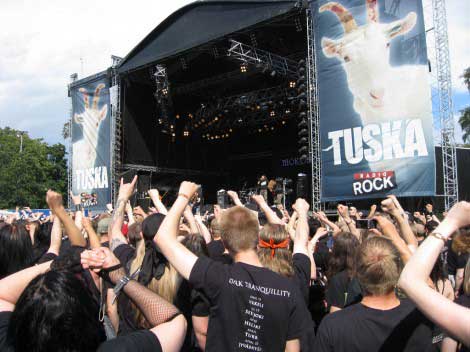
Tuska Open Air Metal Festival 2010
From the 2nd till the 4th of July Helsinki will host the yearly Tuska Open Air Metal Festival for the 13th time. On three stages, more than 30 music acts will deliver metal music at its best. You will meet some of the scene’s favourite veterans and get to know some new faces in the metal music scene. The event takes place at Kaisaniemi Park, the heart of the city right by the train station so even with after a couple of beers, getting lost would be hard and after a day at the festival the clubs aren’t too far away to continue the celebration. Fans of this highly anticipated event get regular updates on the acts that take the stage over the website – www.tuska-festival.fi/en/. But the website is not only informative about the program and the artists of the event. It also provides you with a conduct guideline so ensure the event with proceed smoothly. I guess many metal fans in one place can get a little rowdy as I quote: “Any kind of dressing-up is encouraged as long as the safety of your gear is taken into consideration. When rushing about in the front row you may harm a fellow celebrant with your nail bracelet.” Since the last acts of the day are scheduled to end at 23.00 the festival is accompanied by many metal and rock themed parties at the surrounding clubs in Helsinki. To name a few Tavastia, Nosturi, Virgin Oil Co. and Dante’s Highlight will all have some great parties. So to you head bangers out there hurry up and get a ticket...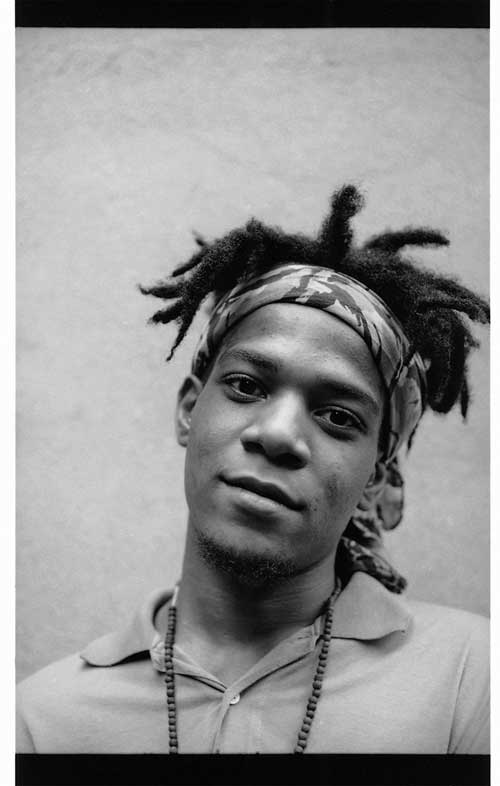
Off the street and into the museum: Street art
When in the ´80s street art emerged from the tagging wars on the streets of New York, nobody thought that 20 years later it would be established as a legitimate artistic discipline recognized by art historians and critics. This subculture has risen up from the street and begun to show up in elite galleries at the international level, and is finally reaching the biggest museums. In less than .thirty years, it has been incorporated into the “sacred” art canon of the major cultural institutions. As street art has travelled through all these places, it has evolved: changing techniques, and above all, its philosophy. What we see today in galleries and museums has little to do with the subcultural momentum that the activist street art of yesteryear once had. Perhaps because it is no longer found in the street. A great paradox of street art is not only its marketing in the art world, but also by its use as a marketing tool to sell an infinite list of products such as T-shirts emblazoned with tags, posters, caps, key chains, even shoes, all “signed” by the artist. After the street art became widely known for criticizing the processes of globalization and the infiltration of urban space by capitalist advertising, some critics have been stunned by its eagerness to adapt to the demands of market, and posit itself as yet another commercial aesthetic. The exhibition “Street and Studio” in the Kunsthalle Wien explores its path, from its beginnings on the street. It collects work from a generation of artists for whom the city has not only been a source of inspiration,...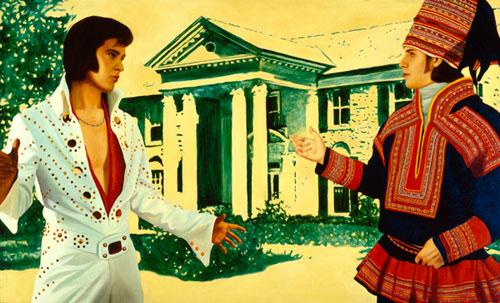
The realest virtual art
For years, images are reproducible and reproduced in countless contexts, media and environments. You can buy everything from coffee mugs imprinted with the face of your dog to murals that are replicas of whatever historical picture you want. This phenomenon is reflected in the rise of sample based music (which uses the sonic reproduction) and in literature, with the rise of the blog, whose content often reproduces what has already been published. In Europe, Finland has been a great leader in the digital revolution, so we should not be surprised that the art scene has followed a cutting edge path. With new technologies, the division between natural and artificial or real and virtual has become increasingly blurred. Just think of two everyday examples, Photoshop and cosmetic surgery. When it was invented, photography astonished people for its ability to capture scenes from real life, and do it easily. Now we are amazed by pictures for their ability to deceive, and create truly credible create worlds of fantasy and surrealism. Cosmetic surgery is also changing our concept of what is natural and real in the context of the human body. Taking these trends as inspiration, the exhibition Virtually REAL – Painters of the Internet Generation (Virtually real: Painters of the Internet Generation), will run from June 9 through Aug. 29 in the Meilahti Museum of Art in Helsinki. The focus of the exhibition is realism, or rather the hyper-realism. Young painters such as Markku Laakso or Ville Löppönen create reflections of the real world where “real” is, in terms of technique, but not necessarily its subject. Reflected in their paintings are...Murat Germen in Istambul
From the 26 May 2010 until September 19, 2010, the Modern Art Museum of Istanbul will host an exhibition of Murat Germen´s photography. The title of the exhibition is “Way” and the exhibit´s concept references all the senses of the word. That is, the photos portray the idea of a way as a road, as a physical path to a place, as well a path for living, a metaphorical journey or manner of confronting a challenge, or how to find direction. Murat Germen writes of his work ” I think of photography as an opportunity to bring to the fore the ordinary things that people, consciously or unconsciously, ignore or don’t see, and give them the chance to change their prejudices. I try to bring out the extraordinariness that may be latent in the normal.” As a photographer, Germen is very focused on the technical side of contemporary photography, and uses many digital editing techniques. He often produces large format images. Especially noteworthy are his panoramic photos, which portray a troubled but familiar world, on a scale that makes the viewer appreciate all the subtleties and hidden details of a scene. Some of the photos in this exhibition measure 10 meters, allowing visitors to inhabit the world of the artist. There will be texts that elucidate their way. The modern art museum in Istanbul was opened in 2004 and was the first museum of its kind in Turkey. It is located in the district of Tophane, and every Thursday admission is free. In an era of “Blockbuster” exhibitions of canonical classics, this museum is noted for its continued support...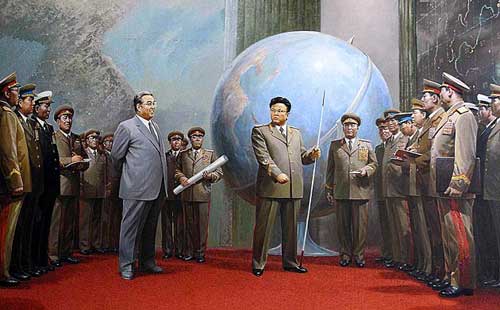
Korean Art in Vienna
The MAK, the Museum of Applied Arts Vienna, hosts a historical exhibition from the 19th of May until September 5th, 2010. The exhibition is called “Flowers for Kim Il Sung: Art and Architecture from Democratic People´s Republic of Korea,” and it marks the first exhibition of its kind in the world, given that the Democratic People´s Republic of Korea is not exactly open to the outside world. The exhibition features over one hundred paintings in oil, ink and watercolour, about 30 posters and a section devoted to North Korean architecture, with models of some monuments. The Democratic People´s Republic of Korea has described himself as a socialist republic, but many humanitarian organizations have questioned whether it is a republic, or rather a Stalinist dictatorship. What is certain is that there is a large personality cult surrounding the revered Kim Jong-il, current leader of the country, known as the Dear Leader, and his father, Kim Il Sung, the Great Leader, or also the Eternal President of the Republic. The propaganda apparatus of the State of North Korea is incredibly strong, and all forms of media fall under its control, so the development of the arts in recent years has a completely different character that in many countries with more political freedoms. The pictures in the exhibit usually represent traditional subjects, portraits, landscapes and scenes of daily life of workers and peasants, as well as Kim Il Sung and Kim Jong Il. The images always portray North Korean life in a flattering light. These idyllic paintings show the achievements of society, and how happy people are. The artists are like any...