English
 Français
 Deutsch
 Italiano
 Español
Sevilla Cathedral
The Cathedral of Sevilla is an imposing Gothic construction that was designated World Heritage and is one of the most important monuments in the city.
Museo de Carruajes
The Museo de Carruajes is ideal for all car and history lovers. You can see differenty types of cars that were used throughout history.
Museum of Flamenco Dance
The Museum of Flamenco Dance, which opened its doors in 2006, is one of the most important in Sevilla and it runs through the whole history of this art.
Museum of Arts and Popular Customs
The Museum of Arts and Popular Customs presents the traditional Spanish trades as well as the costumes of that time and furniture of poor and rich people.
Palacio de la Condesa de Lebrija
The Palacio de la Condesa de Lebrija is one of the most important museums in Sevilla, not only for its Roman objects but also for its construction.
Restaurante San Marcos
The restaurante San Marcos is an example of the good Sevillan taste for food. There one can sample the best dishes in an adequate and relaxed atmosphere.
Archeology Museum
The Archeology Museum in Sevilla is one of the most visited in the city because it possesses a large collection of Roman objects and different valuable pieces.
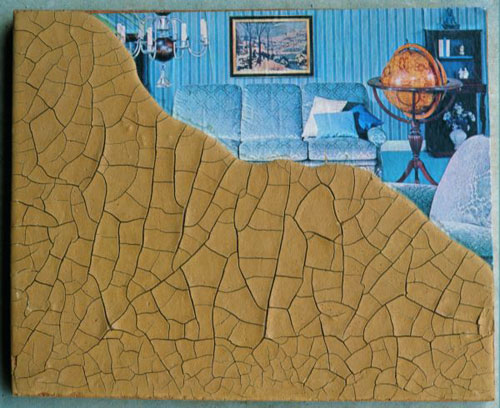
Pere Noguera at the Fundación Tapies of Barcelona
From the 27th of May onwards, the Fundación Tapies of Barcelona exhibits Historia de Archivo of the conceptual Spanish artist Pere Noguera. The exposition takes Nogueras interesting art works based on photographs of the seventies shot by anonymous, amateur and professional photographers which that artist distort and cogitates on the process that embodies the fabrication of photographic images. Pere Noguera was born in La Bisbal in 1941, he is one of the most outstanding representations of the seventies avant garde art that transmuted into the nineties with visual art works that reflect the political social disenchantment of this generation and that materializes in the conformism of society more involved in consuming than worrying about the genuine problems of societies. Noguera is in eternal confrontation with what is transitory and the with what is permanent and he manifests this concern thru the dematerialization of the artistic object. His art uses simple materials like mud, old photos, rocks and objects that he picks up like cardboard etc, but, the profundity of his concepts and his critical look at society is in every element that he transforms, giving poetic breadth to his art One of his favorite materials is ceramic, which has childlike reminiscence and it connects you to the innocence of an era. This material is an important element of his pursuit to escape from the monotony of the material he uses In his eternal speech, actually more of a conversation with the viewer than a speech, irony plays a fundamental role and it is completed thru the decontextualization of the material which the object is made from. Just like Duchamp...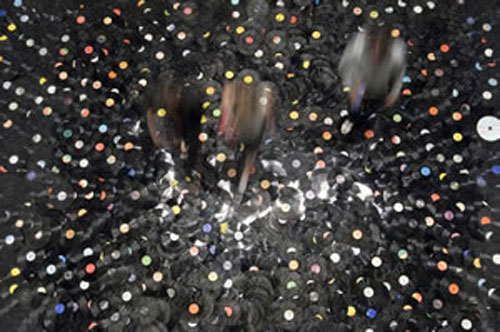
Estación Experimental – CA2M in Madrid
On the 14th of May, the 2 de Mayo Art Centre in Madrid, and the Laboral Centro de Arte and Creación Industrial opened exhibition “Estación Experimental Investigaciones y Fenómenos Artísticos” at CA2M. The show was commissioned by Virginia Torrente and Andres Mengs, and presents the work of 29 artists who work in relation to scientific investigation. The sciences are an amazing source of inspiration, which have brought man to surpass the limits of creation, and many artists have drawn a lot from this over time. These 29 selected artists all share a particular fascination for the different worlds surrounding the sciences – such as science fiction, the paranormal, or just pure science. Science and art are linked by the journey of discovery, and the search for new challenges in order to establish new paradigms for the interpretation of reality. Both take us to unknown worlds – sometimes real, sometimes imaginary, but always an intellectual challenge which shares a poetic common ground. Science and art have evolved in parallel – the development of one impacts the progress of the other, as we can see in the advance of instruments which serve as artistic expression – in painting, and different materials. There is an unavoidable symbiosis between art and the sciences. During the era of modernity, the role of science increased in terms of human advancements and emancipation. Paul Klee, as a response to the new role of science, and its laws, promoted the meeting between art and science, commenting that “knowledge of the laws of design need not imprison.” Just like Klee, many artists have found in science a route...Café Luxembourg
Café Luxembourg is one of the most famous cafés in the whole city and it was declared by critics as one of the best in the whole world.