English
 Français
 Deutsch
 Italiano
 Español
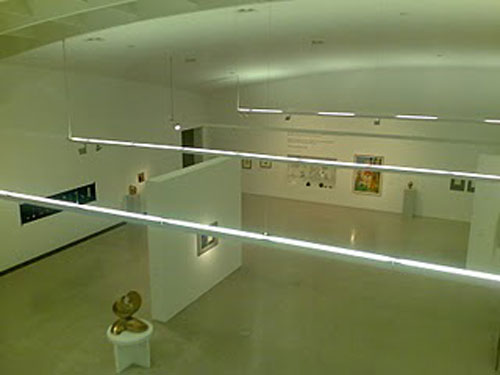
MUMOK. Fokus 01. Rebellion and Climax of the 60s
If you happen to be in Vienna you should definitely visit the museums’ quarter where you can find the Leopold Museum, the Kunsthalle and the MUMOK. This Zone, also known as Vienna’s Museumsquartier is one of the biggest culture centers of the world. It’s located in the old town where the Emperor’s Cavalry used to be. Now there are restaurants, cafes and nice boutiques, as well as 60 000 square meters of space for art works from different eras and styles. The MUMOK is in a new building and in one of this permanent shows it is presenting the exhibit „Fokus 01. Rebellion und Höhepunkt der 60er Jahre” where you can enjoy over 300 works ranging from Pop Art, Fluxus, Nouveau Réalisme and Viennese Actionism. Some of the representatives include Andy Warhol, Claes Oldenburg, Robert Rauschenberg and Jasper Johns. In addition, you will see creations by Daniel Spoerri, Nam June Paik, Yoko Ono, George Brecht and Marcel Duchamp. Viennese Actionism, on e of the most radical movements in modern art is represented by Günter Brus, Otto Muehl, Hermann Nitsch and Rudolf Schwarkogler. Alongside this incredible exhibition you can see 9000 more art works from the first half of the 20th century at the MUMOK, as well as an archive of various materials about the 60s. The museum has not existed for too long, but is already very successful. The first move happened in 1979 when the collection of the museum grew significantly thanks to donations and gifts by the collectors’ couple Peter and Irene Ludwig and the purchase of a collection from Wolfgang Hahn in Cologne. The MUMOK is...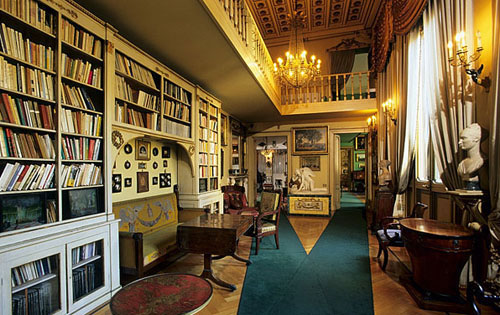
Mario Praz: The House of Life
The known writer and art and literatur critic Mario Praz didn’t only suffer the evil words by Cyril Connolly who said about the House of Life that it is one of the most boring books he ever read, a book so unbelievably exhausting. But also did he have the reputation to bring bad luck and was held responsible for sinking ships, broken lamps and other kinds mishaps, that happened wherever the writer appeared. Of course his fans didn’t want to leave it at that and think that this interpretation of> his text is nothing more than an unlucky coincidence. To them the house of Mario Praz in Rome is one of the most incredible museums of a writer and The House of Life – in which Praz analyzed the story of his wonderful collection – is far from a bad reputation. According to James Joyce this collection was a way for Praz to express the mystery about himself in his furniture. He was one of the greatest experts regarding Antonio Canova and Baroque, as well as Neoclassicism and the history behind the decorations in Pompeji. Luchino Visconti dedicated a figure in one of his movies, Gruppo di famiglia in un interni (1974) played by Burt Lancaster to Praz. For more information visit: http://www.museopraz.beniculturali.it/ Paul Oilzum If you rent apartments in Rome you should visit the Palazzo Primoli (Museo Mario Praz, Via Zanardelli 1).? Translated by: salome antigone...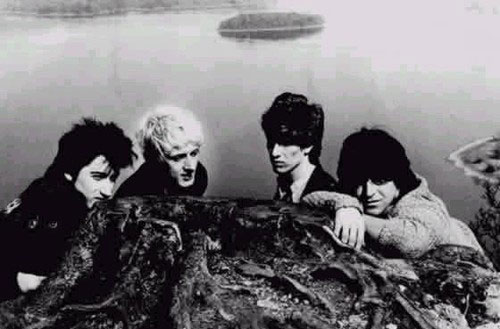
The Chameleons vox live concert in Madrid!
Hypnotic guitars, charming atmosphere, dark lyrics sung by a sensitive and heartbreaking voice, are the characteristic sound of one of the most influential post-punk bands, “The Chameleons vox”. Formed in 1981 in Middleton, England by Mark Burgess, vocals and bass, Dave Fielding and Reg Smithies, guitars, later joined by drummer John Lever, recorded their first single in 1982 and their first album the following year, which was called “Script of the Bridge”. Although the band did not achieve such a huge success as their contemporaries “The Cure” or “The Smiths”, their sound managed to attract a large number of fans and, above all, gain an excellent view of the criticism. In 1985 they released their second album, “What does anything mean?, basically” and in 1986, their album “Strange times”, which strengthened their sound and which would influence many other contemporary bands such as Clan of Xymox or The horrors. In 1987 and with new material to record, the band’s manager died suddenly, what caused a sudden band’s dissolution. Despite this, the band’s music kept on gaining fans around the world, what caused their return in 1999, with multiple concerts. The following year they released a new album, “Strip” and in 2001, “Why call it anything?”, albums which marked the second stage of the British band. This time the concert takes place in Madrid and it’s a must see event, not only for the old school “post-punk fans”, but also for the post-punk revival lovers as, moreover, The Chameleons clearly influences successful bands of the moment such as Interpol or the already famous Editors. The concert will be on the...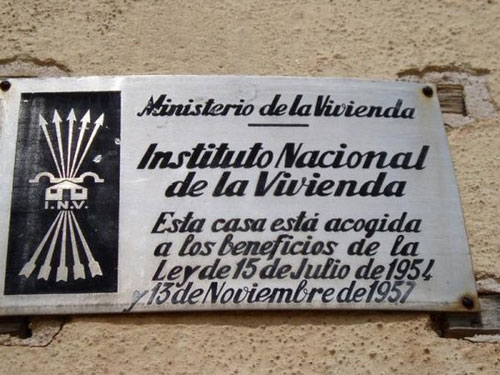
Exhibit of Franco-Symbols in Barcelona
The Memorial Democratic in Barcelona is presenting the exhibit „Símbolos de Franco” (Franco Symbols) until the 13th of February 2011. The curators are Jordi Gixe and Francesc Abad.The exbihit examines the remains of the Franco era that still can be found in Catalonia. The idea is to remind about 40 years of dictatorship to avoid the development of new totalitarian ideas. The Memorial Democratic was founded to promote democratic values and create an initiative that remind of the historic past. Therefore the initiative supports the research and the promotion of these values.In accordance the Memorial is presenting the research results of an investigation of the Franco symbols that are still found throughout Catalonia. Thousands of symbols and images that are still found in Spain demonstrate how far-reaching Franco’s propaganda was. And although more than 3 decades have gone by these symbols still exist in public as well as in private.The symbolic meaning of Franco is comparable to other fascist symbols in Europe and is characterized by many eagles, arches and military references and also images associated with the Catholic Church so Franco would have a better reputation outside of Spain. The symbolic meaning of Franco emerged during the Spanish civil war and served the propaganda for the dictator. Many of the symbols have their origin in the Spanish falange movement of the JONS which added many traditional symbols.During the Franco dictatorship this symbolic spread and used to put a doctrine into place. A good example was the adjustment of the military uniform: a fusion between the uniforms of the JONS and the traditionalists.To reach a totalitarian and global presence...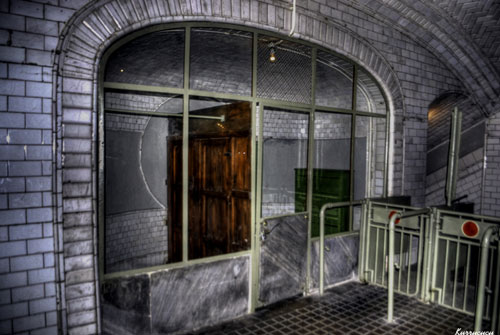
The spooky Chamberí station
Maybe the only detail that is missing in Joyce Ulysses novel a subway system. The Irish writer wrote a book after the massacre of World War I which didn’t praise heroism of war but describes much more the frustrations of the modern hero. After the horror of the war it seems impossible to glorify heroism of the war, but much more to portrait the new hero of the city. As Dublin didn’t have a subway, Joyce placed the action parallel to Odyssey’s visit to the Hades in the cemetery, but we cannot stop imagining how much proper would it have been if the action would have happened in the underground, real neuralgic centre of modern big cities that puts us in direct touch with the phantom reality at the same time that serves as an adequate illustration of the dark labyrinth of the human unconscious. Many artists and writers were fascinated by the subway, real black hole of urban cosmos, as a group of dimensions governed by a different time and space, easily accessible and highly elastic, it has attracted an important part of the creators of the 20th century, interested somehow by its metaphors. Despite Joyce’s omission, both literature and cinema (Jarry, Queneau, Córtazar, Malle, Godard, Besson, Carrax…) have been able to include sometimes this world underneath our feet which almost seems like a parallel universe in which you can see ghosts. After having witnessed the indescribable horrors of the Great War, it was no other choice than rejecting to show the myth of the ancient military heroism and its conquest codes, which are male chauvinist and authoritarian...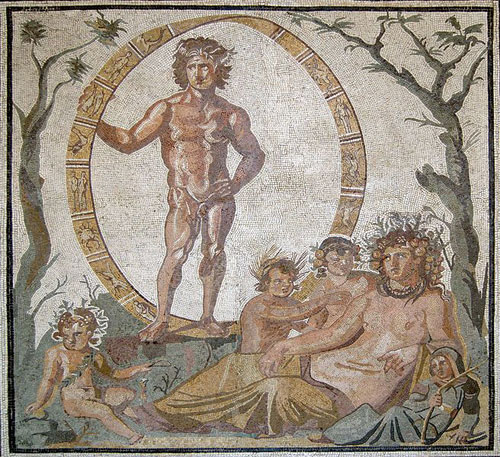
Villa Romana in Florence – one of the oldest artistic sites in Italy
Even though its name is Villa Romana it is located in Florence, in the Via Senese 68 to be exact. Its founders are German. It is one of the oldest artistic sites for modern art in Italy founded with the intention to create an independent center directly financed by the artists where all sorts of artistic expression where accepted and appreciated. In relation to this the Premio Villa Romana was created which represents a critical alternative to prizes handed out by state academies which are known to be more conservative and less interested in promoting new ideas. The project was launched in 1905 when the German painter Max Klinger invested stocks of a group of rich friends in the construction of a house in Florence which was meant to be an art workshop. The house has 40 rooms and about 15 000m² space. One of the main investors was Eduard Arnhold from Berlin, who shortly before purchased the Villa Böckling in Fiesole (province of Florence) who 5 years later founded the Academy of German Artists at the Villa Massimo in Rome. Other sponsors were Adolph vom Rath (president of the Deutsche Bank) and Erich Schulz-Schomburgk (who managed the branch in Lipsia). Although the Villa Romana represents itself as an independent, self-managed project to protest against the artistic academicism in Italy and the slow bureaucracy that often times hinders modern developments, it is obvious that it wouldn’t have been possible without the donations of the German elite and the support of the big German banks. However, it should be mentioned that the history of the Villa Romana is related to...
Christmas Ball 2010 in Berlin
Do you have plans for the holidays this year? If so, you can change them, because if your destination is not Berlin, you´ll regret it for the rest of your days. No, I´m not kidding, the Christmas Ball, a festival that has already been carried out successfully in other cities in Germany arrives in Berlin and has an unbeatable lineup! The festival will be headlined by none other than Fields of the Nephilim, a band led by the “master of gothic rock,” and “Guru of Darkness”, Carl McCoy. This year we were lucky to see him on tour in several European countries, and his concerts showed that his 25-year career has only strengthened and refined his musical skills. If you missed the tour, now is your chance to see him. Enter a different world and get caught up in an atmosphere that few bands can manufacture. The second headliner is another luminary we’ve been looking forward to mentioning, German group Project Pitchfork. They are known for there e-industrial sound, led by Peter Spiller is a band that examines philosophical issues of great substance and depth, accompanied by the best electronic beats. Thirdly, Laibach, pillars of the industrial genre. It´s pretty hard to talk about the music of Laibach, because they have covered so much musical ground over the course of there career. The best thing to do is see them live at the Christmas Ball. Last but not least, is a band that lends pure spark to the dance floor, Agonoize. Know for playing the newest incarnation of German industrial sound, they will finish up the night along with...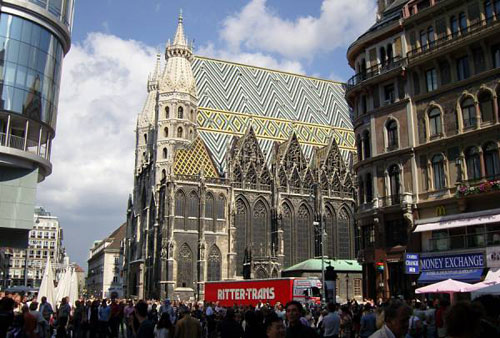
Vienna: Best Quality of Life in the World
If you are tired of the stress of a hectic life you might need to migrate across the planet to find a little corner of paradise. Even with no ocean or beach or a wild forests, Vienna has been selected as the city with the best quality of life for the second consecutive year. The Research is conducted as part of a project of the New York firm Mercer Human Resource Consulting which each year considers 221 cities around the world and analyzes their standard of living based on ten categories and 39 factors include political, social and economic freedoms and stability as well as the quality of public services and cultural and artistic venues. Also considered relevant are sustainability and environmental care, the quality of public water, air, and the presence of parks in the urban layout. As Josef explains Papousek, Austria Mercer administrator “among the most important criteria for classification are security, efficiency of infrastructure, political stability, and social and economic factors” These features won Vienna first place in the world for their living. For more information check out www.mercer.com With 108.6 points, Vienna has maintained its score from 2009 and is closely followed by Zurich (again second) with 108 points. Geneva is third, while the fourth position is occupied simultaneously by Vancouver, Canada, and the New Zealand city of Auckland, both with 107.4 points. In the last position is the Iraqi capital, Baghdad, and the U.S. city that is topmost on the list is Honolulu, which probably is not really what comes to mind when we think of the typical American city. Though Vienna has proved...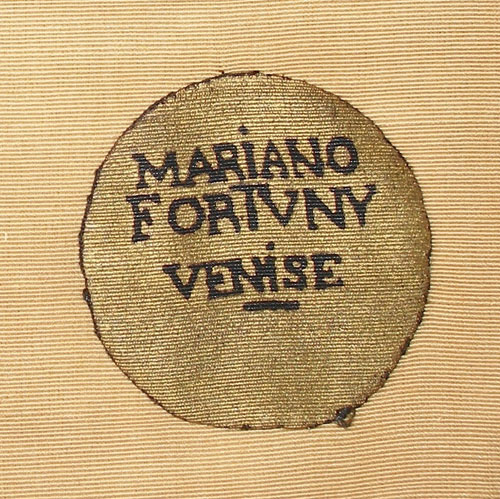
Mariano Fortuny Exhibit in Venice
The painter and designer Mariano Fortuny, despite his Catalan origins, always had a close relationship with Italy, especially Venice. This was the city where his mother decided to move in 1889 after years of living in Paris, and where he continued his studies painting and copying works by some of his artistic idols Venetians. It was in Venice where the multifaceted artist met his wife Henrietta and began a textile printing shop where they created some of the world’s most iconic woven fabrics. He became famous not only in the world of fashion, but also became known as an innovator in theatre, industrial design and other decorative arts. Now the legacy of Fortuny comes home to Venice thanks to a fantastic exhibition at the Fondazione di Venezia Musei Civici, which opened on September 4 and will remain open until January 9, 2011. Under the heading “Silk and Velvet” the exhibit will commemorate this great artist, show some of his most famous designs, including the extraordinary Delphos series of delicate pleated silk dresses. His work continues to be referential in the field of fashion design. And in a way you could say that some of these amazing pieces shine stronger in their place of birth, as many of them were designed in the textile printing shop in the Palazzo Pesaro Orfei. For more information see: http://www.museiciviciveneziani.it/frame.asp?pid=1871&musid=215&sezione=mostre ? Heloise Battista If you´re not already familiar with the work of this interesting character, I recommend renting apartments in Venice and visiting the exhibition at the Fondazione di Venezia Musei Civici. Especially for those interested in fashion and decorative arts, this exhibition...