English
 Français
 Deutsch
 Italiano
 Español


ONLY BE AMSTERDAMMER

ONLY BE BUDAPESTER

ONLY BE VENETIAN

ONLY BE BARCELONIAN

ONLY BE BERLINER

ONLY BE VALENCIAN

ONLY BE ISTANBULITE

ONLY BE FLORENTINE

ONLY BE LISBOETA

ONLY BE LONDONER

ONLY BE NEW YORKER

ONLY BE MADRILENIAN

ONLY BE MALAGUEÑO

ONLY BE MILANESE

ONLY BE PARISIAN

ONLY BE PORTUENSE

ONLY BE PRAGUER

ONLY BE ROMAN

ONLY BE SEVILLIAN

ONLY BE PROXIMAMENTE

ONLY BE ATHENIAN
ONLY BE COMING SOON
ONLY BE COMING SOON
ONLY BE COMING SOON
Last posts

Berlin’s Checkpoint Charlie
On the night of August 12 1961, in one of the most secretive missions carried out in history, more than four thousand Soviet troops converted what had been an imaginary dividing line through Berlin into a very real line. The next morning incredulous Berliners, on both sides of the East-West divide, woke up face to face with the wall that was to keep them divided, both politically and physically for the next four decades. During those early days the wall was just a fence, heavily guarded by well-armed soldiers. It was not unknown for these soldiers to escape to the West side themselves. The first one on record was 19 year-old Hans Conrad Schumann who threw away his gun and ran to the other side when his comrades were distracted. He became famous for being the first deserter of the Berlin Wall. The wall was built quickly and efficiently. It soon became an impregnable border, dividing Berlin in two, splitting apart families, lovers and friends. Several gates were fitted to allow entry to authorized military personnel and international ambassadors. Each of these entry points was named after a letter: A (Alpha), B (Bravo) or C (Charlie). In Friedrichstraße was the letter C: Checkpoint Charlie. The name of this gateway was all over the media in October 1961, when Soviet tanks faced off against American tanks, both sides with their fingers on the trigger and about to start World War 3. Although that particular moment of crisis was resolved, there were many more tragedies which occurred around the wall. The documentation centre in Potsdam states that a total of 120 people died. Other sources cite twice... read more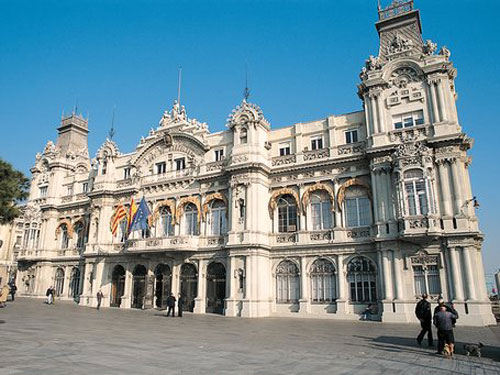
Enric Sagnier in Barcelona
Until the 8th of January, you can discover the history of the social life of Barcelona and how it related to the development of the city, through an exhibition of the life and work of Catalan architect Enric Sagnier at the CaixaForum – called La ciudad de Sagnier. Modernista, ecléctica y Monumental. The exhibition hopes to establish the nexus between the local bourgeoisie to which Sagnier belonged, and the stamp on architecture and its effects on the overall design of the city. To these ends, the show is presented via photographs of the buildings; photographs of an era which demonstrate the relations between the bourgeoisie and the development of the city. Enric Ferran Josep Lluís Sagnier i Villavecchia, marques of Sagnier, was born in Barcelona in 1858. Due to his social standing, he was always associated with high authorities, a position which was initially considered important for the development of architectural projects for the city. It was Sagnier who developed the vast majority of key works in the Catalonian city. With a classic style, which a touch of eclecticism which also placed him near to modernism too, it marked a trend in the era, for its functional quality which broke away from the oriental and Arabic-inspired fashions. Sagnier´s works are clearly dividable into stages. His first stage, which goes up until 1900, is characterized by a monumental eclecticism which expresses youthfulness, and the pursuit of transcendence through work. The second stage goes up until 1910, at which point he became profoundly influenced by his travels to Paris, and the rest of Europe, and the works during this phase are... read moreGay and Lesbian Film Festival in Madrid
The 16th edition of the Gay and Lesbian Film Festival in Madrid will take place between the 3rd and 13th of November.
read more
RANKINGS
Do you want to know the best cities to escape for gastronomy? We will tell you!

VERSUS
Showdown: pure and simple. Comparison is the best way to make a decision.

TRAVEL TIPS
Travelling means many things. We will provide you with all you need. Don’t miss anything.

APPS AND BOOKS
Technology and literature, the necessities of a good traveler.

GUEST
We want to hear your story; we want to travel with you.
Changes, progress and achievements. Only-apartments daily.
Promotions