English
 Français
 Deutsch
 Italiano
 Español


ONLY BE AMSTERDAMMER

ONLY BE BUDAPESTER

ONLY BE VENETIAN

ONLY BE BARCELONIAN

ONLY BE BERLINER

ONLY BE VALENCIAN

ONLY BE ISTANBULITE

ONLY BE FLORENTINE

ONLY BE LISBOETA

ONLY BE LONDONER

ONLY BE NEW YORKER

ONLY BE MADRILENIAN

ONLY BE MALAGUEÑO

ONLY BE MILANESE

ONLY BE PARISIAN

ONLY BE PORTUENSE

ONLY BE PRAGUER

ONLY BE ROMAN

ONLY BE SEVILLIAN

ONLY BE PROXIMAMENTE

ONLY BE ATHENIAN
ONLY BE COMING SOON
ONLY BE COMING SOON
ONLY BE COMING SOON
Last posts
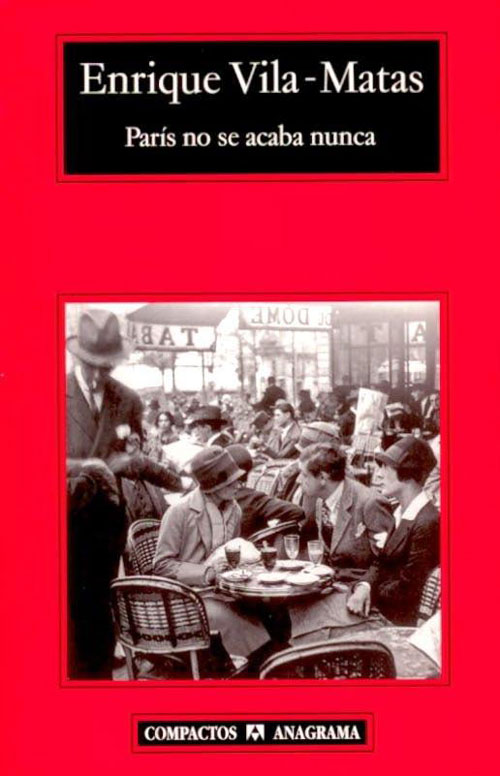
Vila-Matas, Paris never ends
In his novel from 2003 Paris never ends writer Enrique Vila-Matas from Barcelona pays a strange homage to Marguerite Duras and Ernest Hemingway, and through them, a way of being in the world that is not understood unless its learnt from books and words. In more than one sense it is a novel of sentimental education, a book about the ways in which a young man starts on the road of life and art. The book´s title comes from the last paragraph of the autobiographical novel by Hemingway, A Moveable Feast, where the American writer says of the French capital that if you lived in it, it is a city that never ends, to which one always returns -in a different way- according to each individual. For Hemingway, as stated in the last sentence of the novel, a golden memory remains of the years of his youth in which in Paris he was very poor and at the same time very happy. To this luminous Hemingway memory, Vila-Matas sadly and ironically stamps his own, for he too was a very poor young man in Paris, but unlike the Nobel Prize also a very unhappy being and that is what he intends to tell in his book, the first two years in the early seventies when he was very poor and very unhappy in Paris due to his ignorance of how to proceed correctly in both life and in literature, fields in which he was firmly installed in a cult of the black This nihilistic and the despairing, irreplaceable synonymous that he thought of elegant and distinguished due to his... read more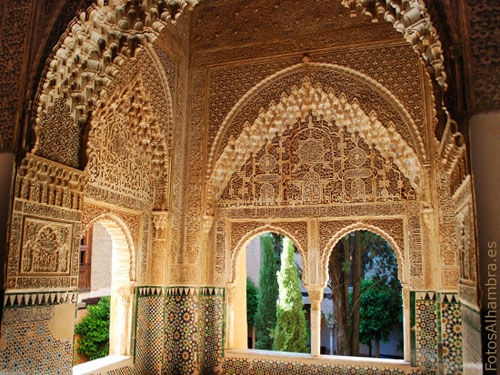
Surprising findings in the Alhambra
We tend to have a black and white vision of reality so that any new archaeological discovery is likely to either be dismissed, ignored or deactivated so you mark it as casual and unrepresentative, either being described as revolutionary and capable of creating a new paradigm when it is convenient. In all likelihood the epithet “grotesque” (Grotta, an Italian word that means a cave or a crypt) comes from an accidental discovery that occurred in Rome during the height of the Renaissance (XV century) in the subsoil of the Titus hot water springs. There were a number of ornamental paintings whose essential features was in the words of Mikhail Bakhtin, author of the brilliant book The popular culture in the Middle Ages and the Renaissance an “a fantastic unusual and delicious mix of plants, animals and humans that intertwined and transformed fantastically together” Since this type of art did not match the current renaissance ideas of aspiring to be synonymous of the recovery of the full civilization of antiquity, it was considered at first to be an anomaly, a product perhaps of the demented imagination of a solitary artist. Only with the passage of time, when more examples of this art was found in different parts of ancient Greece, they had to accept that the grotesque was a common manifestation in the classical natural world we lived in with what we considered that the time after his only aesthetic canon, pushing through the idea of ??historical overlaping of different forms that catch the substrates above the elements that are convenient for them due to political legitimacy reasons that have... read more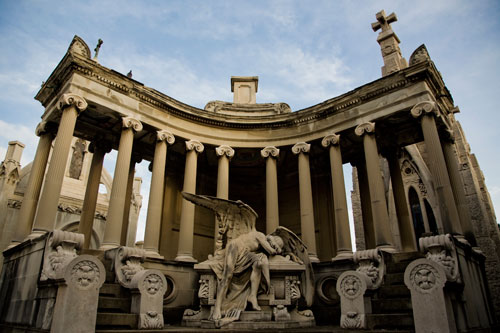
Barcelona cemeteries: Montjuic and Poble Nou
Artists, adventurers, scientists, the rich and the poor, all of them are part of the history of Barcelona and they have a special place in two of the most important necropolis of the city: the cemeteries of Montjuic and Poblenou. Poblenou was the first cementary of the city. Its history reflects the changes that took place at the end of the 18th century and at the beginning of the 19th century. The cemetery of Poblenou was divided into two sections. The first sections began to be built in 1775. The construction project of the Poblenou cemetery began thanks to the bishop of the city, who saw the need to create a cemetery, due to the fast changes in society and the problems that were emerging for public health because of the custom of burying the corpses in the churches of each neighborhood. By that time, the piece of land where the cemetery would be built was an agricultural sector, outside the walls of the city. Despite the fact that the new Spanish legislation established the construction of cemeteries far from the cities, the bourgeois population of Barcelona considered that being buried far from their own churches was dishonorable. For this reason, the first cemetery became the final resting place for the poorest and sickest people who had died in the hospitals. The second section of the cemetery was built after the destruction of the first section of the cemetery in 1819. The project was carried out by the Italian architect Antonio Ginesi. The modern section of the cemetery has been maintained up to the present day. The Poblenou cemetery... read more
RANKINGS
Do you want to know the best cities to escape for gastronomy? We will tell you!

VERSUS
Showdown: pure and simple. Comparison is the best way to make a decision.

TRAVEL TIPS
Travelling means many things. We will provide you with all you need. Don’t miss anything.

APPS AND BOOKS
Technology and literature, the necessities of a good traveler.

GUEST
We want to hear your story; we want to travel with you.
Changes, progress and achievements. Only-apartments daily.
Promotions