English
 Français
 Deutsch
 Italiano
 Español


ONLY BE AMSTERDAMMER

ONLY BE BUDAPESTER

ONLY BE VENETIAN

ONLY BE BARCELONIAN

ONLY BE BERLINER

ONLY BE VALENCIAN

ONLY BE ISTANBULITE

ONLY BE FLORENTINE

ONLY BE LISBOETA

ONLY BE LONDONER

ONLY BE NEW YORKER

ONLY BE MADRILENIAN

ONLY BE MALAGUEÑO

ONLY BE MILANESE

ONLY BE PARISIAN

ONLY BE PORTUENSE

ONLY BE PRAGUER

ONLY BE ROMAN

ONLY BE SEVILLIAN

ONLY BE PROXIMAMENTE

ONLY BE ATHENIAN
ONLY BE COMING SOON
ONLY BE COMING SOON
ONLY BE COMING SOON
Last posts
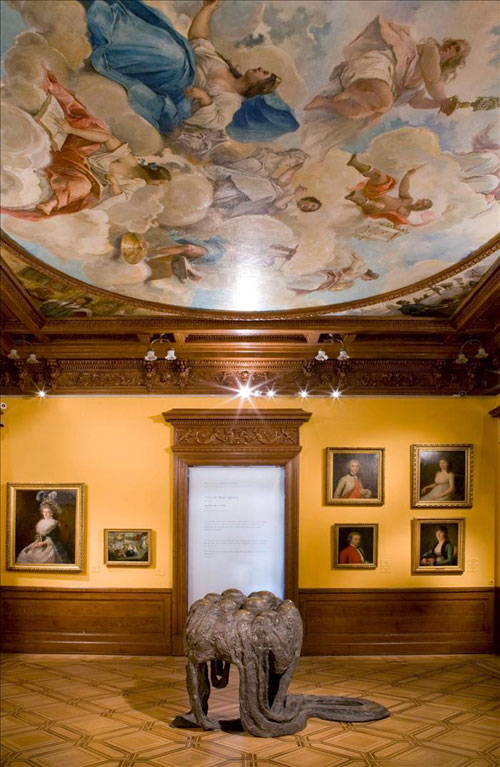
¿Qué hace esto aquí?: Lázaro Galdiano Museum in Madrid
The Lázaro Galdiano Museum will present the exhibition “Que hace esto Aquí” Contemporary Art from the Maria Jose Jove Foundation at the Lázaro Galdiano Museum and will display a very significant collection of art work of some of the most important European and Spanish origin contemporary artists. The exposition is part of the Maria José Jove Foundation private collection and it is the first time this institution from La Coruña has an exhibition in Mardid The art works that you will be able to enjoy in the museum will be varied and different in view of the fact that the idea behind this exhibition is to provoke in the viewer a hefty variety of feelings. In the exposition you will be able to see paintings from Pablo Picasso, one of the most important painters in the history of Art The art works that have been chosen to present this exhibition are those that somehow or another were significant for the different artistic movements that occured during the XX century. Beside the Modelo en el Taller from Picasso, a cloth from Miró belonging to the fortie can be seen as wel as artwork from Francisco Leiro, Tino Grandío, Antonio Saura, Salvador Dalí, Miquel Barceló, Zurbarán, Goya, Kandinsky, Manolo Millares, Manolo Valdés and Eduardo Chillida amongst other very well known artists More Info: http://www.flg.es/agenda/contenido/exposiciones_temporales.htm Museo Lázaro Galdiano: Serrano 122, Madrid MiLK The exhibition will take place in Madrid until the 20th of June and can be visited in the Lázaro Galdiano Museum. If you want to enjoy ¿Qué hace esto aquí? Contemporary art of the María José Jove Foundation and see... read more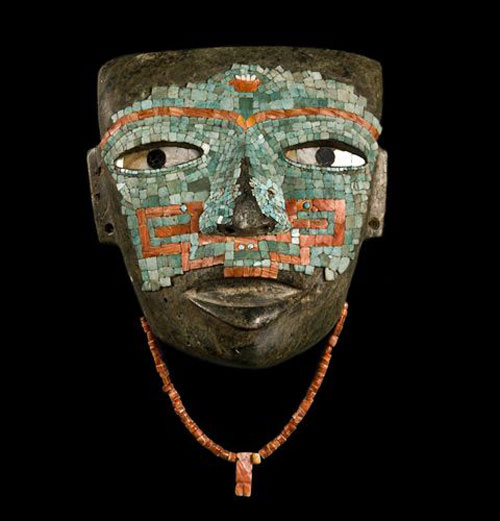
Teotihuacan, in CaixaForum Barcelona
Barcelona’s CaixaForum is holding an exhibition entitled Teotihuacan la Ciudad de los Dioses (Teotihuacan, City of Gods). It is composed of around 400 pieces of pre-Hispanic Mexican art selected from some of the most important museums in Mexico. The exhibition, open until 19 June, aims to reveal the wealth of this legendary civilisation that is famous for its remarkable political system, its incredible architecture and art, as well as its mysterious disappearance. The city of Teotihuacan is located just 45 kilometres from Mexico City. In 1987 it was declared a World Heritage Site by UNESCO. Its name comes from the náhuatl tongue and means ‘the place where gods are born’. At its height, The City of Gods extended to over 20 square kilometres and contained a population of around 100, 000. Its culture spanned almost eight decades, beginning 200 years before Christ and coming to an end sometime after 700 AD. The city was organized around great monuments: the pyramids of the sun and the moon, and the magnificent Temple of Quetzalcoatl, with over 366 serpent heads representing the water goddess depicted on its four facades. Like any great city, Teotihuacan was built using urban planning. The Avenue of the Dead was designed to connect the two most important focal points for their culture: the pyramids. Teotihuacan was an incredible city: the most well constructed of any on the Mesoamerican continent, its remains reveal to us a culture with a huge political capacity for creating social cohesion on the basis of control and fear. Its vastness, standing tall in the middle of a wide valley, must have inspired admiration... read more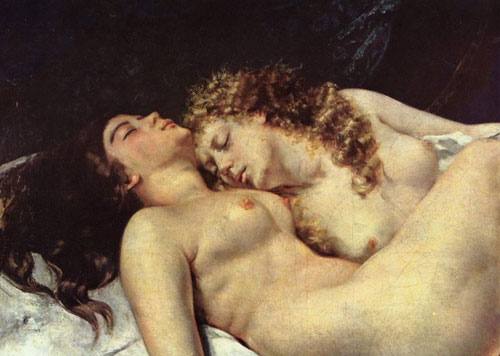
The Realism of Courbet in Barcelona
For a long time, Gustave Courbet (1819-1877) was thought of as a revolutionary painter. On the one side, was his professional status as a free man, whose desire was not to depend on any form of power or religion. There was also his political activism; he was an active participant in the Paris Commune, in which he entrusted himself with the administration of the museums of the city – which resulted in a prison sentence and a subsequent period of exile. On the other side, there is the scandal caused by some of his more notorious paintings, such as The Origin of the World, a graphic depiction of sex, and female nudity – or The Dream (also known as The Two Friends, or Laziness and Lust), which shows two naked women sleeping arm in arm, as though having just slept together, with one resting her head on the other´s neck. However, probably the true revolution of Courbet´s work is not in his evident capacity to shock, and challenge the prudish, hypocritical bourgeoisie morality – but rather his way, more in line with the work of Caravaggio two centuries earlier, of opting for the truth, to the detriment of established notions of beauty; of accepting nothing but the most natural. It was one of Courbet´s exhibitions, in a shack in 1855, titled The Realism, which gave name to the entire realism movement, changing the course of modern art forever. And when Courbet painted himself in his shirtsleeves, like a vagabond, it shook the art world, for its unapologetic expression of the world as he saw it, and opened up a... read more
RANKINGS
Do you want to know the best cities to escape for gastronomy? We will tell you!

VERSUS
Showdown: pure and simple. Comparison is the best way to make a decision.

TRAVEL TIPS
Travelling means many things. We will provide you with all you need. Don’t miss anything.

APPS AND BOOKS
Technology and literature, the necessities of a good traveler.

GUEST
We want to hear your story; we want to travel with you.
Changes, progress and achievements. Only-apartments daily.
Promotions