English
 Français
 Deutsch
 Italiano
 Español


ONLY BE AMSTERDAMMER

ONLY BE BUDAPESTER

ONLY BE VENETIAN

ONLY BE BARCELONIAN

ONLY BE BERLINER

ONLY BE VALENCIAN

ONLY BE ISTANBULITE

ONLY BE FLORENTINE

ONLY BE LISBOETA

ONLY BE LONDONER

ONLY BE NEW YORKER

ONLY BE MADRILENIAN

ONLY BE MALAGUEÑO

ONLY BE MILANESE

ONLY BE PARISIAN

ONLY BE PORTUENSE

ONLY BE PRAGUER

ONLY BE ROMAN

ONLY BE SEVILLIAN

ONLY BE PROXIMAMENTE

ONLY BE ATHENIAN
ONLY BE COMING SOON
ONLY BE COMING SOON
ONLY BE COMING SOON
Last posts

Folcore. Electronic music with latin-american rhythm in Barcelona
Music and dance are two elements which have the power to free the spirit – and electronica is one genre which is particularly innovative in this respect. What sets Folcore apart from other emergent groups is that it takes the music of Latin America into the marginal musical communities of Europe. Folcore was born as an audiovisual collective in underground spaces round Barcelona. It´s counter-cultural approach seeks to bring together different rhythms of displaced, alienated communities in the context of the economic crisis, and globalisation which has provoked people to turn to new creative horizons. Aside from the collective´s critical, multicultural approach, they the mix sounds of the cumbia villera, which was born in the marginal neighbourhoods of Argentina,; vallenato colombiano, along with others which merged the styles of reggae, salsa, bailanta, malambo, Brazilian rhythms and Angolan Kuduro. The challenge of transporting electronic music to the ethnic musical landscape, creating new tones and styles in order to provoke an aesthetic, expressive effect has prompted recognition amongst fans and lovers of electronic music and dance in Barcelona. The special thing about this type of music is its roots – most of which are variations of music styles which grew out of poor areas, where delinquency and cultural resistance were channeled into dance. Latin America has proved the fertile ground on which to express social phenomenon through music – in the 60s and 70s there was a surge in protest music, which took traditional sounds to articulate reactions to the political changes of the revolution. The 80s were marked by the Nueva Trova born in Cuba, which adapted itself to the... read more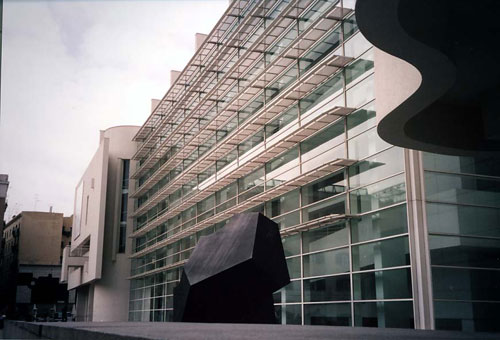
MACBA & Narrative Parallels in Barcelona
From the 14th of May, MACBA presents exhibition Museo de las Narrativas Paralelas, commissioned by Zdenka Badovinac and Bartomeu Marí. It is the first to be organised by The International, which is an initiative formed by five European museums, in 2009, of over 40,000 works. The show compiles one hundred pieces from the Galerija Museum of Modern Contemporary Art in Slovenia, in participation with the Bratislava Julius Koller Society Museum, Van Abbemuseum, de Eindhoven Museum van Edendaagsen Kunst, de Amberes, and MACBA in Barcelona. This interesting exhibition attempts to question the existing narratives in art, in which western area of Europe has implemented a series of aesthetically acceptable rules; ignoring the important creative processes taking place in the ex-Soviet Union – two parallel creative processes which did not meet. Despite the creative richness which arose from the complex political climate, many Eastern European artists are practically unknown, along with their work. During the 70s and 80s there took place interesting experimentation with the notion of the body amongst artists in Eastern Europe, who challenged and questioned the social, political and philosophical norms, denouncing the banality of power, and the irrationalities of the Soviet communist regime. It was a kind of aesthetic which confronted power through the use of the body as a liberator. Amongst these artists were Czechs Pert Stembera and Jan Mlcoch, who made installations using their bodies as a comment on the socio-political reality, deliberately subjecting themselves to physical danger and violence. Stembera started out as a painter in 1966, before moving to Paris after the events of 1968 and experimenting with self-inflicted experiments, such as going... read more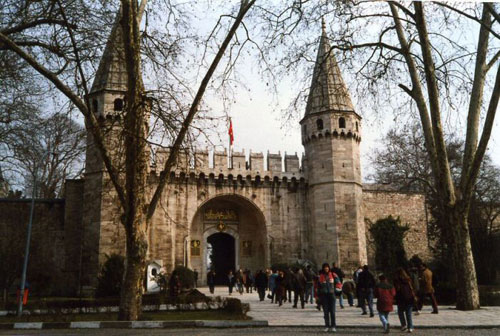
The Magic Shirts at the Topkapi Palace in Istanbul
Between the Golden Horn and the Marmara Sea, with an incredible view of the Bosforo, sits the Topkapi Palace http://www.topkapisarayi.gov.tr/. Built by order of the Sultan Mehmed II a few years after the final collapse of the Byzantium, it was the centre of administration for the Ottoman empire for the following four centuries – until 1853, and the Christian era, when the Sultan Abdulmecid decreed that the headquarters move to the modern Dolmabahçe Palace. Today, the Topkapi Palace is a museum dedicated to those far away glory years of the Ottoman Empire, and which houses some of the most magnificent treasures in the world. Visitors who wander the vast and winding spaces are often grateful for a tourist guide to show them the Pearl room for example, which holds the Topkapi head, embellished with precious stones, gold and emeralds – or the room which displays the famous Indio-Turkish throne from the 18th century. But one thing we would advise you not to miss out on is the extraordinary collection of talismanic shirts, made famous recently thanks to the publication in Istanbul of Hülya Tezcan´s Las Camisas Mágicas del Palacio de Topkapi. In Turkish culture, great importance has always been placed on magical practice – whether aesthetic or ritual – as a lesson for the future, from coffee, to the summoning of the omnipresent Turkish eye, or nazar to cast curses. Tezcan´s book speaks of the power of the talismanic tops to make the fighter invisible in battle, to protect from evil, to maintain good health and aid fertility. The latter was the case with the powerful Sultana Nurbanu –... read more
RANKINGS
Do you want to know the best cities to escape for gastronomy? We will tell you!

VERSUS
Showdown: pure and simple. Comparison is the best way to make a decision.

TRAVEL TIPS
Travelling means many things. We will provide you with all you need. Don’t miss anything.

APPS AND BOOKS
Technology and literature, the necessities of a good traveler.

GUEST
We want to hear your story; we want to travel with you.
Changes, progress and achievements. Only-apartments daily.
Promotions