English
 Français
 Deutsch
 Italiano
 Español


ONLY BE AMSTERDAMMER

ONLY BE BUDAPESTER

ONLY BE VENETIAN

ONLY BE BARCELONIAN

ONLY BE BERLINER

ONLY BE VALENCIAN

ONLY BE ISTANBULITE

ONLY BE FLORENTINE

ONLY BE LISBOETA

ONLY BE LONDONER

ONLY BE NEW YORKER

ONLY BE MADRILENIAN

ONLY BE MALAGUEÑO

ONLY BE MILANESE

ONLY BE PARISIAN

ONLY BE PORTUENSE

ONLY BE PRAGUER

ONLY BE ROMAN

ONLY BE SEVILLIAN

ONLY BE PROXIMAMENTE

ONLY BE ATHENIAN
ONLY BE COMING SOON
ONLY BE COMING SOON
ONLY BE COMING SOON
Last posts

A Century of the Circus: Paulina Andreu Rivel Schumann
The cultural phenomenon of the circus has gradually undergone a resurgence, thanks to the recent recognition of the complexity of the circus arts. Even if circuses have often been seen as places of animal exploitation, this recognition of its aesthetics, and its contribution to fine art is an opportunity to delve a little deeper. Beyond the “cruel” label of the spectacle is a wonderful way of life, whose inhabitants live for their art – an art which forces them to adapt and sacrifice a lot. Itinerant, ephemeral and diverse, the circus troupe traverses the globe – great cities and small villages alike – showcasing it´s joyful, virtuoso world. The big top and all that goes on inside it involves a lot of hard work. The inhabitants of the circus are its creators; tightrope walkers, trapeze artists, jugglers, magicians, clowns – each person has their own special role in the circus micro-community. Circuses are often made up of entire families, and is a lifestyle which is passed down, from generation to generation. Telling these stories – or at least one of them – was the aim of exhibition “Un siglo de circo” (“A century of the circus“), where we learn about Paulina Andreu Rivel, daughter of famous Barcelona-born clown Charlie Rivel.* She may not be as well known as her father, but Paulina Andreu Rivel has had an active career in the circus – on the eve of her 90th birthday – is almost a century old. A collection of photographs tell the story of Paulina Rivel, and the many well-deserved tributes she has received over the years – the... read more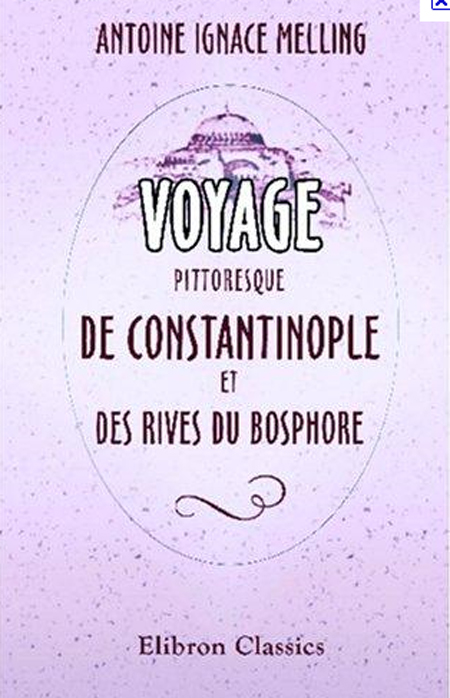
Antoine-Ignace Melling and Istanbul
It is said that in the late eighteenth century Hatice Sultan, sister of Ottoman reformist Sultan Selim III and bowed with creative curiosity for news from the West, fell in love at first sight with the gardens that festooned the former Danish trade ambassador´s mansion in Istanbul and immediately wanted a natural environment like in his palace. Without caring about the scandal, she surrendered to the desire to walk when out on a whim around a Western-style garden, a maze of roses, acacias and lilacs she claimed to have dreamed of since childhood. In her dream there was a crystal ball, the base of a statue and a winged lion covered by nets of an unseen colour produced by stylish and tiny floating women working on stranger looms in a small annex pavilion, which years later she identified in an English painting as an European kiosk. Apparently the painting was a gift of Antoine-Ignace Melling, the person recommended to her as the designer of these gardens that she so desperately desired. Born in 1763, Melling was an artist, architect and German mathematician, in whose veins ran also Italian and French blood. At the age of 19 he left the city of Strasbourg to obey the call of the East, in line with the emerging Romantic wave beginning to stir the conscience of Europe. Thus he came to Istanbul, where he would inhabit for the following two decades of his life. Melling not only designed neoclassical style gardens and worked as an art adviser for Hatice Sultan, but he also scheduled annex pavilions and internal arrangements to the summer palace... read more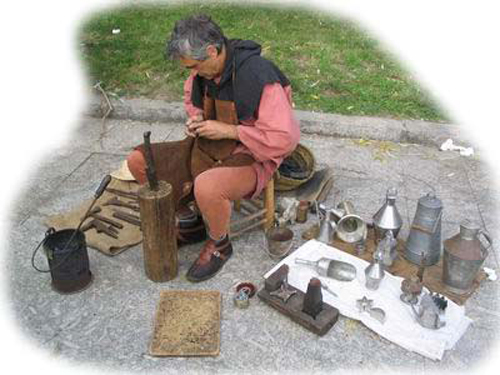
Montblanc Medieval Market
The story goes that Montblanc was at the mercy of an evil dragon which had brought much disgrace to the village. One day the town, fed up of all the suffering, got together, and made a pact with the dragon, so that he would stop his path of destruction. The agreement was that, every now and again, the village would offer somebody up to the dragon, to quench his thirst for blood – and that the name would be drawn out of a hat. So, one terrible day, the chosen one happened to be the daughter of the King of Montblanc. Knowing that his daughter was a villager just like everybody else, it was with great sadness that the King had to obey the order. The princess began her journey to the dragon´s den – but just as she reached the entrance of the cave, there appeared a gentleman riding a white steed who introduced himself as George, and announced that his mission was to save the princess, and the village from the evil dragon. A great battle commenced between George and the dragon. Finally, the dragon was killed, and the village was free. Legend also has it that in the spot where the dragon died, grew a bush of red roses. This took place on the 23rd of April – and is celebrated with San Jordi, who is the patron saint of Catalonia. Medieval week is commemorated with a dramatisation of the legend of St George in the beautiful town centre, during which the “blood” of the dragon is drunk by the visitors to the fair. There is... read more
RANKINGS
Do you want to know the best cities to escape for gastronomy? We will tell you!

VERSUS
Showdown: pure and simple. Comparison is the best way to make a decision.

TRAVEL TIPS
Travelling means many things. We will provide you with all you need. Don’t miss anything.

APPS AND BOOKS
Technology and literature, the necessities of a good traveler.

GUEST
We want to hear your story; we want to travel with you.
Changes, progress and achievements. Only-apartments daily.
Promotions