English
 Français
 Deutsch
 Italiano
 Español


ONLY BE AMSTERDAMMER

ONLY BE BUDAPESTER

ONLY BE VENETIAN

ONLY BE BARCELONIAN

ONLY BE BERLINER

ONLY BE VALENCIAN

ONLY BE ISTANBULITE

ONLY BE FLORENTINE

ONLY BE LISBOETA

ONLY BE LONDONER

ONLY BE NEW YORKER

ONLY BE MADRILENIAN

ONLY BE MALAGUEÑO

ONLY BE MILANESE

ONLY BE PARISIAN

ONLY BE PORTUENSE

ONLY BE PRAGUER

ONLY BE ROMAN

ONLY BE SEVILLIAN

ONLY BE PROXIMAMENTE

ONLY BE ATHENIAN
ONLY BE COMING SOON
ONLY BE COMING SOON
ONLY BE COMING SOON
Last posts
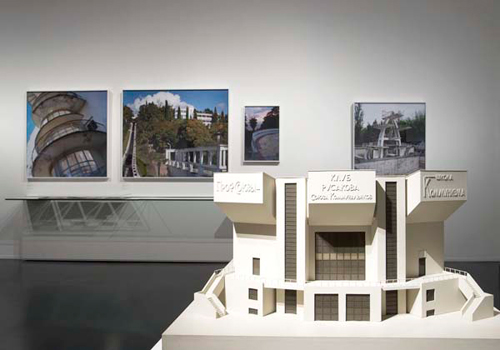
Soviet Constructivism at the CaixaForum, Barcelona
Barcelona´s CaixaForum can always be relied upon for excellent exhibitions on architecture – and it looks like their latest is not going to disappoint. In the last year, the museum has put on two brilliant, extensive shows of two of the most relevant, key architects of their respective times – Italian Andrea Palladio (1508-1580), who is considered one of the most influential and important architects in Western history, and British Richard Rogers, creator of some of the most iconic, innovative architectural works of the 20th and 21st centuries – such as the Paris Georges Pompidou Centre (with Renzo Piano), London´s Lloyd´s building, and terminal 4 of Bajaras airport in Madrid. And now, commissioned by Mary Anne Stevens, is Construir la Revolución. Arte y Arquitectura en Rusia, 1915-1935 (http://obrasocial.lacaixa.es/nuestroscentros/caixaforumbarcelona/construirlarevolucion_es.html), on until the 17th of April. As the name suggests, it is a show dedicated to the art and architecture made in Russia during the period between the 1917 October Revolution, and the establishment of the new Soviet Union. These years were a time of much experimentation and creative activity in all of the art forms – painting, sculpture, design, theatre, literature, cinema – and in particular, architecture, which became marked for its “constructivism;” clean lines and geometric forms; and it is this style movement that is the focus of the exhibition. Architects Mamén Domingo and Ernest Ferré have put together a comprehensive, cohesive montage of 250 works – including large, colour photographs taken by Brit Richard Pare in the last twenty years, archive images, drawings, and paintings lent by the Moscow State Schusev Architecture Museum and the Costakis Collection at... read more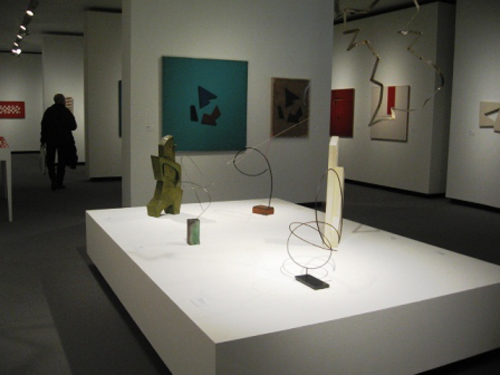
Cold America in the Juan March Foundation in Madrid
Until May 15 the exhibition Cold America. Latin American geometric abstraction, 1934-1973 is presented at the Juan March Foundation in Madrid. The exhibition is organized around 300 works and seeks to establish new parameters in the history of Latin American geometric abstraction, highlighting the particularities and differences it has with this artistic movement in Europe. Comprised of paintings, sculptures, architecture and photography from Argentina, Brazil, Colombia, Cuba, Mexico, Uruguay and Venezuela, the simple is chronologically framed in the return of Joaquin Torres Garcia to Uruguay (1934) and the return of Jesús Rafael Soto (1973) to Venezuela for the opening of the Ciudad Bolivar Museum. The geometric abstraction has its roots in the Kasimir Malevich’s suprematism, the Piet Mondrian’s neoplasticism and Wassily Kandinsky’s avant-garde. It is described as a stream of abstract art that emerged in response to Impressionism, striving for objectivity and universality that the geometric mean. One of the drivers of geometric abstraction in Latin America was Joaquín Torres García. He was born in Montevideo in 1874. At 17, he traveled to Spain to finish school in the town of Mataró, where his father´s family lived. He studied at the School of Fine Arts in Barcelona where he was influenced by French Impressionism. His connection with the stream of geometric abstraction occurred in Paris, where he was invited to participate in the group who frequented Piet Mondrian and joined the Cercle et Carré. Torres Garcia brings the logic in the composition and the inclusion of symbolic figures to the group. In 1934 he returned to Uruguay and joined the elite of art, driving forward the avant-garde thinking. He... read more
Barcelona Fetish Weekend
The first Barcelona Fetish weekend will be held between April 15 and 17. The party is hosted by Fetish Movies and expects to summon all lovers of unlimited sexual enjoyment and get closer to the sense of curiosity of those who have not yet been integrated with these sexual practices. The main show will be held at Club Row 14, located near the airport. The site was chosen because of the discretion that its spaces offer for lovers of latex costumes and the different spaces that allow the presentation of different DJs, dancing platforms, performances and audiovisual presentations that promise a high-level party. It also includes spaces for kinky play, dungeons, Shining Stations, dark spaces and places of BDSM fantasy. Naturally, the party could not stand apart from fashion and latex costume design. The Fetish Fair, to be held on Saturday April 16 from 1pm to 6pm at La Maryposa, will present the latest creations and accessories from English designers Rubberluv for all ages and genres in the Fetish Fair. There will be designers, photographers and models to directly display the wonderful creations and the best kinky pictures. This space will be open to emerging artists and kinky clothes and accessories designers, as well as artists who wish to showcase their creations. For those wishing to improve their expressive skills in the Fetish Café and Rosas5 workshops will be organized on intimate mummification, wax, bondage and Shibari. Shibari is a Japanese bondage technique that is performed with extreme sexual sophistication, it’s very subtle and could only be taught by the samurai; it consists of immobilizing first the trunk in... read more
RANKINGS
Do you want to know the best cities to escape for gastronomy? We will tell you!

VERSUS
Showdown: pure and simple. Comparison is the best way to make a decision.

TRAVEL TIPS
Travelling means many things. We will provide you with all you need. Don’t miss anything.

APPS AND BOOKS
Technology and literature, the necessities of a good traveler.

GUEST
We want to hear your story; we want to travel with you.
Changes, progress and achievements. Only-apartments daily.
Promotions