English
 Français
 Deutsch
 Italiano
 Español


ONLY BE AMSTERDAMMER

ONLY BE BUDAPESTER

ONLY BE VENETIAN

ONLY BE BARCELONIAN

ONLY BE BERLINER

ONLY BE VALENCIAN

ONLY BE ISTANBULITE

ONLY BE FLORENTINE

ONLY BE LISBOETA

ONLY BE LONDONER

ONLY BE NEW YORKER

ONLY BE MADRILENIAN

ONLY BE MALAGUEÑO

ONLY BE MILANESE

ONLY BE PARISIAN

ONLY BE PORTUENSE

ONLY BE PRAGUER

ONLY BE ROMAN

ONLY BE SEVILLIAN

ONLY BE PROXIMAMENTE

ONLY BE ATHENIAN
ONLY BE COMING SOON
ONLY BE COMING SOON
ONLY BE COMING SOON
Last posts

Jasper Johns at the IVAM: The Footprints of Memory
An exhibition of the work of Jasper Johns, one of the most important artists of the the second half of the 20th century, will be at Valencia´s IVAM from February, through April 24th. The retrospective, “The Huellas of Memory” comprises 40 works of painting, sculpture, and pieces using signs, letters and numbers. Along with Robert Rauschenberg, Johns was a precursor of the North American Pop Art movement. Jasper Johns was born in Georgia, U.S in 1930. After spending a year at the University of Carolina, he transferred to Parsons School of Design in New York, where he met Robert Rauschenberg, Merce Cunningham and John Cage, and started to develop his style. Johns’ prolific and eclectic work has passed through various art movements of the 20th century. Though identified as a member of the Pop Art group, for his early works with the North American flag, his use of unorthodox materials also places his at the fringes of Dadaism. There’s also a clear influence of the American abstract expressionism of the 40s and 50s, cubism, and even the German expressionism of the early 20th century. Hence the importance of Jasper Johns’ work. In 1952 he was called up for the Korean war, an experience that marks a particular stage of his artistic development which was centred around detailed paintings of the North American flag, upon which images were superimposed, and numbers and letters formed the title “Flag.” This period of flags, numbers and letters ended in the 1960s, when he discovered Marcel Duchamp’s Ready Made, and started to make bronze moulds of simple, every day objects. Johns’ methodical style of... read more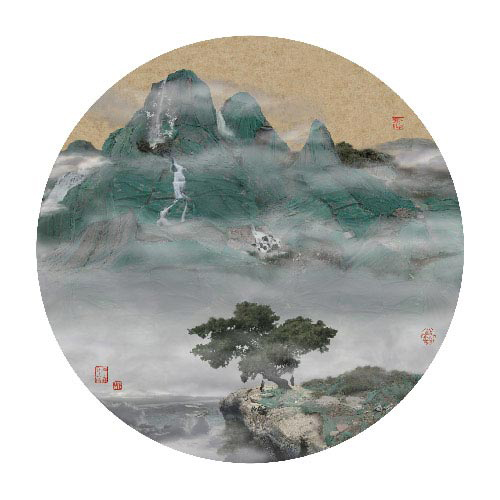
Yao Lu. The New Landscapes in Istanbul
The Istanbul Modern is presenting the work of Chinese photographer Yao Lu with new exhibition Los Nuevos Paisajes, on until the 22nd May. Lu´s aesthetic is based around ecology and industrial waste – and with landscapes created to look like classical Chinese paintings. Yao Lu was born in Beijing, China in 1967. Though he studied engraving at the China Central Academy of Fine Arts, Lu chose to explore the photography medium, becoming a professor of design at the Griffith University´s Queensland College of Art. Yu developed his personal style, mixing the techniques of photography, painting and design. Whilst Lu bases himself in conceptual art, many of his paintings are also reminiscent of both expressionism and traditional Chinese art. His works, on one level, possess the harmony and beauty of the pastoral landscape paintings of the Chinese medieval period, but also, upon closer inspection, themes of violence, and protest against the destruction of nature, and natural beauty. Lu has travelled round China photographing different signs of societal destruction – it is a complex, time-consuming project which is carried out in three stages. First, he covers mountains of rubbish with green fabric, photographs them from different angles, and then finally loads the images onto a computer, adding digital effects to give them an element of the classic Chinese water-colour landscape paintings. Lu´s skill as a photographer helps him to observe nature, in order to be able to transfer its imagery, beauty and impact onto the canvas, and combine them with a powerful conceptual message. He directs his criticism at the damaging effects of industry on the environment. His apocalyptic mountains of... read more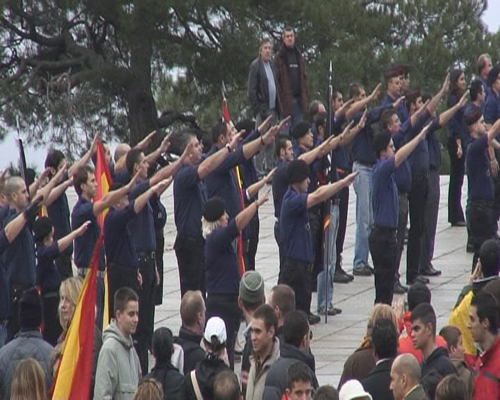
Plan Rosebud 2. A documentary by Maria Ruido, Madrid
On the 8th of May, the Centro de Arte Dos de Mayo in Madrid will be screening Plan Rosebud 2, a documentary by María Ruido, as part of the center´s “Thought and Debate” cycle. Visual artist María Ruido was born in Orense, Spain in 1967. Her entrance into the art world was not the conventional one, as she had studied history – and her approach cinema, based on the idea of the construction and deconstruction of images, was shaped by these studies. Making Barcelona her adopted city, Ruido´s work as a professor at the University of Barcelona´s Department of Images led to the production of various documentary essays which explored the contextual representations of social memory, and its relation to the construction of historical narrative. In 2006, the year of “memory,” Ruido assembled a team and started work on the documentary “El Plan Rosebus 2,” along with the support of the Centro Gallego de Arte Contemporáneo de Santiago de Compostela. That year, Spain was full of tributes to the victims of the Franco years – a topic which resurfaced due to the Memory law passed by congress in 2007 – and so it seemed that finally the lid had been lifted on the collective memory of the country after 30 years of near silence. However, Ruido wasn´t interested in making another documentary about the victims of Francoism – nor in commenting on the defeat of the Republicans; but rather in examining the general politics of memory, and the discussion that takes place during commemorations, places of memorial, and the symbols of collective memory – in order to create a... read more
RANKINGS
Do you want to know the best cities to escape for gastronomy? We will tell you!

VERSUS
Showdown: pure and simple. Comparison is the best way to make a decision.

TRAVEL TIPS
Travelling means many things. We will provide you with all you need. Don’t miss anything.

APPS AND BOOKS
Technology and literature, the necessities of a good traveler.

GUEST
We want to hear your story; we want to travel with you.
Changes, progress and achievements. Only-apartments daily.
Promotions