English
 Français
 Deutsch
 Italiano
 Español


ONLY BE AMSTERDAMMER

ONLY BE BUDAPESTER

ONLY BE VENETIAN

ONLY BE BARCELONIAN

ONLY BE BERLINER

ONLY BE VALENCIAN

ONLY BE ISTANBULITE

ONLY BE FLORENTINE

ONLY BE LISBOETA

ONLY BE LONDONER

ONLY BE NEW YORKER

ONLY BE MADRILENIAN

ONLY BE MALAGUEÑO

ONLY BE MILANESE

ONLY BE PARISIAN

ONLY BE PORTUENSE

ONLY BE PRAGUER

ONLY BE ROMAN

ONLY BE SEVILLIAN

ONLY BE PROXIMAMENTE

ONLY BE ATHENIAN
ONLY BE COMING SOON
ONLY BE COMING SOON
ONLY BE COMING SOON
Last posts
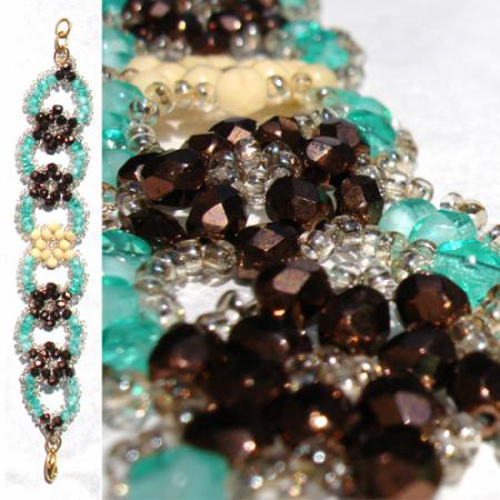
Glass Expo: Thousand years of art in Venice
On until the 25th of April at Venice´s Correr Museum is exhibition La Aventura del Vidrio: un milenio de arte veneziano. The show, which marks the 150 year anniversary of Venice Museum Foundation, is commissioned by Aldo Bova and Squarcina Chiara. The exhibition was created with the aim of both promoting and telling the story of the art of Murano and Venetian glass, and is organized into four sections: archeological glass, 15th and 18th century, 19th century and 20th century. On show are more than 300 pieces from the Murano Crystal Museum´s collection – some of which were recovered from the banks of the Venice canals, having fallen from ships which were transporting them abroad. The Murano glass name dates back to the 11th century, when Venice´s artisan glassworkers moved to the small island of Murano after a massive fire hit the city. Up until then, Venice had been the European leader in the production of glass, and so that this prestige was maintained, the special techniques and creative processes of the artisans became a closely guarded secret. Venice would go on to dominate the European glass market until 1700. The special feature of Venetian glass was its hard, refined sodium-based composition, making it colourless and transparent. The early pieces were simple shapes decorated with gold or silver enamel to make them look like jewelry. By the end of the 16th century, the designs had started to become more sophisticated, along with the technique. Pieces were smaller, lighter and more delicate, and glass filigree was developed, in which tiny strands of opaque glass were added to the transparent glass,... read more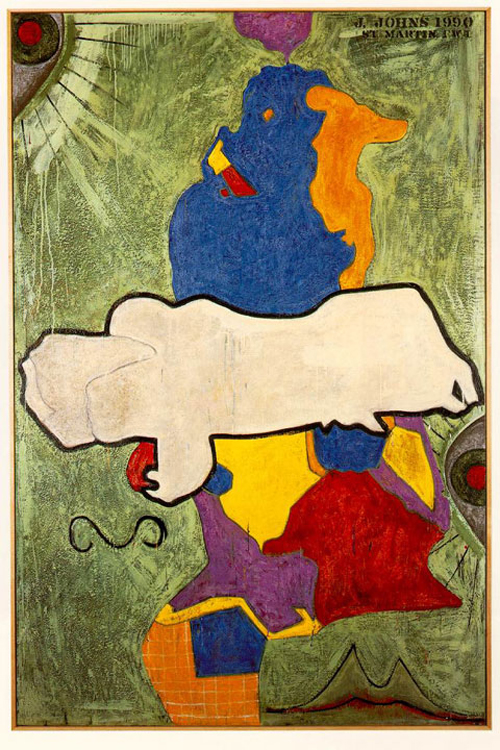
Jasper Johns at the IVAM
Samoa writer Albert Hanover relates in his strange novel Daughter of light how before hearing the story about its design, he only smoked Lucky Strikes because the package invariably made him think of the American artist Jasper Johns. He had already had fun with the word game of the American brand of cigarettes, allowing to identify a stroke of luck which the name announced with the lighting of the match (to strike a match) that would ignite the cigarette, and that, somehow, also evoked Johns and his elegant and incisive Duchamp irony which admirably illustrate works such as The critic smiles, consisting of a toothbrush metal mold placed on a plinth made of the same material. All in Johns, despite the deliberate banality of his themes and forms -or precisely because of it, as banal designs do not generate any energy anymore- is always elegant, starting with his exquisite and masterly treatment of the canvas painting that refers to the concept of inertia of Kenneth Noland paintings, and ending his interest in the idea of painting as object and not as representation. It was in Lisbon, however, while Hannover worked as a Spanish teacher at a language school, where the general director of Lucky Strike in Europe, then a student of him, assured that Johns hadn’t had any involvement in the design of the package, which was designed by Raymond Loewy, co-creator of the Shell logo and one of the biggest names in industrial design. In the original pack an area painted red on a green background represented a ball on a pool table -adding a new word-game to... read more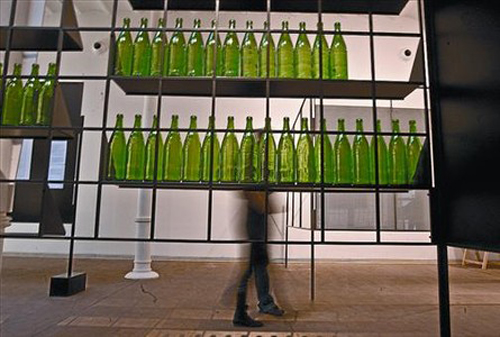
Ibon Aranberri in the Antoni Tapies Foundation
Recently, the Museum of Contemporary Art of Barcelona (MACBA) has acquired a piece dated from 2003, consisting of a closing actiong documented by photographs and several texts, using a metal structure of the access to a cave placed in a particular spot in the mountains of the Basque Country, with the particularity of allowing a small passage through which bats can enter and leave. However, the passage of people was completely closed. This is a work that aspires to give significance and recode the landscape by intervening in this landscape and which plays with philosophical notions of symbolism and identity. In the succinct words of the author of the piece, “the closing of my cave does not affect nature but human consciousness, and this is a fundamental difference… it may seem violent, but it is not. It only affects our image of what is sacred. It has a symbolic function”. The name of the operation is Ir. T. Nº513 zuloa. Extended Repertory. and its creator Ibon Aranberri (Itziar, Deba, 1969), an enigmatic artist who, being only fragmentarily known, in recent years has gained an increasingly international prestige thanks to similar works; works which were conceived in the form of projects somewhere between documentary narrative and abstract formalism where the essential artistic material is perhaps nature and history. Now and until the 15th of May, after three successive postponements, the Antoni Tapies Foundation in Barcelona (255 C/Arago, http://www.fundaciotapies.org/site/) devotes a retrospective exhibition curated by Nuria Enguita Mayo covering the last ten years of his artistic activity where you will see Ir. T. Nº513 zuloa. Extended Repertory, a great illustration of... read more
RANKINGS
Do you want to know the best cities to escape for gastronomy? We will tell you!

VERSUS
Showdown: pure and simple. Comparison is the best way to make a decision.

TRAVEL TIPS
Travelling means many things. We will provide you with all you need. Don’t miss anything.

APPS AND BOOKS
Technology and literature, the necessities of a good traveler.

GUEST
We want to hear your story; we want to travel with you.
Changes, progress and achievements. Only-apartments daily.
Promotions