English
 Français
 Deutsch
 Italiano
 Español


ONLY BE AMSTERDAMMER

ONLY BE BUDAPESTER

ONLY BE VENETIAN

ONLY BE BARCELONIAN

ONLY BE BERLINER

ONLY BE VALENCIAN

ONLY BE ISTANBULITE

ONLY BE FLORENTINE

ONLY BE LISBOETA

ONLY BE LONDONER

ONLY BE NEW YORKER

ONLY BE MADRILENIAN

ONLY BE MALAGUEÑO

ONLY BE MILANESE

ONLY BE PARISIAN

ONLY BE PORTUENSE

ONLY BE PRAGUER

ONLY BE ROMAN

ONLY BE SEVILLIAN

ONLY BE PROXIMAMENTE

ONLY BE ATHENIAN
ONLY BE COMING SOON
ONLY BE COMING SOON
ONLY BE COMING SOON
Last posts
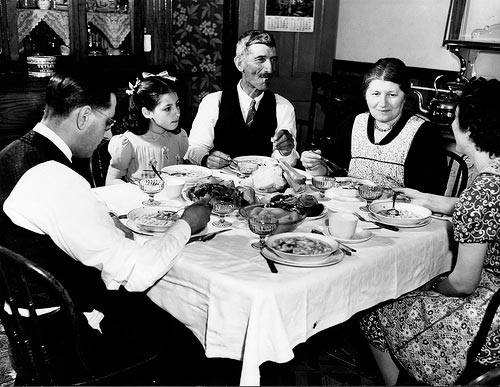
Food – Mea(l)ns of Communication
In the Western culture is it considered rude if you talk with your mouth full. However, have you ever sat at the dinner table and it was completely silent? Social gatherings nearly always include food. Having a meal together is a strong tool for our social communication and interaction. In fact, many times it is not just the meal itself that is important, often the preparation that goes into it as well. The popularity of cooking shows on TV support this notion. The exhibition Kochen, essen, redden – satt? (transl. cooking, eating, talking – full?) at the Museum of Communication in Berlin aims to reiterate the powerful role that food and meals have as tools of communication. Displaying historical flashbacks, amusing anecdotes, art, literature work, as well as anthropological analysis of daily rituals and comparisons, the exhibition shows in an interdisciplinary manner how closely knit the bond between cooking, eating and talking is. The exhibition is divided into 5 segments which all focus on different aspects and scenarios of eating: 1. zuhause essen (eating at home) is something that happens everyday in every household and yet it can be so different. From childhood memories to private dinner parties to lonely dinners in front of the TV. 2. draussen essen (eating outside): eating outside at the camp fire is how eating in a group began, but today there’s different reasons for eating outside: no time, no home, love of nature… 3. auswärts essen (eating out): cafeterias, restaurants, snack bars, etc. 4. öffentlich essen (eating publicly): eating to see and be seen. It’s all a matter of image. 5. richtig essen... read more“Touch and play”: learn to enjoy physical contact
We live in a society and an era in which physical contact between two people has become more infrequent. Locked in our bubbles of personal space, we only give access to the people with whom we are most intimate, which makes it harder for us to understand and master the strong feelings produced by touch. From the healing power of a helping hand resting on our shoulder to the sparks produced by a casual brush of the palm of the hand with someone who attracts us, touch is power. This kind of rigidity and fear which prevents physical contact even extends to many actors, dancers and artists, who in preventing contact forego a powerful tool of communication between them and the public. Trying to avoid this, a group of drama teachers, artists and researchers has established the first festival dedicated to the performance genre “contact improvisation”, in the always artistically vibrant city of Berlin. This event, organized for the first time in May 2010 has been dubbed “Touch and Play Festival” will be an annual event. It is not restricted to actors and performers and is open to anyone who wants to explore the theatrical possibilities and possible artistic expression that can be born out of the physical contact between people. Touch is a phenomenon, a chemical process, and a physical sensation, a journey from the initial fears and misgivings to the sensuality that comes naturally when hormones rage and we are open to our senses. There will be five days of workshops, classes, practical exercises and a closing party (the “Touch & Play Party”) that promises make this... read more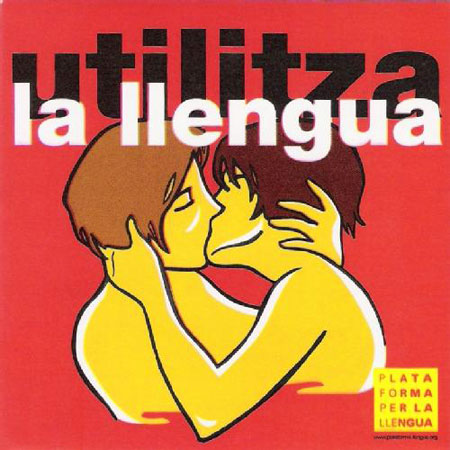
Learn Catalan in Barcelona
Cata-what? Catalan! Though everybody in Barcelona speaks Spanish, it is the capital of Catalonia, where they speak Catalan. There are about 9.2 million speakers. Knowledge of French, Spanish or Italian might help you understanding Catalan, but don’t underestimate the difficulty of this beautiful language! Let’s start with some tongue twisters and you’ll immediately understand: “Setze jutges d´un jutjat mengen fetge d´un penjat.” The j is pronounced like the English [d?] sound in just/large. It is believed that this phrase was used like a watchword during the siege of Barcelona, because it if difficult to pronounce. Or how about this one: “Plou poc, però pa lo poc que plou plou prou.” Note that you pronounce the ou like [ow]. It means: it doesn’t rain much, but it’s enough. A little children’s rhyme to end with: “En Panxo li va dir a en Pinxo: vols que et punxi amb un punxó? I en Pinxo li va dir a en Panxo: punxa´m però a la panxa no.” Another difficult one, but Barça player Xavi Hernandez can help you with this one. The x [t?] is pronounced ‘tsh’ like you would say Cha-cha-cha. So Xavi is pronounced like Chavi. Now you know some of the sounds, it’s time to listen! Rock Catalá is a very popular genre: take a look at the MySpace of the band Toquem Fusta, which means something like ‘knock on wood’, (www.myspace.com/toquemfusta or www.toquemfusta.cat) and discover their new song Abraça´l Fort. After playing in Razzmatazz last February (the biggest disco in Barcelona), your next chance to see them live is at the Andén NºZero 2010 Festival in Salou (end... read more
RANKINGS
Do you want to know the best cities to escape for gastronomy? We will tell you!

VERSUS
Showdown: pure and simple. Comparison is the best way to make a decision.

TRAVEL TIPS
Travelling means many things. We will provide you with all you need. Don’t miss anything.

APPS AND BOOKS
Technology and literature, the necessities of a good traveler.

GUEST
We want to hear your story; we want to travel with you.
Changes, progress and achievements. Only-apartments daily.
Promotions