English
 Français
 Deutsch
 Italiano
 Español


ONLY BE AMSTERDAMMER

ONLY BE BUDAPESTER

ONLY BE VENETIAN

ONLY BE BARCELONIAN

ONLY BE BERLINER

ONLY BE VALENCIAN

ONLY BE ISTANBULITE

ONLY BE FLORENTINE

ONLY BE LISBOETA

ONLY BE LONDONER

ONLY BE NEW YORKER

ONLY BE MADRILENIAN

ONLY BE MALAGUEÑO

ONLY BE MILANESE

ONLY BE PARISIAN

ONLY BE PORTUENSE

ONLY BE PRAGUER

ONLY BE ROMAN

ONLY BE SEVILLIAN

ONLY BE PROXIMAMENTE

ONLY BE ATHENIAN
ONLY BE COMING SOON
ONLY BE COMING SOON
ONLY BE COMING SOON
Last posts
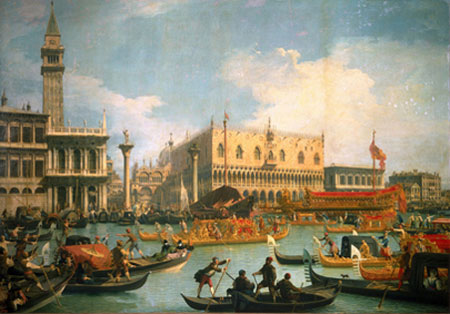
Canaletto à Venise – Discover Venice in Paris
During the eighteenth century some young French artists, despite having the French Academy, preferred to study in Rome and Venice. Today, you have the chance to discover their works at Maillol Museum, which pays tribute to the Venice of 1700 with an exhibition that showcases the best works of Canaletto (from the 19th of September to the 10th of February 2013). Giovanni Antonio Canal (known as Canaletto, 1697-1768) was a famous painter of urban landscapes in Venice, who became the greatest precursor of Veduta, the eighteenth century Italian painting genre. The vedute, portrayed almost as a mapping, the Venetian landscape of the time, while describing in great detail rivers, canals, bridges, architecture, etc. Maillol Museum, in collaboration with other museums and private collectors, gathered more than 50 Canaletto’s works, selected with great rigor. This is a great opportunity to contemplate the best paintings of Canaletto. Landscapes and views, as well as tradition, history, drawings and prints, are now gathered in this magnificent display of the best artist of this kind of art, while renewing and modernizing him, to become a global icon in painting. Canaletto’s techniques were varied; direct painting, sketch or finished on site work. Referring to the latter one, the Venduta’s painter used an optical camera to project an image and frame landscapes. Caravaggio also used this device, but Giovanni Antonio Canal better developed what today is known as wide angle. Thanks to Dario Maran studies, there is a recreated copy of this wonderful machine showcased in this exhibition, so that the viewer can interact with it and understand how Canaletto did those aerial view of Venice.... read more
El Molino in Barcelona
Lovers of Moulin Rouge style burlesque theater will be thrilled to find that the atmosphere of the Parisian cabaret is recreated in Barcelona’s stellar El Molino. The signature windmill design on the front of the edifice is immediately reminiscent of the famous Moulin Rouge, and in fact, when it changed ownership in 1908, it was even called the Petit Moulin Rouge. The red windmill, however, didn’t make an appearance until 1929, when it was added to help the building stand out from similar surrounding establishments. The history of the building in fact dates back for over 100 years, to 1898 when it opened under the name Catalan Aviary and was used as a performance space. It carried on under that name until it was sold in 1908 and began operating under the name Petit Moulin Rouge. For many years, the Petit Moulin Rouge operated in the Parallel area of Barcelona – an area distinguished by its many French styled cabarets and nightclubs. For years, the club was known as the Moulin Rouge of Barcelona; however, when the Civil War ended and the Spanish “nacionales” came into power, any “Frencified” name was obliterated from buildings and businesses. Thus, the name was changed to El Molino. Throughout the 1940s, 50s, 60s, and 70s El Molino enjoyed huge popularity in Barcelona, thanks to its uniquely liberal flair, blatant eroticism and grand, decadent luxury. Legendary artists graced its stage, including such stellar performers as Mary Mistral, Lander and Leanna, Yvette Rene, and Gardenia Pulido. In the 1980s the theater hosted artists like Amparo Moreno, Lita Claver and Merche Mar. Unfortunately, poor economic choices... read more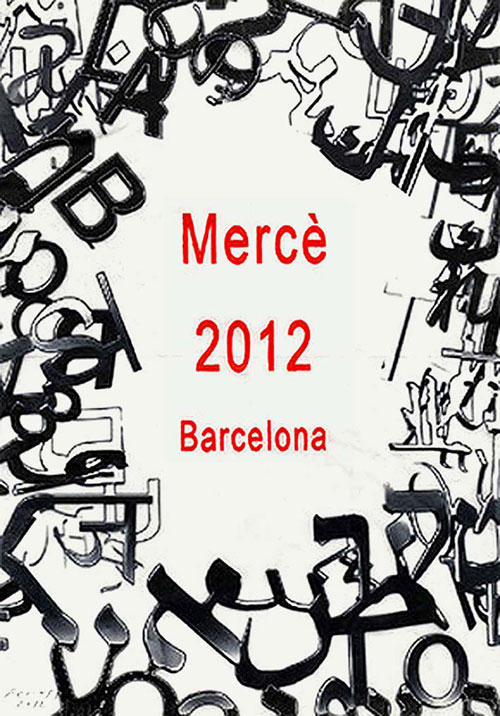
La Mercè in Barcelona
Traveling to Barcelona is a magical experience, as this city is always able to fascinate you with its exquisite blend of art and tradition. One of the best times to enjoy getting to know more about its history and admire the folklore and customs that make up the character of Barcelona, is La Mercè festival. To discover the origins of this celebration, which coincides with the beginning of autumn, we must go back to the late seventeenth century. At that time, Barcelona suffered the misfortune of a locust plague and its inhabitants started praying to the Virgin of la Mercè to get rid of it. When the plague ceased, the city named the Virgin of la Mercè as the protector of Barcelona, although it wasn’t official until 1868, when Pope Pius IX ratified it. Since then, Barcelona celebrates its most cheerful festival on the la Mercè’s day. Today, the festival has a distinctly popular character and a complete agenda of events around the Mediterranean culture, taking place in many public spaces in the city: parades, concerts, traditional dances and street arts, etc. The 2012 edition of this festival will be celebrated from the 21st to the 24th of September, and its theme will be innovation and creativity. Montreal, one of the most creative cities in the world, will be the Festival’s guest city. What can you see at La Mercè? The festival has hundreds of activities planned, so it is hard not to miss anything. Here are some of the activities you should consider: The Correfocs are an ancient Catalan tradition and one of the most spectacular acts that... read more
RANKINGS
Do you want to know the best cities to escape for gastronomy? We will tell you!

VERSUS
Showdown: pure and simple. Comparison is the best way to make a decision.

TRAVEL TIPS
Travelling means many things. We will provide you with all you need. Don’t miss anything.

APPS AND BOOKS
Technology and literature, the necessities of a good traveler.

GUEST
We want to hear your story; we want to travel with you.
Changes, progress and achievements. Only-apartments daily.
Promotions