English
 Français
 Deutsch
 Italiano
 Español


ONLY BE AMSTERDAMMER

ONLY BE BUDAPESTER

ONLY BE VENETIAN

ONLY BE BARCELONIAN

ONLY BE BERLINER

ONLY BE VALENCIAN

ONLY BE ISTANBULITE

ONLY BE FLORENTINE

ONLY BE LISBOETA

ONLY BE LONDONER

ONLY BE NEW YORKER

ONLY BE MADRILENIAN

ONLY BE MALAGUEÑO

ONLY BE MILANESE

ONLY BE PARISIAN

ONLY BE PORTUENSE

ONLY BE PRAGUER

ONLY BE ROMAN

ONLY BE SEVILLIAN

ONLY BE PROXIMAMENTE

ONLY BE ATHENIAN
ONLY BE COMING SOON
ONLY BE COMING SOON
ONLY BE COMING SOON
Last posts
Electricity Museum in Lisbon
Museum located in a beautiful building in the tourist area of Belém, with guided visits and activities for the whole family.
read more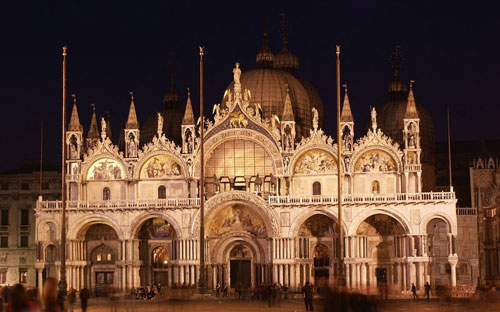
Basilica of San Marco in Venice
It is enriched with precious treasures and artifacts, often from the Far East. In its architecture, which is both the Byzantine, Roman and Venetian, was recognize by the work of artists and artisans from various sources. When the republic fell, there were many raids, yet the treasury of the Basilica of San Marcos still has valuable items such as cups, reliquaries, chalices, etc. made of gold, silver or crystal. In addition to the domes, it is especially the beautiful mosaics on a gold background, completely covering the walls of the Basilica, which link the Christian basilica, the Oriental art. Inside the Basilica of San Marco in Venice, you will be especially impressed by the mosaics, which constitute a veritable illustrated Bible, a book designed for use by those who could not read and used for the edification of believers. The facade of the basilica is a masterpiece of Gothic sculpture, a composition full of columns, arches, gables and reliefs, as in all medieval churches are often characters, or scenes of daily life occupations. The Basilica of San Marco shows a clear Byzantine influence, but it will find a wide variety of styles. This is because one of the Doges of the Venetian Republic imposed a tribute to the merchants who make a good business in the city, thus enriching the Basilica of San Marco. The exterior of the Basilica of San Marcos, like all the Piazza San Marco, shows two completely different faces, which can be seen during the day, crowded and at night, which breathes peace of mind and can admire the grandeur of the Basilica as you... read more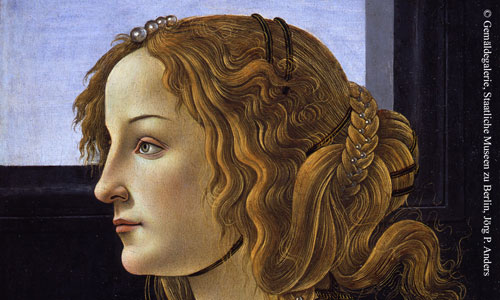
Renaissance Faces at Bode Museum in Berlin
On the 25th of August, the exhibition Renaissance Faces will open at the Bode Museum in Berlin, which contents the largest exhibition of Renaissance art from the New York Metropolitan Museum of Art. This exquisite exhibition is done in collaboration with the Federal Ministry of Foreign Affairs and will be open until November 20th. The exhibition is organized with 150 portraits painted by Filippo Lippi, Sandro Botticelli and Giovanni Bellini. The Italian portrait, in its beginnings, was marked by the realism of great Dutch painters and reflected the social status, marital status and social and aristocratic relations of the person, just by looking at his/her facial expressions. The development of portraiture in the Renaissance led to increase the demand of this kind of art in various sectors of society, who found an opportunity to perpetuate different iconography, that reflected different features such as religious devotions, an expression of love in its many facets, or religious and political images representing the dominant and political power at the time. The portraiture was also a testing ground for artists, through self-portrait and the anonymous portraits or illusory. Following the masters of the time several new techniques were developed. Fray Filippo Lippi (1406-1469), known as Lippo Lippi, entered the convent after the death of his parents. When he was only 15 years old, he began to express his artistic capacities in painting by decorating the Brancacci Chapel with Masolino and Masaccio. Protected by Cosimo de Medici, he created remarkable works, including Madonna and Child, which is preserved in the Uffizi Gallery in Florence. He was a remarkable teacher of great artists as Sandro... read more
RANKINGS
Do you want to know the best cities to escape for gastronomy? We will tell you!

VERSUS
Showdown: pure and simple. Comparison is the best way to make a decision.

TRAVEL TIPS
Travelling means many things. We will provide you with all you need. Don’t miss anything.

APPS AND BOOKS
Technology and literature, the necessities of a good traveler.

GUEST
We want to hear your story; we want to travel with you.
Changes, progress and achievements. Only-apartments daily.
Promotions