English
 Français
 Deutsch
 Italiano
 Español


ONLY BE AMSTERDAMMER

ONLY BE BUDAPESTER

ONLY BE VENETIAN

ONLY BE BARCELONIAN

ONLY BE BERLINER

ONLY BE VALENCIAN

ONLY BE ISTANBULITE

ONLY BE FLORENTINE

ONLY BE LISBOETA

ONLY BE LONDONER

ONLY BE NEW YORKER

ONLY BE MADRILENIAN

ONLY BE MALAGUEÑO

ONLY BE MILANESE

ONLY BE PARISIAN

ONLY BE PORTUENSE

ONLY BE PRAGUER

ONLY BE ROMAN

ONLY BE SEVILLIAN

ONLY BE PROXIMAMENTE

ONLY BE ATHENIAN
ONLY BE COMING SOON
ONLY BE COMING SOON
ONLY BE COMING SOON
Last posts
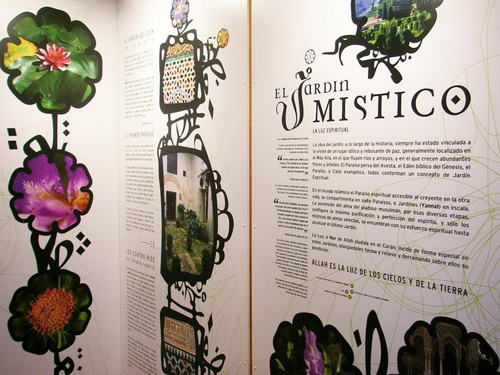
Madrid & Andalusi, a history
Sometimes, history is written from confusing, conflicting fragments of information which are then interpreted to fit an already existing general theory. It probably all starts with a decision about what materials are valid for an historical investigation and which aren´t, according to a previous model of theory. So certain facts are discarded, and hidden in spite of having potential scientific and objective value. Also, especially in the history of political corruption, there occurs a certain fabrication of fake proof where deemed necessary. This is an old practice which is far from dead and gone – it has actually undergone a revival in this era of information technology, in which even newspapers which are considered serious, and trustworthy seem to have denounced the practice of the honest collation of news and facts. In the case of Madrid, such a creation of false evidence has taken place for centuries with the study of the origin and the development of the city, leading to a series of unreliable chronicles which have turned their backs on hard facts such as street and place names, and instead presented a Mozarabic Madrid built by primitive virgins and saints as something beyond debate. Undoubtedly, it was the easiest, most convenient thing, to erase the deep rooted link of the city with Islam – a religion historically dogged by tensions. Clearly, it wasn´t advisable for the Spanish monarchy to remember that its capital, since 1561, was a city of Arabic origins – an essentially Moorish place since the Christian conquest in 1065. Instead it chose to fabricate its own, more acceptable history. In the place where the... read more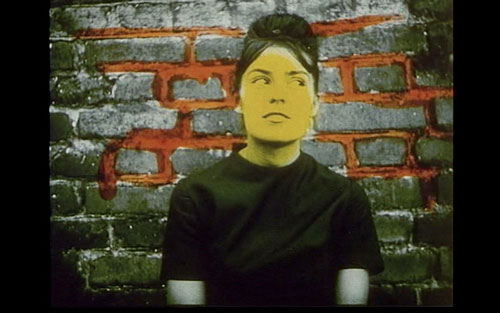
Yugoslav Experimental Cinema at MACBA
The Barcelona Museum of Contemporary Art, MACBA, holds an exhibition of Yugoslav Experimental Cinema 1960-1980 – as part of the exhibition Museum of parallel narratives – until the 6th of July. This sample is an important part of the international activities that the museum has been carrying out in its agenda 2011. The series curated by Ana Janevski reveals an experimental cinematography that changed the language and the dominant aesthetic in the former Socialist Federal Republic of Yugoslavia between the decades from 60´s to 80´s. “We can’t promise to do other than experiment” was the statement that accompanied the KOD group, consisting of visual artists from Novi Sad on the Danube, city which the Serbian director and screenwriter Dušan Makavejev used as scenario to make a visual performative intervention in 1971. This triggered a revolution of thematic paradigms and Yugoslav film production, which was subject to state censorship. Dušan Makavejev was born in Belgrade in 1932. He studied psychology at the University of Belgrade, and after graduating; he got involved in the cinema and festivals society. There he became fascinated with the image content production, so he started studying at the Academy of Radio, Television and Film. In 1953 he began making his first documentaries, which were directly related to post-war events. His tendency to insert experimental raw footage in other productions, deconstructing and re-signifying their contents, transformed him into one of the most important men in Yugoslav cinema. In his first three films: Man is a bird (1966), Love Affair (1967) and Innocence Unprotected (1968), we can see a strong influence from the filmmaker Jean-Luc Godard, particularly in... read more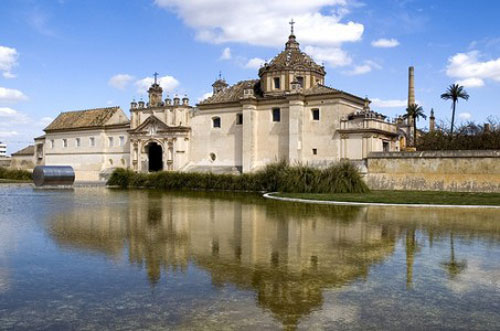
Andalusian Center of Contemporanean Art of Seville CAAC
At the Centro Andaluz de Artes Contemporaneas (CAAC) in Seville. The exhibition “A test extending beyond the action” will soon open to everybody. This is the first retrospective exposition of K.P Brehmer who, was born in Berlin in Germany in 1938 and died in Hamburg in 1997. This fantastic exhibition will begin on the31st of May and will last until the 12th of June. At the exhibition of this German artist, one of the most important exponents of pop art, -not only in his country, but all over the world- you will be delighted with some of his most significant art pieces On the other hand, Jessica Diamond will present her exhibition called “Murales” on the exterior of the Cartuja Monastery -which is one of the CAAC headquarters- and where you will be able to view numerous piecs of her art works. This singular female artist who created her own style in the eighties, uses language to express through her paintings her countless criticisms about nowadays popular culture and generates with her art a direct energetic message filled with individuality that very little artists are capable of achieving in their life time Finally CAAC will also present the exposition “Prensadas“of Inmaculada Salinas, who, just as the previous expostion we mentioned, will have a period of visitation up until the 12th of June. Here we can see the latest art pieces of Inmaculada and can enjoy her paintings which have a more ideological content as seen in paintings like “Espejo” “Prensada” “Como Fondo” and “Visión de las vencidas“ More Info: http://www.juntadeandalucia.es/cultura/caac/programa/ex_act.htm Centro Andaluz de Artes Contemporáneo: Av. Américo Vespucio, 2... read more
RANKINGS
Do you want to know the best cities to escape for gastronomy? We will tell you!

VERSUS
Showdown: pure and simple. Comparison is the best way to make a decision.

TRAVEL TIPS
Travelling means many things. We will provide you with all you need. Don’t miss anything.

APPS AND BOOKS
Technology and literature, the necessities of a good traveler.

GUEST
We want to hear your story; we want to travel with you.
Changes, progress and achievements. Only-apartments daily.
Promotions