English
 Français
 Deutsch
 Italiano
 Español


ONLY BE AMSTERDAMMER

ONLY BE BUDAPESTER

ONLY BE VENETIAN

ONLY BE BARCELONIAN

ONLY BE BERLINER

ONLY BE VALENCIAN

ONLY BE ISTANBULITE

ONLY BE FLORENTINE

ONLY BE LISBOETA

ONLY BE LONDONER

ONLY BE NEW YORKER

ONLY BE MADRILENIAN

ONLY BE MALAGUEÑO

ONLY BE MILANESE

ONLY BE PARISIAN

ONLY BE PORTUENSE

ONLY BE PRAGUER

ONLY BE ROMAN

ONLY BE SEVILLIAN

ONLY BE PROXIMAMENTE

ONLY BE ATHENIAN
ONLY BE COMING SOON
ONLY BE COMING SOON
ONLY BE COMING SOON
Last posts
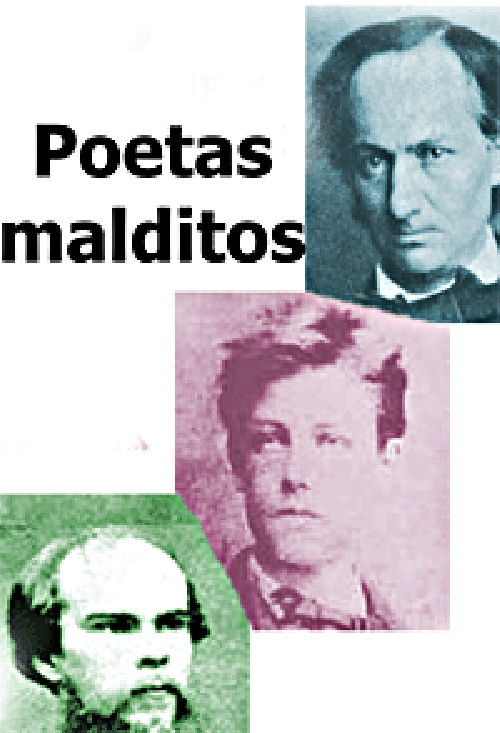
Baudelaire and the damned poets
A damned poet is he who takes his life and work outside of the conventions of society. Illness, disgrace, drug abuse and alcohol – all leading to a premature death are the typical components to the life story of a doomed poet or artist. And his works are laden with doom and gloom, like a backdrop. The term damned poet comes from a poetic essay by Verlaine, Les Poètes maudits, in which he pays homage to 6 poets: Tristan Corbière, Arthur Rimbaud, Stéphane Mallarmé, Marceline Desbordes-Valmore, Auguste Villiers de L’ Isle-Adam and Pobre Lelian (Paul Verlaine). The first French poet known as a kind of proto- damned poet is François Villon, who lived in the 15th century. Other doomed poets include Antonin Artaud, John Keats, Edgar Allan Poe, the Count of Lautremont, Dylan Thomas – and the great suicidal Argentinian poets Alejandra Pizarnik y Alfonsina Storni. Undoubtedly, the list goes on. The French poetry from the end of the 19th century, known as “fin de siécle” was at the hands of many of these poets, who didn´t conform to the conventional rules, and were ignored by the critics. However, after the materialisation of symbolism, these artists who had innovated the form, began to be recognised more in society. Baudelaire is one of the best doomed poets. An innovator of French literature, and prophet of modern poetry, his work was very influenced by romanticism, whilst rejecting the movement´s rhetoric on the importance of nature. He was initiated into the literary movement known as the Parnasianos and came to to be one of the key exponents of Symbolism. With his ironic... read more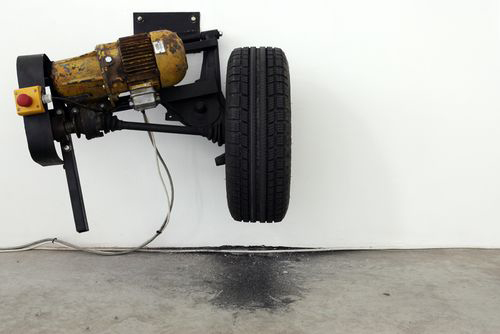
Michael Sailstorfer at the Miro Foundation in Barcelona
On until the 25th April at the Miro Foundation is Sonar, an exhibition of the experimental work of German artist Michael Sailstorfer. The interesting new show addresses the question which preoccupied the artist and which shaped his work: what is a sculpture? Sonar, as the name suggests, is an experimental exhibition based on sound, in which a piece of glass is broken for acoustic effect. In order to make this effect visible, Sailstorfer constructs a room from wood, with one window, whose glass absorbs high frequency sound via a generator installed on the inside. The final smashing of the glass, which is the climax of the show, is shown on a video inside of the room, and can only been seen through the window frame of the broken glass. Michael Sailstorfer plays with concepts that he has derived from literature and cinema, transferring them into experimental installations. The Sonar piece is inspired by a character in the novel by Günter Grass, which was adapted for the screen by Volker Schlöndorff. The narrative revolves around Oskar Matzerath, a young boy who decides to stop growing at three years old, and develops a talent for breaking glass, using sounds created by playing his tambourine. The child symbolises the rupture of purity at the time of Hitler´s rise to power, and the desperation of a world without hope. Another of the inspirations at play in this work is the interesting performance Window Blowout in 1976 from North American vanguard artist Gordon Matta-Clark, son of surrealist painter Roberto Matta and Anne Clark, which involved shooting at glass in an abandoned building in Bronx,... read more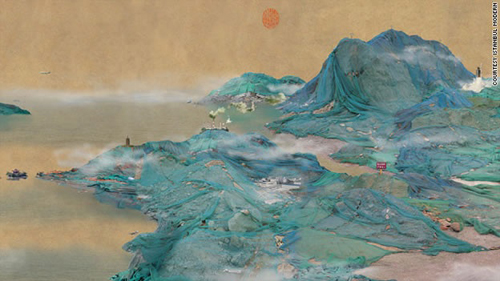
Paradise Lost in Istanbul
On until the 24th July at the Istanbul Modern Museum is exhibition Paradise Lost, in which 19 contemporary artists explore the eternal conflict between nature and the technological world. Through digital videos made by the artists, a dialogue is developed about an uncertain future of nature, and the role of art in sustainability. The Istanbul Modern Museum, with co-operation from the Department of Education, is opening the show to schools, offering interactive discussion workshops which aim to encourage awareness of the concept of nature in a post-modern society. The interesting interactive programme aims to create communication between people of different ages and generations, and teach them about the uses of different digital medias, and the role of technology in contemporary art. Amongst the artists participating in the show is acclaimed North American Doug Aitken, whose work encompasses both photography and sculpture. Born in California in 1968, he is one of the most influential digital artists of the States. Since 1990, he´s created numerous interesting installations, in which he uses multiple screens to challenge the idea of a linear narrative. His themes mainly question the use of nature, and his works are ambitious and high-impact – such as Sonic Aitken Pavilionin the wooded area of Inhotim in Brazil, in which sounds of the earth were audible through noise sensors installed a mile deep into the ground. Aitken´s conceptual work has a startling poetic beauty which is always highly conscious of our role in nature. Native Bulgarian Ergin Çavu?o?lu will be another of the selected members of the debate, whose digital works confront the notion of space and place in order... read more
RANKINGS
Do you want to know the best cities to escape for gastronomy? We will tell you!

VERSUS
Showdown: pure and simple. Comparison is the best way to make a decision.

TRAVEL TIPS
Travelling means many things. We will provide you with all you need. Don’t miss anything.

APPS AND BOOKS
Technology and literature, the necessities of a good traveler.

GUEST
We want to hear your story; we want to travel with you.
Changes, progress and achievements. Only-apartments daily.
Promotions