English
 Français
 Deutsch
 Italiano
 Español


ONLY BE AMSTERDAMMER

ONLY BE BUDAPESTER

ONLY BE VENETIAN

ONLY BE BARCELONIAN

ONLY BE BERLINER

ONLY BE VALENCIAN

ONLY BE ISTANBULITE

ONLY BE FLORENTINE

ONLY BE LISBOETA

ONLY BE LONDONER

ONLY BE NEW YORKER

ONLY BE MADRILENIAN

ONLY BE MALAGUEÑO

ONLY BE MILANESE

ONLY BE PARISIAN

ONLY BE PORTUENSE

ONLY BE PRAGUER

ONLY BE ROMAN

ONLY BE SEVILLIAN

ONLY BE PROXIMAMENTE

ONLY BE ATHENIAN
ONLY BE COMING SOON
ONLY BE COMING SOON
ONLY BE COMING SOON
Last posts
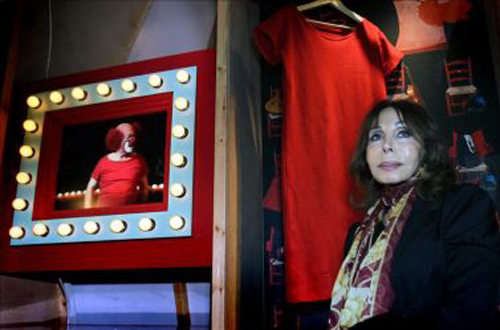
Un siglo de circo: Exhibition at Arts Santa Mónica
The cultural phenomenon of the circus has gradually undergone a resurgence, thanks to the recent recognition of the complexity of the circus arts. Even if circuses have often been seen as places of animal exploitation, this recognition of its aesthetics, and its contribution to fine art is an opportunity to delve a little deeper. Beyond the “cruel” label of the spectacle is a wonderful way of life, whose inhabitants live for their art – an art which forces them to adapt and sacrifice a lot. Itinerant, ephemeral and diverse, the circus troupe traverses the globe – great cities and small villages alike – showcasing it´s joyful, virtuoso world. The big top and all that goes on inside it involves a lot of hard work. The inhabitants of the circus are its creators; tightrope walkers, trapeze artists, jugglers, magicians, clowns – each person has their own special role in the circus micro-community. Circuses are often made up of entire families, and is a lifestyle which is passed down, from generation to generation. Telling these stories – or at least one of them – was the aim of exhibition “Un siglo de circo” (“A century of the circus“), where we learn about Paulina Andreu Rivel, daughter of famous Barcelona-born clown Charlie Rivel.* She may not be as well known as her father, but Paulina Andreu Rivel has had an active career in the circus – on the eve of her 90th birthday – is almost a century old. A collection of photographs tell the story of Paulina Rivel, and the many well-deserved tributes she has received over the years – the... read more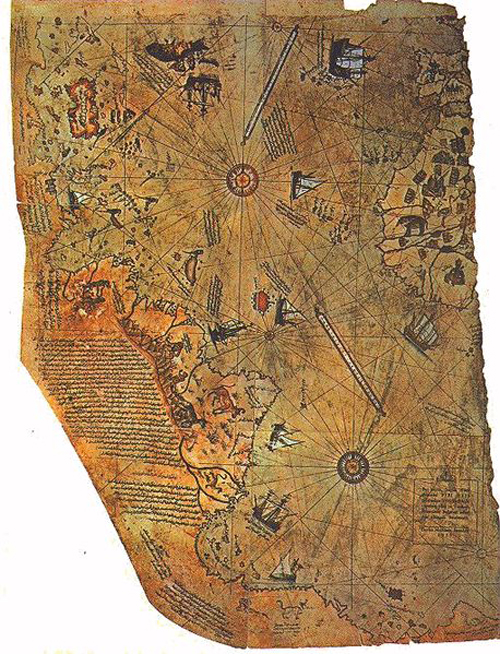
Haci Muhiddin Piri oglu Haci Mehmed’s enigmatic atlas
History is always the present history. A fiction story that must be supported by rigorous methods of experimental science to work (otherwise, we should never forget it, we´re not even talking about history), but belonging by right to the battlefield in the history of ideas, always located, as is well known in the Middle Ages, in a literary region beyond genres. History is produced by tracking values of our time in past periods that have as principal aim to legitimate and pass them off as needed. In this exercise of justification of the present, everything that does not fit is misrepresented, omitted or quieted. Impressed by his massive and heterogeneous nature, when Flaubert visited Istanbul in 1850 he wrote a famous letter in which he predicted that the ancient Constantinople would be the capital of the world a century later. According to Orhan Pamuk, what occurred, therefore, within the prescribed time was that after the fall of the Ottoman Empire, Istanbul had become a city possessed by bitterness, poverty and ruin. Among the ruins of a glorious past there was a magnificent and disturbing world atlas of 1513 during the rule of Atatürk, which, despite being from the first moment it was found out one of the great national treasures of the modern and laic Turkey, whose representation decorates even today the Turkish notes, has since then continued strictly away from public display. Even scholars who want to examine it directly often meet, despite its excellent state of preservation, some insurmountable bureaucratic difficulties. Somehow not surprisingly it is so, as the map in question has a number of questions... read more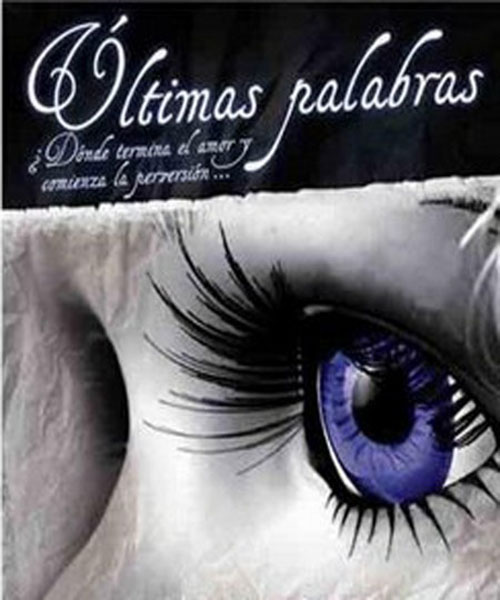
Last Words
Let´s look back at the last words of some of our key cultural figures – such as Beethoven, who from his deathbed, shortly before leaving this world, said “Friends applaud, the comedy is over.” French writer Francois Rabelais´ last words were similar: “Draw the curtain, the farce is over.” Scotsman Alexander Graham Bell, who invented the telephone whilst experimenting with listening devices (his mother and wife were deaf) was brief in his final hours – to his wife´s plea of “don´t leave me,” came the reply “no.” Lord Byron, English poet, spared any detail, deciding to depart as though any other night, with the words “Good night.” Theodore Roosevelt, president of the United States, apparently felt the same way as Byron, simply saying “Turn out the light,” just before he died. On the contrary, German novelist Wolfgang von Goethe felt that it was too dark, exclaiming “Light, more light!” Russian writer Tolstoy´s last words were in the form of a riddle; “Even in the valley of the shadow of death, two and two do not make six.” One person who left in more dramatic style was fellow Russian writer Anton Chekhov. The doctor had barely arrived at an ill Chekhov´s side, when he said “I´m dying.” When the doctor sent orders for an oxygen tank, the writer said “It´s no use, by the time they bring it, I´ll be dead.” So the doctor quickly changed the order to a bottle of champagne instead – which Chekhov accepted, saying “It´s been ages since I drank champagne.” He emptied the glass, retired to bed, and stopped breathing shortly after. Great last... read more
RANKINGS
Do you want to know the best cities to escape for gastronomy? We will tell you!

VERSUS
Showdown: pure and simple. Comparison is the best way to make a decision.

TRAVEL TIPS
Travelling means many things. We will provide you with all you need. Don’t miss anything.

APPS AND BOOKS
Technology and literature, the necessities of a good traveler.

GUEST
We want to hear your story; we want to travel with you.
Changes, progress and achievements. Only-apartments daily.
Promotions