English
 Français
 Deutsch
 Italiano
 Español


ONLY BE AMSTERDAMMER

ONLY BE BUDAPESTER

ONLY BE VENETIAN

ONLY BE BARCELONIAN

ONLY BE BERLINER

ONLY BE VALENCIAN

ONLY BE ISTANBULITE

ONLY BE FLORENTINE

ONLY BE LISBOETA

ONLY BE LONDONER

ONLY BE NEW YORKER

ONLY BE MADRILENIAN

ONLY BE MALAGUEÑO

ONLY BE MILANESE

ONLY BE PARISIAN

ONLY BE PORTUENSE

ONLY BE PRAGUER

ONLY BE ROMAN

ONLY BE SEVILLIAN

ONLY BE PROXIMAMENTE

ONLY BE ATHENIAN
ONLY BE COMING SOON
ONLY BE COMING SOON
ONLY BE COMING SOON
Last posts
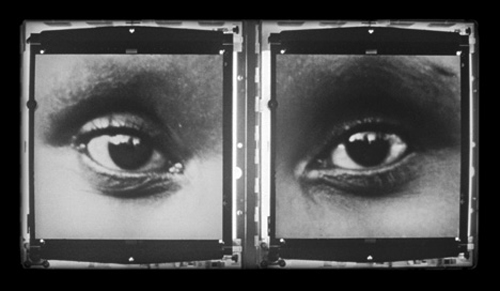
Jacques Rancière: First International Conference of Aesthetics and Politics in Valencia
Jacques Rancière is an obligatory point of reference for any debate about aesthetics and politics, which is why the Polytechnic University of Valencia, with sponsorship from the Valencia French Institute has organised The First Conference of Aesthetics and Politics (23rd, 24th, and 25th March) around his ideas. Jacques Rancière: First International Conference of Aesthetics and Politics hopes to open up the debate on Rancière´s thoughts, basing itself on the relationship between literature and history. On the 23rd of March at 5.30pm, Rancière will lead the opening conference in the Salón de Actos de la Escuela Superior de Ingeniería Informática at the Polytechnic University of Valencia. For the closing of the event, there will be a round-table debate between Jacques Rancière and other invited speakers. Jacques Rancière was born in French Algeria in 1918. The protegee of French philosopher Louis Althusser, Rancière collaborated, along with Althusser and Ettiene Balibar for the famous book Reading Capital, a work which was highly influential amongst the intellectuals and students involved in May 1968, and which ignited the revolutionary thinking of the time, as it was a guide to reading Karl Marx: The Capital. After May 1968, Rancière parted ways with his mentor in order to concentrate on his search for intellectual freedom, and its possible links with political freedom. A noted work is The Ignorant Schoolmaster, which is based on the experience of a professor called Joseph Jacotot during the 18th century, who claimed “who teaches if to emancipate is to stupefy.” Like Jacotot, Rancière asserts that there is no such thing as different levels of intelligence – that everybody, however simple they... read more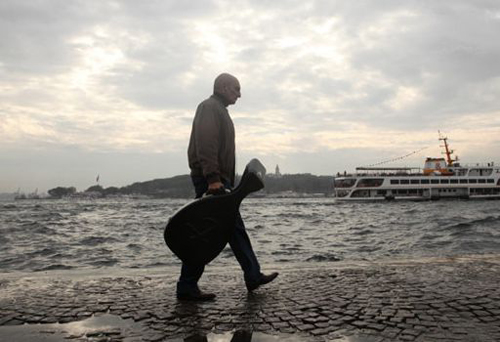
30th International Istanbul Film Festival
Between the 2nd and 17th of April the Istanbul International Film Festival will be taking place, under the organisation of the Istanbul Arts and Culture Foundation. The 30th edition of the event will be dedicated to four fundamental figures of Turkish cinema: director Yusuf Kurçenli, director of photography Ertunç ?enkay, and actors Metin Akpinar and Zeki Alasya, who will be awarded the Cinema of Honour Prize. The film started out as week of exhibition of cinema that took place during summer. In 1984, they started to separate the activities, and devise what is today known as the Istanbul International Film Festival, with its date fixed in April – and in 1985 the programme went international. Sponsored by FIAPF (International Federation of Cinema Producers Association), the festival is a space for the development and discussion of international cinema – as well as for showcasing the best new Turkish cinema. On the bill this year, just as with previous years, will be the International Competition for the Golden Tulip, as well as the national Turkish Cinema competition which includes documentaries as well as movies. The jury is made up of directors, screenwriters, actors, film historians, academics and other eminent figures from the world of cinema. Turkish cinema has been affected by the political climate of the country and the global changes to movie production. The fundamental strength of Turkish cinema has always been the ability of its directors to express in a sensitive and realistic way the human experience, and the vitality of life in Turkey. Amongst those contributing to the internationalization of Turkish cinema who will be awarded the Cinema... read more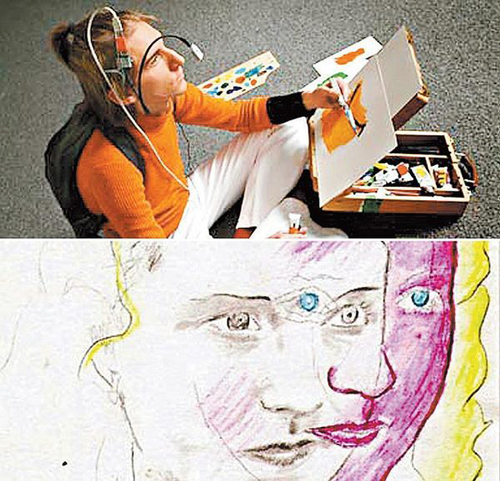
Neil Harbisson: the cyborg-artist who hears colors
Have you ever thought how would the world be like without its colors? Seeing black and white (and grey) is a disease known as “color blindness” and Neil Harbisson was born with this hereditary condition but managed to develop (and affirmed) his career thanks to a sensor called “eyeborg” who became the first cyborg known throughout the world. Harbisson was born in London in 1984 and raised in Barcelona (Mataro), where he originally studied a Bachelor of Arts at the High School Alexandre Satorras. Here, because of his particular visual condition he was allowed to use only white, black and grey in his works. At the age of 18 he moved to Dublin, where he continued his artistic studies in the musical industry, being accepted at Dartington College of Arts (in England) where he studied composition and piano. It was at this time when his life changed radically, thanks to an encounter with Adam Montandon, a cybernetics professor at the University of Plymouth expert in techniques to expand the senses through technology. The two worked together in creating a tool called “eyeborg” a cybernetic system capable of recognizing lighting impulses and converting colors into musical notes. The “eyeborg” was awarded the British prize for innovation awarded by the Submerge in Bristol in 2004 and in the same year, it took first prize in the Interface Design Europe Europrix Multimedia Top Talent Award in Vienna. Thanks to this device, Harbisson could begin to perceive their environment differently, combining his passion for music and visual arts, and creating a series of works that are pictorial representations of musical pieces and vice... read more
RANKINGS
Do you want to know the best cities to escape for gastronomy? We will tell you!

VERSUS
Showdown: pure and simple. Comparison is the best way to make a decision.

TRAVEL TIPS
Travelling means many things. We will provide you with all you need. Don’t miss anything.

APPS AND BOOKS
Technology and literature, the necessities of a good traveler.

GUEST
We want to hear your story; we want to travel with you.
Changes, progress and achievements. Only-apartments daily.
Promotions